
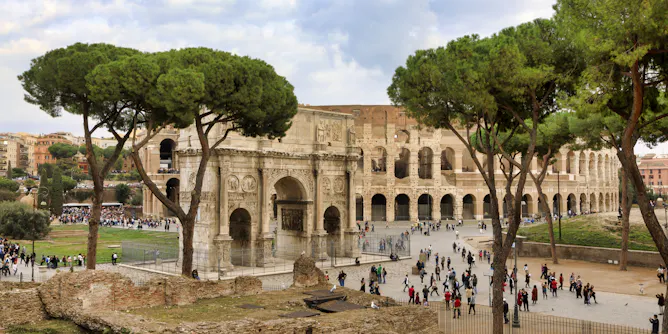
As summer temperatures rise, finding ways to build cities that don’t hold in the heat and can provide some cooling is increasingly important.
Articles on Cities
Displaying 161 - 180 of 1700 articles

Many municipal politicians identify strongly with a political party, but some don’t. In fact, more than a quarter of municipal politicians are genuine non-partisans, with no party affiliation.

Using birth control to manage rat infestations is a temporary and inefficient approach. Any successful rat management programs would require multiple collaborative approaches.

African countries can learn a lot from Hong Kong on how to use the gains from rising urban land prices to fund infrastructure and other public services.
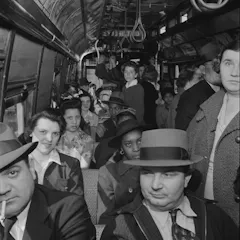
When US cities offered low-cost, high-quality public transit during World War II, buses and trains were full. Some cities are trying to revive that formula, after decades of disinvestment.

They’re not what many of us imagine when we think of schools, but building them vertically could make our cities better for everyone.

Montgomery once closed all of its parks rather than desegregate them. Today, the city’s long history of racial inequality is still reflected in the state of its parks and green spaces.

While trees are beautiful and benefit the environment, the most practical argument for planting more is that they provide a clear public health benefit, both in the preventive and therapeutic sense.
Connecting the rich, and often unknown, histories of open swimming in urban waterways to the growing swimmable cities movement could help to shape the futures of urban swimming.

What will our daily lives be like in 50 years’ time? What will our challenges be? Scientific data and analysis are essential, and municipal diplomacy is the key to sharing knowledge.

African countries are urbanising fast but without investment in public infrastructure and services, resulting in congestion, contagion and the rise of informal settlements.

In a major homelessness ruling, the Supreme Court holds that cities and municipalities can punish people for sleeping outside, even when they have nowhere else to go.

A study in Detroit finds large areas without pet resources, mainly in lower-income and minority neighborhoods. Better access to supplies and services could help owners and animals thrive together.
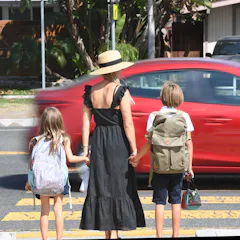
A traffic engineer argues that, contrary to his profession’s view, ‘human error’ is not the main cause of deaths in car crashes in the US.

The new level won’t trigger automatic cleanups, but it sets a lower threshold for taking precautions to reduce lead exposure.

The answer depends in part on where you live. If it’s extremely hot and humid, the health risks are much higher.

Turning excess office space into apartments isn’t a panacea for the housing shortage, but it’s producing thousands of new units yearly and is more sustainable and economical than new construction.
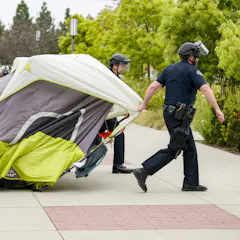
Framing dissent and poverty as a menace to public order can threaten fundamental rights, particularly when it’s used to justify the deployment of predictive technology.

Two recent research documents provide a substantial basis for assessing how the draft policy shapes up and identifying where it falls down.
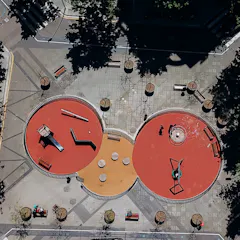
New Zealand tends to focus on big infrastructural projects such as tunnels or light rail to change cities. But there are cheaper ways to add public spaces to urban design.
Top contributors
-
 John Rennie Short is a Friend of The Conversation.
Professor Emeritus of Public Policy, University of Maryland, Baltimore County
-
Head of Urbanism and Associate Professor of Urban Studies, School of Architecture, Design and Planning, University of Sydney
-
Professor of Sustainability, Curtin University
-
Professor of Human Geography and Planning, University of Tasmania
-
Professor of Urban Policy and Director, Urban Futures Enabling Impact Platform, RMIT University
-
Transport and Cities Program Director, Grattan Institute
-
Senior Lecturer in Urban and Environmental Planning, Griffith University
-
Associate Professor in Urban Planning, The University of Queensland
-
Adjunct professor, School of Media and Communications, RMIT University
-
Associate Professor of Urban Planning, The University of Melbourne
-
Professor of Housing Research, Adelaide University
-
Research associate at African Centre for Cities, University of Cape Town
-
Housing Policy Researcher, Expert Advisor, Housing Assessment Resource Tools and Adjunct Professor, L’Université d’Ottawa/University of Ottawa
-
Emeritus Professor, Urban Planning and Policy, University of Sydney
-
Emeritus Professor of Housing, UNSW