

Other countries have learned to harness the economic and cultural energy of their super-cities, but New Zealand is held back by Auckland’s failure to thrive.
Articles on Cities
Displaying 101 - 120 of 1700 articles

Current science communications in Cape Town are not serving the public well.
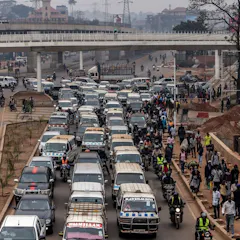
Motorcycle ride-hailing taxis have been hailed as a major boon for African cities. But they also present new risks of their own making.
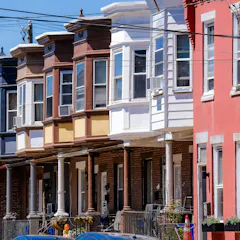
Municipal bonds are integral to Philly’s effort to make more affordable housing, but hidden costs and requirements can hurt taxpayers.

A new study involving more than 150 industry experts identifies how to turn ‘good intentions’ on emissions into better ways to design, build and maintain our cities.
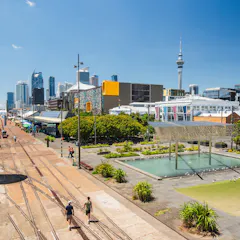
Converting open-air car parks and creating green cooling corridors on transport routes is an easy and affordable way to beat the city heat as the climate changes.

NZ playgrounds are often separated from city life, constraining children’s spontaneous play. Planners can learn from car-free urban spaces where children are free to roam.
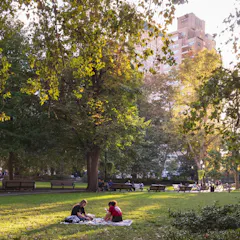
Public squares, secret gardens and offbeat cafes can offer respite and a sense of community connection, which contribute to happiness.
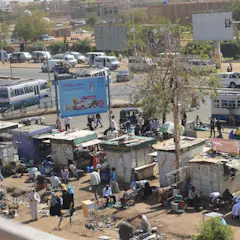
It’s time to rethink how Africa’s public spaces are defined and designed – by listening to how people already make cities public.
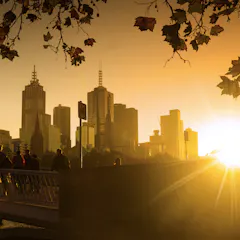
As Australian cities heat up, street trees are needed more than ever for their cooling. It turns out many are more resilient to heat than expected.

The question is not whether a city is fixed – it can never finally be – but rather what trajectory it is on.

A process called “exaptation” places repurposing resources and adaptations at the heart of evolution; what if our homes were designed on the same basis?

Attracting immigrants is key to growing and maintaining a more resilient economy in former industrial cities like Detroit.
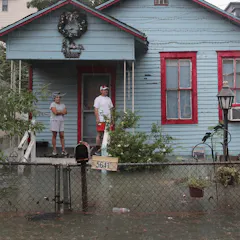
Low-income neighborhoods have the hardest time recovering from disasters without help. FEMA used to require cities to pay attention to them, but that’s changing.
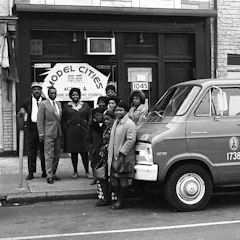
The Great Society’s Model Cities Program wasn’t perfect. But it offered a vision of what democratic, community-based planning could look like.

Cats aren’t the only bird hazard around your home. More than 1 billion birds die each year from hitting windows, often during migration.

New research shows that rural America has untapped export potential. Taking advantage of it could be a more effective way to narrow the trade deficit than tariffs.

Cities seeking to create greener, more liveable neighbourhoods can revitalise disused spaces in various ways. Encouraging and supporting communities is key.
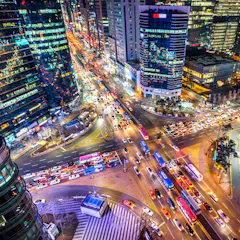
By 2050, the majority of the world’s population will live in cities. So how do we make them as liveable as possible?
Engineers use giant fans in the Wall of Wind test facility to study the destructive ways these powerful winds can interact with tall buildings.
Top contributors
-
 John Rennie Short is a Friend of The Conversation.
Professor Emeritus of Public Policy, University of Maryland, Baltimore County
-
Head of Urbanism and Associate Professor of Urban Studies, School of Architecture, Design and Planning, University of Sydney
-
Professor of Sustainability, Curtin University
-
Professor of Human Geography and Planning, University of Tasmania
-
Professor of Urban Policy and Director, Urban Futures Enabling Impact Platform, RMIT University
-
Transport and Cities Program Director, Grattan Institute
-
Senior Lecturer in Urban and Environmental Planning, Griffith University
-
Associate Professor in Urban Planning, The University of Queensland
-
Adjunct professor, School of Media and Communications, RMIT University
-
Associate Professor of Urban Planning, The University of Melbourne
-
Professor of Housing Research, Adelaide University
-
Research associate at African Centre for Cities, University of Cape Town
-
Housing Policy Researcher, Expert Advisor, Housing Assessment Resource Tools and Adjunct Professor, L’Université d’Ottawa/University of Ottawa
-
Emeritus Professor, Urban Planning and Policy, University of Sydney
-
Emeritus Professor of Housing, UNSW