

The catastrophic story is familiar, but the insight, and the ending, offer an opportunity, and perhaps motivation, for modern readers.
Articles on Climate disasters
Displaying 1 - 20 of 60 articles

Cascading hazards and entrenched inequalities have led to false starts in reconstruction and ongoing suffering since the 2023 disaster in India’s eastern Himalayas.
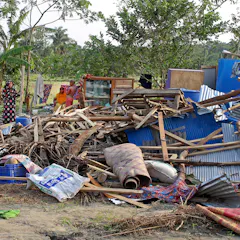
Most climate aid arrives after the disaster. A handful of countries are proving it doesn’t have to.
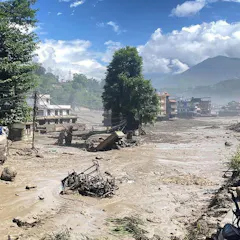
Recovery time between climate disasters makes a huge difference to the consequences affecting local people.
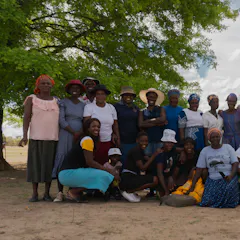
New research shows how women in rural Zimbabwe rebuilt their lives after Cyclone Dineo displaced hundreds of families and swept away their homes.

Climate risk assessments guide how much funding is available to support climate impacts and need to work out which women are worst affected.
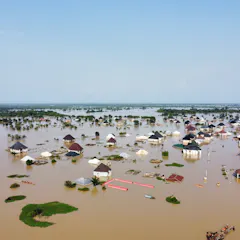
AI tools can help communities respond to floods, heatwaves and other climate emergencies – but only once trained to interpret the nuance of everyday language.

Kenya faces extreme weather crises. Humanitarian aid must be part of the solution.

When times are tough, household brands and consumer rituals provide a source of comfort, reaffirming family identity and a sense of togetherness.

How can a society afford recurring cycles of disaster management without addressing the ecological interventions that amplify these calamities?
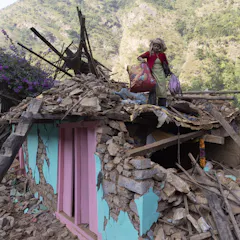
Disasters like earthquakes and flood destroy homes and generate vast amounts of waste. Is there a better, greener way to rebuild affected communities?

Climate disasters are rising and insurance costs are, too. Canada’s poorest are caught in the middle.

What if Canada could see the impact of wildfires, floods and traffic congestion before they happen?

Wildfires are not just environmental events. They are public health crises that demand stronger, more resilient health systems.
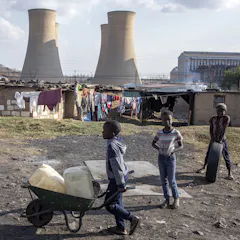
The G20 must establish a fair mineral trade for Africa, fund Africa’s climate needs, and make sure the move to clean energy benefits everyone.
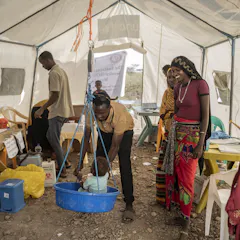
There are lessons for other African countries in how Ethiopia built its health emergency response teams.
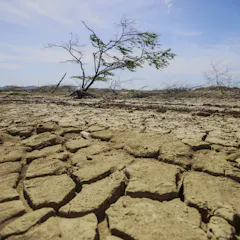
New research has found that a two-year drought can have the same economic impact on a region as a one percentage point increase in the unemployment rate.
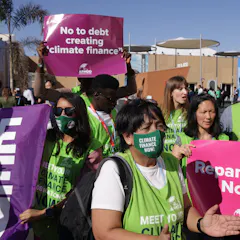
State-contingent debt instruments allow countries hit by economic and climate crises to restructure their debt repayments.

Cutting carbon dioxide emissions to zero by 2050 will reduce global warming, but climate modelling shows that some regions may still experience extreme heat.
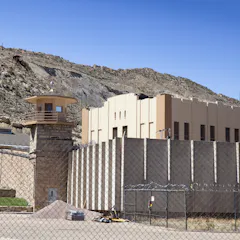
More than 65% of formerly incarcerated people reported experiencing climate-related hazards, according to survey results.
Top contributors
-

Head, Disaster Solutions, Australian National University
-
Visiting professor, Harvard University
-
Professor of Geology and Environmental Geosciences, University of Dayton
-
Assistant Professor of Marine and Environmental Affairs and American Indian Studies, University of Washington
-
Senior Researcher, Migration and Development, Maastricht Economic and Social Research Institute on Innovation and Technology (UNU-MERIT), United Nations University
-
Researcher, Aging In the Right Place | M.A. student, Gerontology, Simon Fraser University
-
Research professor, RMIT University
-
Research Associate, Institute for Climate Risk and Response, UNSW
-
Associate Professor in Journalism, Media and Communication, Griffith University
-
PhD Candidate, Humanities, York University, Canada
-
Associate professor, Gerontology Department, Simon Fraser University
-
Data Scientist at the Center for Social Solutions, University of Michigan
-
Professor of International Relations, Boston University
-
Chair in Insurance and Professor, Finance, Wilfrid Laurier University
-
Associate Director (International) - Melbourne Centre for Cities, The University of Melbourne