
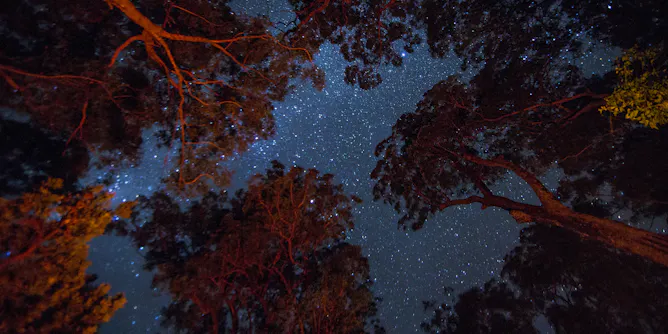
Aboriginal communities have observed the night sky for millennia. But they face a growing threat – light pollution.
Articles on Constellations
Displaying 1 - 20 of 21 articles
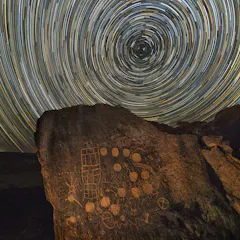
From Earth spinning on its axis and orbiting the Sun to it precessing like a top, lots of factors affect which stars you can see in the sky.

Australia’s literary festivals are under threat from culture wars, climate risks, new hate speech laws and ongoing funding scarcity.
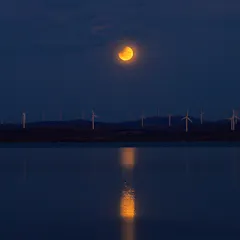
In 2026 we will see a total eclipse of the Moon, a blue Moon, a supermoon and the two brightest planets close together in the sky.
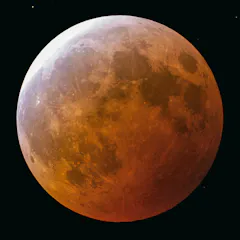
In 2025 we will see Saturn’s rings ‘disappear’, the Moon turning red, meteor showers and more.
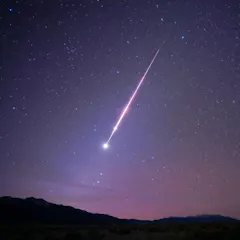
On July 31, Earth will pass through two debris streams that will produce meteor showers. Here’s where to look in the night sky in Australia and New Zealand.

Astronomers and stargazers around the world are excited to witness a rare event that only happens once every 80 years – a recurrent nova.
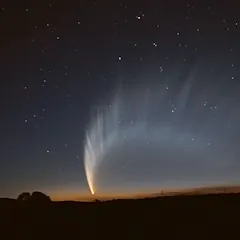
In 2024 we will see meteor showers, Saturn disappearing behind the Moon, and – if we’re lucky – a comet bright enough to see with the naked eye.

People have been looking up at the stars for thousands of years. Here’s where to start if you want to learn more about the night sky – from spotting easy-to-find constellations to using the best apps.

With the help of thousands of citizen scientists, a new study measured exactly how much brighter night skies are getting every year.
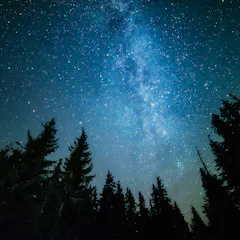
People travel hundreds or thousands of miles and spend a fortune to see the night sky in all its splendor. But we are literally blocking out the cosmic beauty above our homes.
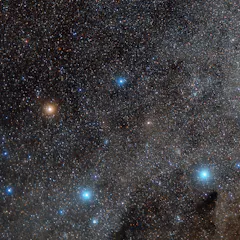
Warlpiri Elder Wanta Jampijinpa Pawu interprets the Southern Cross, not as a contested symbol of identity, but as a summons to unite First Nations and non-Indigenous people.

The Orion Star Count 2022 calls on us to go outside and count the stars of Orion.

Cultures around the world call the Pleiades constellation ‘seven sisters’, even though we can only see six stars today. But things looked quite different 100,000 years ago

Two new coins released by the Royal Australian Mint celebrate Indigenous astronomers, who have used the stars to map changing seasons, inform the behaviours of plants and animals, and encode Law.
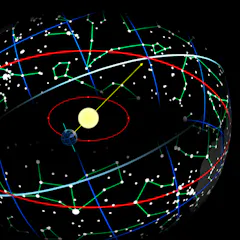
Astronomy and astrology do not agree on the dates of the zodiac constellations.
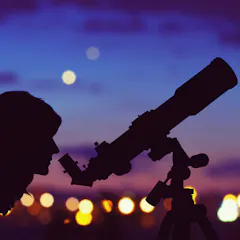
Dark sky sites can inspire new generations of stargazers, but a better long-term solution would be connecting people with the night sky where they live.

Around the world and throughout history, we find remarkably similar constellations defined by disparate cultures, as well as strikingly similar narratives describing the relationships between them.

Many of the constellations we know in the night sky come from myths of the ancient Greeks. But similar stories are told by the oldest living cultures on Earth, including those of Australia.

Stargazing seems such a quiet, calm activity. But whether our eyes can see or not, those stars out there are in constant flux. Time-domain astronomy studies how cosmic objects change with time.
Top contributors
-

Adjunct Professor, Centre for Astrophysics, University of Southern Queensland
-
Associate Professor, School of Physics, The University of Melbourne
-
Lecturer in Astronomy, Nottingham Trent University
-
Senior Curator (Astronomy), Museums Victoria Research Institute; The University of Melbourne
-
Professor (Astrophysics), University of Southern Queensland
-
Associate Professor of Astrophysics, University of Portsmouth
-
Associate Professor in Mathematical Psychology, The University of Melbourne
-
University Distinguished Professor of Astronomy, University of Arizona
-
Professor Emeritus of Astronomy, University of Illinois Urbana-Champaign
-
Professor, School of Psychological Sciences, The University of Melbourne
-
Honorary Fellow, Space and Astronomy, CSIRO; Western Sydney University
-
Scientist, National Optical-Infrared Astronomy Research Laboratory
-
Associate Professor, Complex Human Data Hub, Melbourne School of Psychological Sciences, The University of Melbourne
-
Visiting Fellow, School of Literature, Language and Linguistics, Australian National University
-
Professor of Physics and Astronomy, USC Dornsife College of Letters, Arts and Sciences