
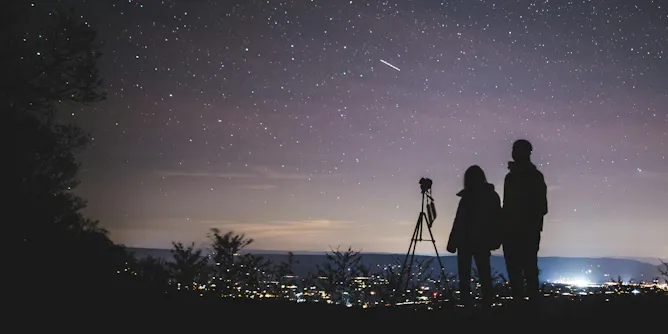
So what names do astronomers use for stars and how are official star names selected?
Articles on Indigenous astronomy
Displaying 1 - 20 of 23 articles
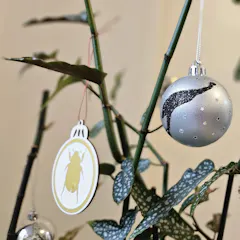
Let’s cast the holly, snowmen and reindeer aside to decorate our homes with Aussie Christmas crafts instead. How about Christmas beetle baubles, paper parrots and ornamental echidnas?
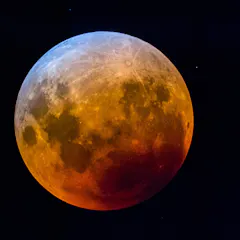
A lunar eclipse ceremony from the Torres Strait turns our understanding of the history of science on its head.

Ancient stories of the sea and the sky date back to the end of the last ice age.

Tens of thousands of satellites orbiting Earth will hamper astronomers’ efforts to study the Universe and spot dangerous asteroids, as well as brightening the sky and hiding stars from the rest of us.
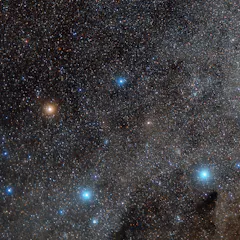
Warlpiri Elder Wanta Jampijinpa Pawu interprets the Southern Cross, not as a contested symbol of identity, but as a summons to unite First Nations and non-Indigenous people.
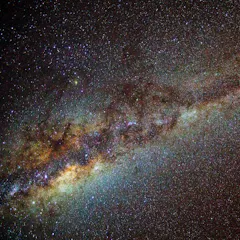
A growing number of satellite ‘mega-constellations’ are being deployed. Will a starry night sky soon be a thing of the past?

The First Astronomers shares the extensive star knowledge of First Peoples worldwide, stretching back millennia to reclaim so-called Western discoveries and highlight the strength of oral traditions.
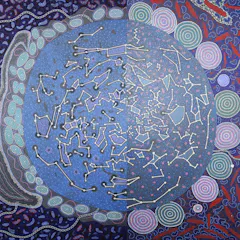
A new 3D film follows two children as they discover the astrophysical story of the universe and Yamaji stories of the sky and land. Making it was an extraordinary cross-cultural experience.
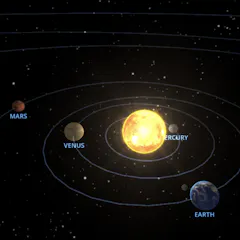
Mars, Venus and the crescent Moon will all come together in the sky just after sunset on Tuesday.

Uncle Segar is an expert on many things including the land, sea and sky. This knowledge is then captured in his artworks.

Cultures around the world call the Pleiades constellation ‘seven sisters’, even though we can only see six stars today. But things looked quite different 100,000 years ago
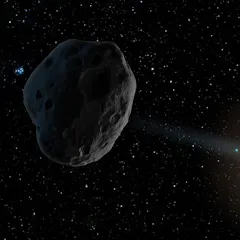
Following on from the 2019 International Year of Indigenous Languages, 2020 has seen 5 asteroids given new names recognising the contribution of illustrious Aboriginal and Torres Strait Islander people.

Around the world and throughout history, we find remarkably similar constellations defined by disparate cultures, as well as strikingly similar narratives describing the relationships between them.
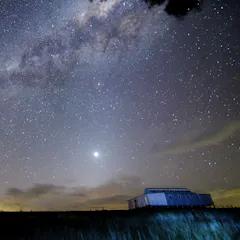
The planets we can see in the sky were known to the ancient Greeks as ‘wandering stars’. But they appeared much earlier in the stories and traditions of Australia’s Indigenous people.
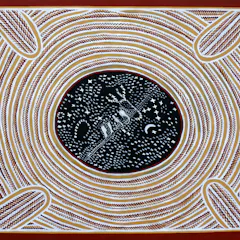
Four star names from Aboriginal Australia have been recognised by the International Astronomical Union. So what are they and where to find them?

This exhibition at the National Museum of Australia is not only brilliant but marks an important turning point in how Aboriginal art is exhibited.

A new look at some of the oral traditions of Aboriginal Australians shows a deep understanding of three red-giant variable stars, long before European observers.

Disney’s Moana has a remarkably accurate depiction of how Polynesian peoples navigate by the stars, and draws attention to the richness of Indigenous astronomy.
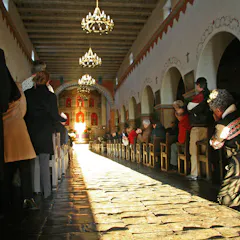
At many Spanish missions in the US and Latin America, the rising sun illuminates the altar on the winter solstice or other symbolic days. To the faithful, these events meant that Christ was with them.
Top contributors
-

Associate Professor, School of Physics, The University of Melbourne
-
Postdoctoral Researcher in Radio Astronomy, University of Sydney
-
Cultural Astronomy & Cultural Competence Researcher, UNSW
-
Professor, School of Psychological Sciences, The University of Melbourne
-
Professor of Geography, School of Law and Society, University of the Sunshine Coast
-
Astronomer, Australian National University
-
Mualgal man, Moa Island, Torres Strait, Indigenous Knowledge
-
Associate Professor in Mathematical Psychology, The University of Melbourne
-
McKenzie Postdoctoral Fellow, University of Divinity
-
Lecturer in Archaeology, Flinders University
-
Associate Professor, Complex Human Data Hub, Melbourne School of Psychological Sciences, The University of Melbourne
-
Honorary Senior Lecturer, Australian National University
-
Artistic director, Milpirri Festival, Lajamanu, Indigenous Knowledge
-
Assistant researcher
-
John Curtin Distinguished Professor (Radio Astronomy), Curtin University