

Aging levees and dams are only the beginning of the risks communities face. One of the biggest challenges is helping people manage the heat and storms.
Articles on Disaster preparedness
Displaying 1 - 20 of 80 articles

As storms, wildfires, and floods strike in ever-closer succession, an architect with disaster risk science expertise explains why resilience is built between hazards, not during them.

A catastrophic flash flood ripped through local villages and has claimed hundreds of lives.

Mobile phones have become part of just about everyone’s emergency infrastructure. But what do you do when the power and service go out?

Evacuations in the face of a wildfire, hurricane or other disaster are stressful and can take more time than you might expect. Here’s why practice helps and what to think about.

Too often, Australian authorities have relied on ad hoc preparations for the droughts and bushfires made more likely by El Niño.

Computer models of the storm hitting different areas show how much damage is possible, yet flood maps still focus on where flooding is most likely instead.
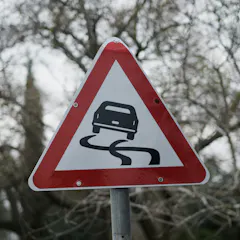
Near-misses, when accidents are narrowly avoided, aren’t false alarms. They’re the most honest feedback a system gives: the future, whispering in the present.
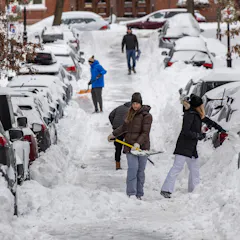
Winter storms create many hazards, from slick ice to freezing temperatures. People often underestimate how quickly conditions can become life-threatening

Like many other regions in the Global South, Aceh’s vulnerability can be traced back to colonialism. Post-colonial development continues to reinforce it.
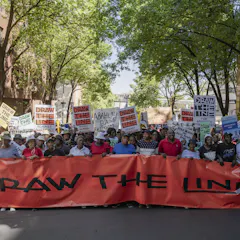
For the first time, countries now have a shared way to understand whether the world is actually improving at adapting to climate impacts.
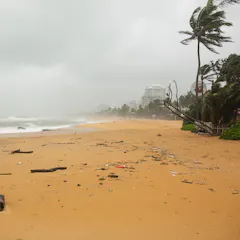
How Sri Lanka can move from reactive disaster management toward proactive climate resilience.
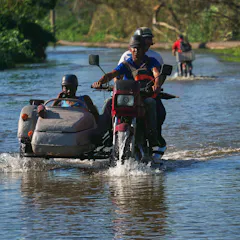
As the Caribbean recovers from the hurricane, Cuba’s response offers lessons for a region facing stronger storms.
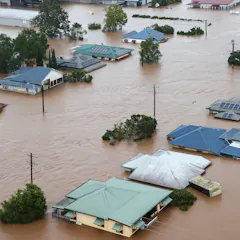
Now is the time for government to act – before the next disaster strikes.
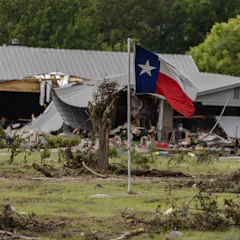
There are ways the state could help these communities, as a team of disaster planning specialists explains.

How ready is Australia for its next sudden flood? And what could help to encourage people to leave while there’s still time?

Research shows hospital administrators can better plan for how they’d cope if a disaster or terrorist attack impacts a hospital’s ability to function as normal.
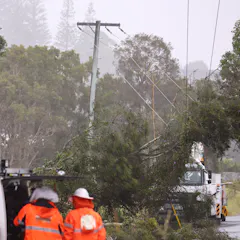
There aren’t enough skilled workers to support Australia’s day-to-day building needs, let alone in response to disasters.

How do you stay safe while you begin the clean up and recovery? It can be helpful to have a plan of action ready.

For millions of people, Cyclone Alfred will be their first. From “go bags” to sandbags, here’s what you should do to be as ready as possible.
Top contributors
-

Adjunct Senior Lecturer, Centre for Disaster Studies, James Cook University
-
Professor Emeritus of Geography, Louisiana State University
-
Professor of Disasters and Health, UCL
-
Reader in Coastal Engineering, University of East London
-
Assistant Professor in International Social and Public Policy, London School of Economics and Political Science
-
Professor of Geography, University of Tennessee
-
Postdoctoral Researcher, The Resilience Institute at Boise State University, Boise State University
-
Assistant Professor of Geography, Middle Tennessee State University
-
Head of Transition Finance Research, University of Oxford
-
Research Associate, Institute of the Americas, UCL
-
PhD Candidate in Computer Science, Stanford University
-
Associate Professor of Geography, The University of Melbourne
-
Associate Professor, Applied Disaster and Emergency Studies Department, Brandon University
-
Professor of the Practice, Tufts University
-
Adjunct Research Fellow at the Cities Research Institute, Griffith University