

An expedition through Arabia’s Rub’ al Khali desert uncovered abundant evidence of ancient lakes, but no sign of human occupation.
Articles on Early humans
Displaying 1 - 20 of 55 articles
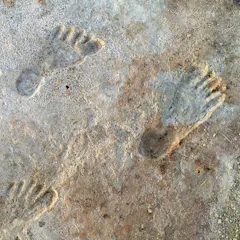
People who lived in New Mexico more than 20,000 years ago experienced rapid climate change.

The age of the rock art at Wetar means it could be one of the earliest places outside of Taiwan to document the Austronesian migration.

Through fossilized tooth enamel, scientists are reconstructing the diets and landscapes that existed millions of years ago. We really are what we eat.

An anthropologist’s new book lays out the formula for human innovation, from stone tools to supercomputers. Depending on developments in the next few years, AI could hit the gas or the brakes.
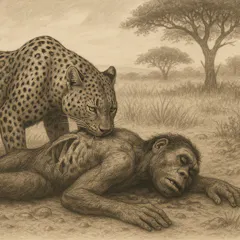
Paleoanthropologists have thought that Homo habilis was the first stone-tool maker and meat-eater in our genus. But new research suggests H. habilis might not have been so advanced.
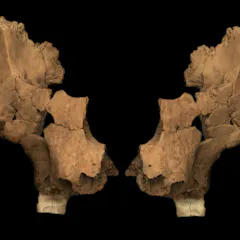
The bone fragments belong to an extinct species of human who lived 1.4 million years ago.

Two dental experts explain that these furthest-back molars may be a not-so-necessary leftover from early human evolution.

A changing climate, humans and fire were a deadly combination for the big animals that used to roam southern California. Listen to The Conversation Weekly podcast.

The findings reveal a close association between climatic conditions and early human migrations out of Africa.

New evidence from contested Laos cave site shows humans reached Southeast Asia at least 68,000 years ago.

Meet the archeologist who is overhauling our understanding of early human history.
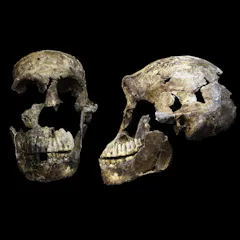
Homo naledi had a brain less than half the size of our own. Yet the new research claims it had cognitive abilities far beyond what we might expect.

45,000 years ago, people first started arriving in what’s known as Europe today. We thought a worsening ice age made them disappear – but it seems some lineages survived.
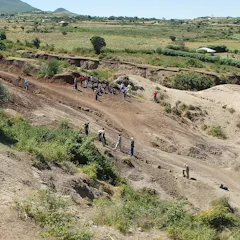
The findings suggest we weren’t the first advanced carnivore among the hominins, as has been previously assumed.

Rituals have been around for hundreds of thousands of years – but are they still useful today?

Our work provides new evidence against the theory that people living in Sahul drove the megafauna extinction.

Thousands of ancient genomes have been sequenced to date. A Nobel Prize highlights tremendous opportunities for aDNA, as well as challenges related to rapid growth, equity and misinformation.
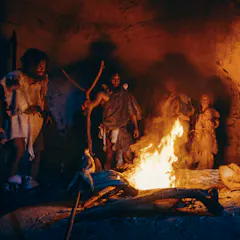
Around 200,000 years ago, people were living who were as intelligent as us.
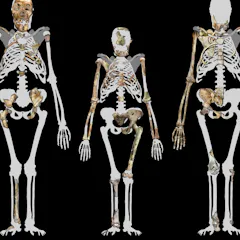
Walking has taken a very long time to develop, with evidence of bipedalism among early humans in Africa roughly 4.4 million years ago.
Top contributors
-

Director, ARC Centre of Excellence for Transforming Human Origins Research, Griffith University
-
Professor of Archaeology and Biological Anthropology, School of Social Science, The University of Queensland
-
Honorary Associate Professor, UNSW
-
Professor, Palaeontology, Griffith University
-
CENIEH Director, Atapuerca Research Team and author of "Homo imperfectus" (Ed. Destino), Centro Nacional de Investigación sobre la Evolución Humana (CENIEH)
-
Senior Lecturer in Psychology, Leeds Beckett University
-
Professor of Quaternary Science, Royal Holloway, University of London
-
Professor in Geochronology, School of Natural Sciences, Macquarie University
-
Arqueólogo y profesor, Centro Nacional de Investigación sobre la Evolución Humana (CENIEH)
-
Associate Professor of Osteoarchaeology, Uppsala University
-
Associate Professor of Anthropology, Binghamton University, State University of New York
-
Curator of Plio-Pleistocene palaeotology, Ditsong Museums of South Africa
-
Senior Research Associate in Translational Genomics, University of Oxford
-
Postdoctoral Research Fellow in Biology, Stanford University
-
Honorary Research Associate, Evolutionary Studies Institute, University of the Witwatersrand