

Australia’s IVF industry generates more than $800 million each year.
Articles on Fertility
Displaying 21 - 40 of 248 articles

Even though there are 8 billion people on Earth today, a catastrophe could send that number much lower within a few decades.

Male infertility is rising – but what if science can grow sperm in a lab?
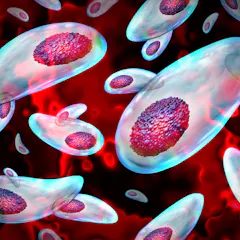
If you’ve handled cat litter or eaten raw meat or unwashed produce, there’s a chance you might have a permanent toxoplasmosis infection spread throughout your body.
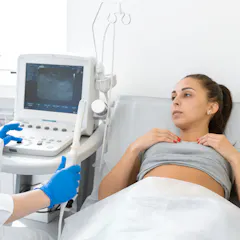
Reassurance scans are marketed as a way to ‘give you peace of mind’ about your baby’s development. But often those doing the scans aren’t actually sonographers.

Stem cell engineering and CRISPR were used to create mice with two male parents. Could we use this technique on humans?

What do we know about the chance of conceiving naturally after age 45? And what are the risks?

A new study has found a link between hormonal intrauterine devices (IUDs) and breast cancer. But media reports of a large increase in risk may cause unnecessary worry.

A decongestant called Mucinex is touted online as an aid for women wanting to conceive.

Less than 3% of teenagers in our study told us that they had been taught about specific reproductive health conditions such as endometriosis and PCOS.

Apps that track your menstrual cycle are part of a ‘femtech’ boom claiming to revolutionise women’s health. But many base predictions on an outdated idea of what’s normal.

Compared with voters who are trying to have kids or haven’t decided yet, those who definitely don’t want to have kids – known as the ‘child-free’ – have a different set of political priorities.

We hear a lot about women’s biological clock and how age affects the chance of pregnancy. But age also affects men’s fertility. Here’s how.
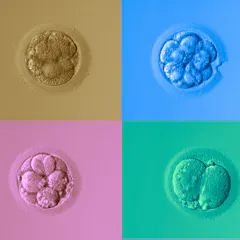
A study of more than 1,000 IVF patients showed a deep learning software system was almost as good as human experts at choosing viable embryos.

The abortion drug they’re talking about is mifepristone, otherwise known as RU486. It has been used in Australia since 2012, opening access to women who couldn’t previously access abortions.
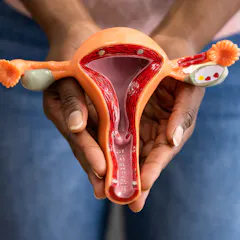
Rapamycin is commonly used to prevent organ transplant rejection.
Mitochondrial disease is an inherited condition with a poor prognosis. But a technique using a donated egg can stop this fault passing on to babies.

The latest census figures are released this week, but the long-term trends are already clear: we will soon be more Māori and more Asian, fertility rates are dropping, and more citizens are leaving.

Fertility in Australia has dropped to the point that without migration the population will start dropping from 2037.

Some women who use drugs like Ozempic have reported unexpected pregnancies. What’s going on?
Top contributors
-

Adjunct Senior Research Fellow, Global and Women's Health, School of Public Health & Preventive Medicine, Monash University
-
Senior Lecturer, School of Social Sciences and Humanities, Loughborough University
-
Senior lecturer in reproductive Biology, University of Sheffield
-
Reader / Associate Professor in Reproductive Science, Manchester Metropolitan University
-
Monash University
-
Adjunct clinical professor, Monash University
-
Assistant Professor of Sociology, University of South Carolina
-
NHMRC Emerging Leader Research Fellow in Reproductive Health, School of Public Health, University of Sydney
-
Professor and Director, Robinson Research Institute, Adelaide University
-
Emeritus Professor of Reproductive and Periconceptual Medicine, The Robinson Research Institute, Adelaide University
-
Professor of Social Science and Public Policy, Hong Kong University of Science and Technology
-
Professor of Reproductive Medicine, University of Dundee
-
Adjunct Professor, La Trobe University
-
Associate Professor,, The University of Melbourne
-
Assistant Professor of Obstetrics and Gynecology, UMass Chan Medical School