

In the past, when courts considered disputes over what to do with no-longer-wanted embryos, they typically considered them property. The Alabama ruling challenges this legal precedent.
Articles on Fertility
Displaying 41 - 60 of 248 articles

Holi is a symbolic celebration of spring, the harvest, new life and the triumph of good over evil.

IVF is a decades-old procedure that has allowed increasing numbers of prospective parents to have children. Evolving legislation may put it under threat.

A recent ruling from the Supreme Court of Alabama implies frozen embryos are legally equivalent to living children. This creates risks for IVF providers, and therefore problems for patients.

We found no discernable difference in how people rated family scenarios with one, two or three children.

Corporate medicine is hijacking feminist narratives around empowerment and women’s rights to market technologies, tests and treatments that aren’t backed by evidence.

Understanding how the ageing of sperm works in other animals is more important than ever as human male fertility is in decline.

In general, an ageing population puts added pressure on the working-age population to be more productive – just to maintain total output – amid growing fiscal constraints.

Preconception health refers to the many lifestyle changes you can make to benefit a future pregnancy.

The technology may be here sooner than we think. But we have so much to discuss first.

With sperm counts declining world wide, it’s important to know how to keep your sperm as healthy as possible.

Hybrid flowers became a metaphor for sterility at the end of the 19th century.

Talking about plans for childbearing is still seen as a taboo.
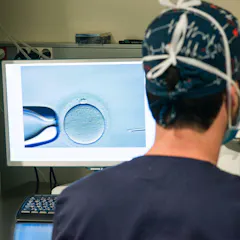
Spain is the egg donation capital of Europe. We hear what is driving women to donate in this episode of The Conversation Weekly podcast.

IVF doesn’t always work, but clinics often don’t make that clear to patients.

The landscape has been shifting when it comes to employer interest in employee fertility journeys.
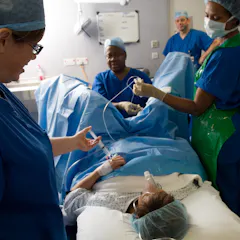
As part of my research, I interviewed egg donors and doctors and also observed women in fertility clinics to get a better sense of what the process was actually like.

Efforts to save one species can provide scientific knowledge that enables us to save other creatures in need.

South Korea’s fertility rate fell below the level needed to sustain a population in the mid-1980s – and it never recovered. It is now below one child per woman during her reproductive years.

The ‘egg timer’ blood test is marketed as an empowering way to give women insights to help them plan when to have children. Problem is, it can’t deliver what it promises.
Top contributors
-

Adjunct Senior Research Fellow, Global and Women's Health, School of Public Health & Preventive Medicine, Monash University
-
Senior Lecturer, School of Social Sciences and Humanities, Loughborough University
-
Senior lecturer in reproductive Biology, University of Sheffield
-
Reader / Associate Professor in Reproductive Science, Manchester Metropolitan University
-
Monash University
-
Adjunct clinical professor, Monash University
-
Assistant Professor of Sociology, University of South Carolina
-
NHMRC Emerging Leader Research Fellow in Reproductive Health, School of Public Health, University of Sydney
-
Professor and Director, Robinson Research Institute, Adelaide University
-
Emeritus Professor of Reproductive and Periconceptual Medicine, The Robinson Research Institute, Adelaide University
-
Professor of Social Science and Public Policy, Hong Kong University of Science and Technology
-
Professor of Reproductive Medicine, University of Dundee
-
Adjunct Professor, La Trobe University
-
Associate Professor,, The University of Melbourne
-
Assistant Professor of Obstetrics and Gynecology, UMass Chan Medical School