
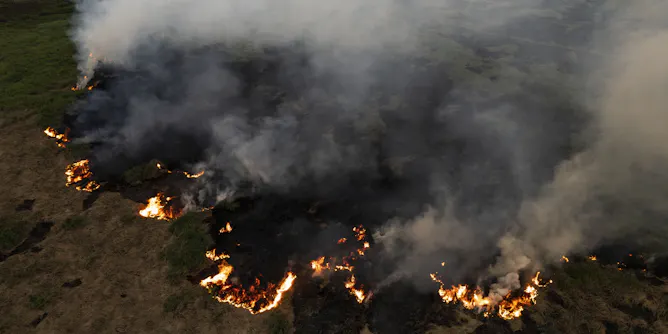
When environmental crises cross borders, government communication become crucial to managing their impacts and protecting Indonesia’s international reputation.
Articles on Forest fires
Displaying 1 - 20 of 96 articles
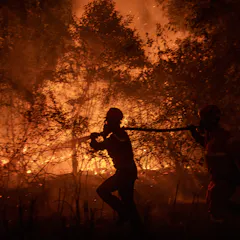
Southeast Asia’s recurring haze is rooted in Indonesia’s fires, but its regional impact calls for stronger ASEAN cooperation, accountability and prevention.
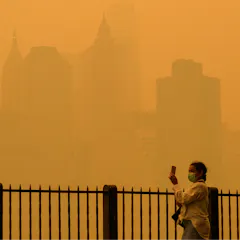
To understand what’s in the smoke you might be breathing, you have to look at where it’s been.
Kalimantan’s land fires aren’t just down to El Niño—they are caused by soil losing its ability to hold water. Prevention must start by restoring the soil’s natural balance.
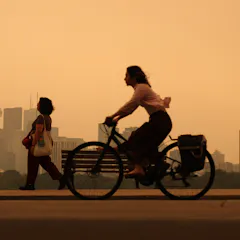
When you breathe in wildfire smoke, harmful particles can travel deep into your body.
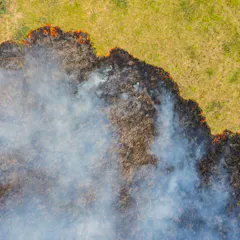
Studying the scale and intensity of previous fires can help us to detect thermal hotspots earlier and support faster, smarter crisis response and post-fire restoration.

Research shows that wildfires are causing more debris, sediment and chemicals to enter waterways, harming fish and other aquatic life.
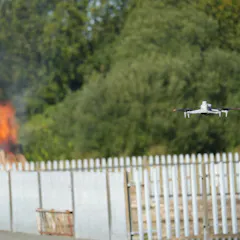
Inspired by the behaviour of flocks of birds, swarm intelligence is being used in drones to tackle the growing threat of wildfires.

The challenge is not firefighting capacity nor convincing people to help; it is coordinating efforts to prioritize safety and efficiency.
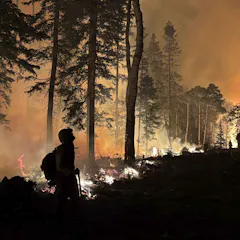
The Trump administration and members of Congress propose cutting environmental reviews and public involvement to boost logging. But data show reviews aren’t the problem.
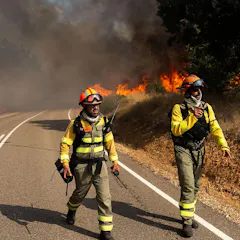
Proper forest management can boost rural economies, and prevents fires from starting in the first place.
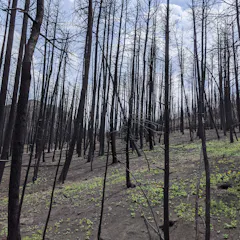
Scientists analyzed water quality in 145 watersheds after wildfires and found dramatic spikes in contaminants.
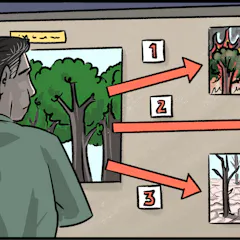
Park and forest managers can’t rely on the past any longer to understand future risks. Fires, pests and climate change are changing the game.
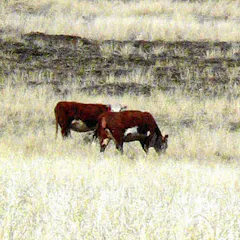
That delay can tip ranchers’ finances into the red. While the land needs time to recover, studies raise questions about whether two years is really necessary.
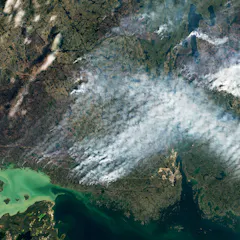
Global carbon emissions from forest fires have increased by 60% over the past two decades, with the largest contributions coming from fires in Siberia and western North America.

Reversals by British Columbia’s NDP and Conservative leaders may give the impression that the parties’ positions on climate have converged. But the contrasts are stark as election day looms.
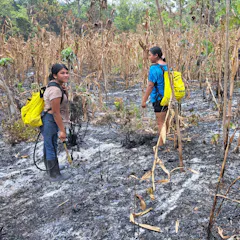
Recent wildfires in Belize shows how we must work together to revitalize Indigenous knowledge systems and plant the seeds of collaborative climate action.

Carbon lost during the 2018 fire season in Sweden could take 40 years to return to trees and soil.

Containing and extinguishing mega blazes like the one that reached Jasper is an all-hands-on-deck affair that draws upon expertise from around the world.

Fire events, like the one which has destroyed much of Jasper, will only get worse in a warming world. Canada needs a national wildfire strategy to meet these challenges.
Top contributors
-

Professor of Geography and Director of the Centre for Wildfire Research, Swansea University
-
Professor of Fire Ecology, University of Montana
-
Distinguished Professor of Ecology, Fenner School of Environment and Society, Australian National University
-
Research Associate, University of New South Wales, and Adjunct Associate Professor, Curtin University
-
Professor of Forest Protection, IPB University
-
Professeur écologie et aménagement forestier, Université du Québec en Abitibi-Témiscamingue (UQAT)
-
Research Fellow, Fenner School of Environment and Society, Australian National University
-
Research Fellow, Australian National University
-
Tenured Scientist (IMB-CSIC, Spain) & Honorary Associate Prof. (SU, UK), Swansea University
-
Chief Research Scientist, CSIRO Environment; Executive Director, Global Carbon Project, CSIRO
-
Professor in Soil-Landscape Modelling, University of Sydney
-
Associated Professor, Department of Geography, University of Minho
-
PhD Candidate in Political Science and International Relations, Queen's University, Ontario
-
Professeur-chercheur en écologie forestière, Université du Québec à Chicoutimi (UQAC)
-
Associate Professor of Civil Engineering, Boise State University; United Nations University