

The Big Cypress fox squirrel is losing its habitat to urban and suburban development. But a few design changes could help to save this and other species.
Articles on Green cities
Displaying 1 - 20 of 38 articles

As urbanisation accelerates across India, the importance of urban forests is becoming more crucial.

Paying attention to soundscapes within the landscape design process can create a stronger sense of place and reduce unwanted noise.
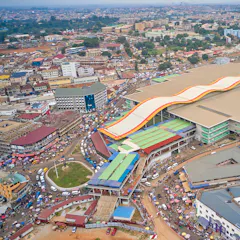
Kumasi was once considered among west Africa’s greenest cities.

Managed well, golf courses can bring nature back to our cities. Here’s how to balance the good and bad for urban biodiversity.

Bioarchitecture draws on design principles from nature to construct buildings that work in ways that help tackle climate change and reverse environmental damage.

Ad hoc, lot-by-lot efforts to house more people in our ageing suburbs are failing to increase liveability and sustainability. Our cities need strategic, precinct-scale regeneration.

Experts in city government are missing the perspective of residents.

Cities occupy just 3% of the Earth’s surface, yet more than half the world’s population live in urban environments. We need nation-wide plans to keep our cities cool so no one gets left behind.

Making cities greener is a vital endeavour – but one that comes with potential pitfalls.
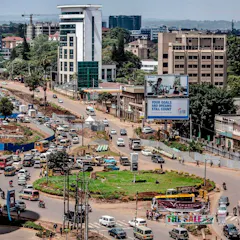
Parts of Nairobi are already dealing with temperature increases and reduction in humidity. These conditions are associated with increases in mortality, especially in children and the elderly.

The release of a roadmap for green roofs, walls and facades in Australia can help our cities catch up with the world leaders in urban greening.

Sleep might be a key factor in the link between greener neighbourhoods and better health. A new study shows living in an area with more tree canopy improves people’s odds of getting enough sleep.
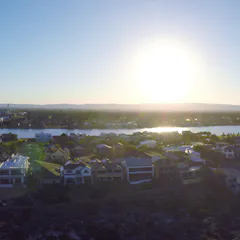
At the peak of a summer heatwave in Adelaide, an aerial survey of land surface temperatures reveals just how much cooler neighbourhoods with good tree and vegetation cover can be.
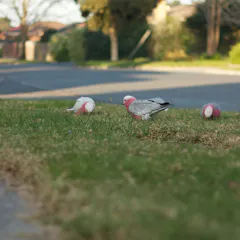
When so much of the green space in our cities is in the form of nature strips, current restrictions on plantings are denying us the many social and environmental benefits of more diverse greenery.
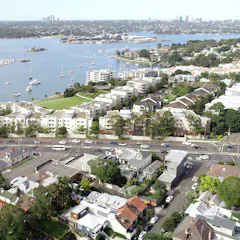
Greater urban density is making it harder to preserve, let alone increase, tree cover. It’s vital, then, to demonstrate the full value of green infrastructure for healthy liveable cities.

Thirty tree species make up more than half of Australia’s urban forests. Some won’t survive climate change, so cities must plant a more diverse mix of the right species to preserve their tree cover.
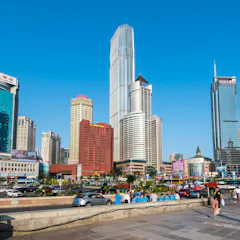
Australia has well established urban design guidelines, whereas many Chinese cities don’t have any – and it shows. But Australia can also learn from China.

Expanding green cities needs a holistic approach, and learning from Melbourne and Canberra is a good place to start.

Not all of the solutions to the climate and ecological crisis have to be painful.
Top contributors
-

Associate Professor in Urban Science, University of California, Davis
-
Associate Director Smart Green Cities, Macquarie University
-
Professor, School of the Built Environment, University of Technology Sydney
-
Associate Professor in Planning, University of Technology Sydney
-
Distinguished Professor, Director of Smart Green Cities, Macquarie University
-
Professor and Head of School of Architecture and Built Environment, University of Newcastle
-
Honorary Associate Professor, Forest Measurement and Management, Fenner School of Environment and Society, Australian National University
-
Academic, Landscape Architecture and Urban Ecology, The University of Melbourne
-
Research Fellow, School of Natural and Built Environment, Queen's University Belfast
-
Professor and ARC Future Fellow, Hawkesbury Institute for the Environment, Western Sydney University
-
Spatial analyst, Macquarie University
-
Adjunct professor, School of Media and Communications, RMIT University
-
Vice-Chancellor's Research Fellow, Centre for Urban Research, RMIT University, RMIT University
-
Professor of International Planning, Centre for Urban Research, RMIT University
-
Senior Lecturer, School of Built Environment, University of Technology Sydney