
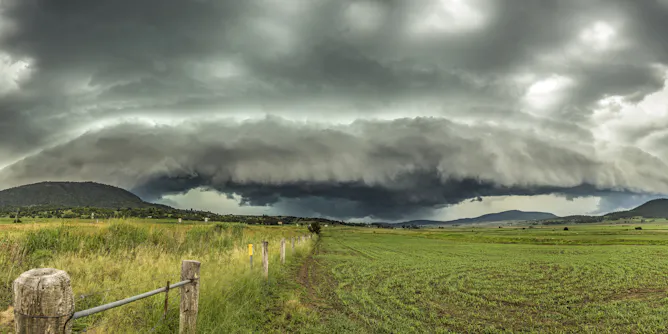
The State of the Environment 2016 report shows that the main drivers of environmental change in Australia are land-use change, habitat destruction, invasive species and climate change.
Articles on Land use
Displaying 101 - 111 of 111 articles

Most big city cemeteries in Australia date back to the 1800s, so we need to consider our burial options before we reach the point when the number of deaths exceeds the available cemetery plots.
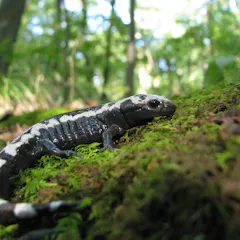
Animals and plants will need escape hatches to move to cooler climes as the planet warms, but few parts of the U.S. have the natural habitat available for these migrations.
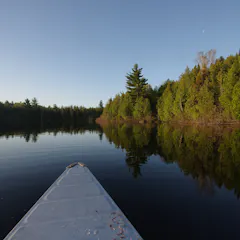
Almost 100 years ago, the foundations to preserve the Boundary Waters in Minnesota for recreation were put in place. Now residents are debating whether to allow a mine in its headwaters.

What are the issues facing rural and regional Australia? The challenges are many and varied – and only some have made the national political agenda – but these areas deserve better than neglect.
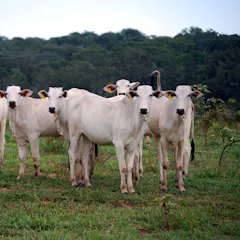
Widespread adoption of a largely meat-free diet could feed the world and leave our forests intact.
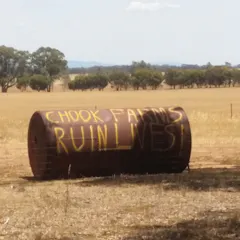
As consumption has soared and prices have fallen, the realities of industrial chicken farming often clash with the values of people who live on the urban fringes where broiler farms are sited.

Farms on Sydney’s fringes supply 20% of the city’s food. That could drop by more than half if urban sprawl isn’t kept in check.
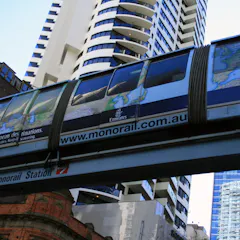
Infrastructure Australia’s latest report is substantial but, critically, it fails to incorporate the transport thinking needed to develop more compact cities that work better for everyone.
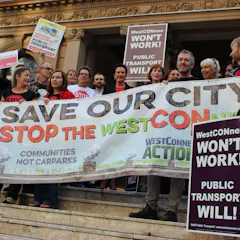
Tensions are mounting between the professional practices of government planners, processes of public participation and the private sector’s increasing role in shaping Australian cities.
Constant, complex changes in cities and mine sites are hard to monitor. Drawing on digital aerial photography, it’s now possible to track land-use and vegetation changes in areas as small as 10-20cm.
Top contributors
-

Lecturer in Conservation, The University of Queensland
-
Professor in Conservation Science, School of the Environment, The University of Queensland
-
Research associate, The University of Melbourne
-
Oppenheimer-Jamma Research Chair in African Wildlife Economies, Stellenbosch University
-
Senior Lecturer in Chemical and Renewable Energy Engineering, University of Newcastle
-
Senior Research Fellow, School of Geography, Earth and Atmospheric Sciences, The University of Melbourne
-
Professor of International Planning, Centre for Urban Research, RMIT University
-
Research Scientist, CSIRO
-
Associate Professor, Centre for Sustainability Transitions, Stellenbosch University
-
Professor of Human Geography, The University of Queensland
-
Senior Lecturer in Urban and Environmental Planning, Griffith University
-
PhD Candidate, Doctor of Social Sciences, Royal Roads University
-
Associate Professor, Deakin University
-
Researcher in Conservation Decision Science and Land Use, University of Oxford
-
Associate Professor, Institute for Sustainable Futures, University of Technology Sydney