
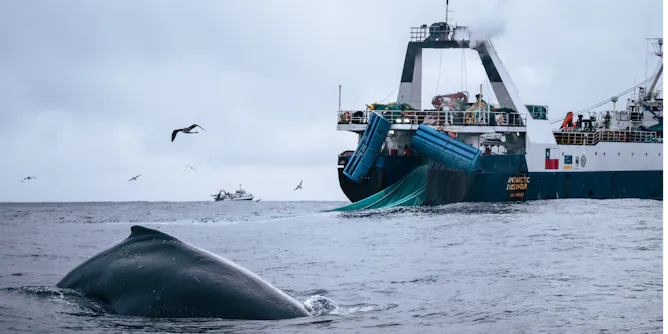
The Southern Ocean’s krill-rich waters attract multiple species of filter-feeding whales – and, increasingly, fishing boats.
Articles on Marine biology
Displaying 21 - 40 of 198 articles
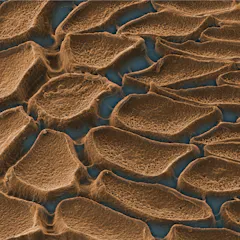
Researchers can use powerful microscopes to capture the tiny teeth in squid suckers.
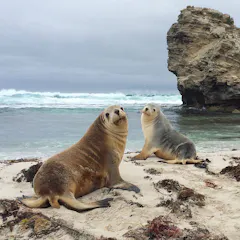
Using cameras and trackers attached to Australian sea lions, we explored previously unmapped ocean habitats off the South Australian coast. The data also fed into predictive computer models.
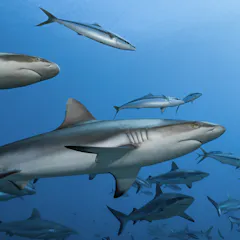
A broad review of shark research shows that sharks play critical roles in keeping ocean ecosystems such as coral reefs and seagrass beds healthy.
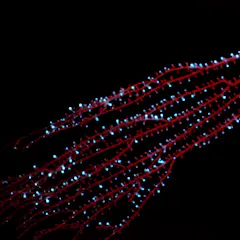
Dozens of animals, some on land but many in the ocean, can produce light within their bodies through chemical reactions. Scientists are still trying to understand when and why this trait developed.
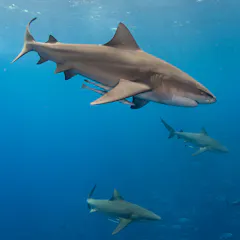
New research shows climate change can drive sudden ocean cooling too. This can have devastating effects on marine life such as bull sharks and manta rays.
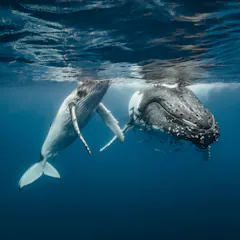
There’s so much we still don’t know about whales. Here’s 3 amazing new things we’ve learnt about whales lately: how humpback whales have sex and give birth – and how baleen whales sing underwater.
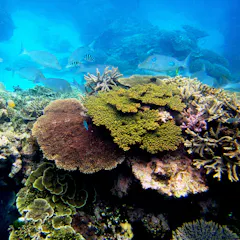
Just as the world’s zoos breed critically endangered animals in captivity to repopulate the wild, scientists are building a global effort to freeze corals for reef restoration.
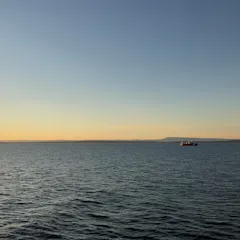
Atlantic halibut are making a strong comeback in the Gulf of St. Lawrence. But how do we know where the fish move throughout their lives?
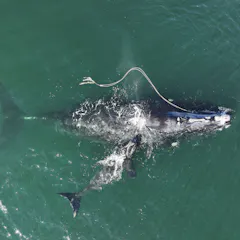
Even when female North Atlantic right whales survive entanglement in fishing gear, it may affect their future ability to breed, increasing the pressure on this critically endangered species.
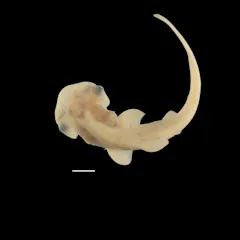
Because hammerhead sharks give birth to live young, studying their embryonic development is much more complicated than harvesting some eggs and watching them develop in real time.
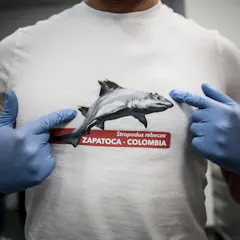
‘Jaws,’ published in 1974, terrified the public of sharks, but it also brought shark research into the scientific mainstream.
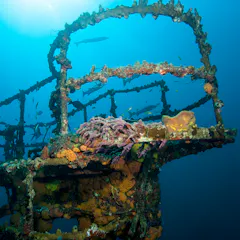
Artificial reefs are structures that humans put in place underwater that create habitat for sea life. A new study shows for the first time how much of the US ocean floor they cover.
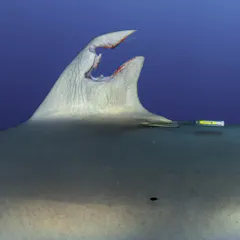
After scientists’ GPS tracking tag was violently removed from one shark’s dorsal fin, they were in for a surprise: The wound didn’t just heal, but the missing tissue grew back.
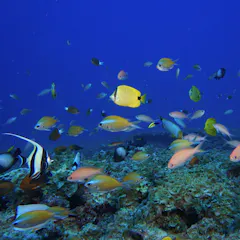
There are so many fish in the ocean that if you took them out, important habitats and food sources for many creatures would be lost.
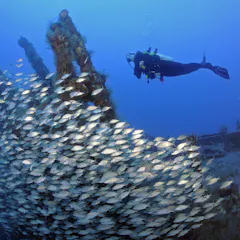
When ships sink, they add artificial structures to the seafloor that can quickly become diverse, ecologically important underwater communities.
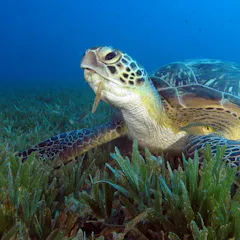
Global marine life is on the move with significant consequences – new study.

Researchers are finding alarming concentrations of persistent pollutants such as PFAS in Australian dolphins. These record-breaking levels are cause for concern.
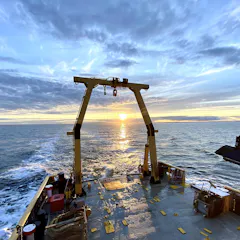
The waters of the St. Lawrence are running out of breath and bottom-dwelling organisms are already feeling the effects. Here’s how ecosystems are reacting.
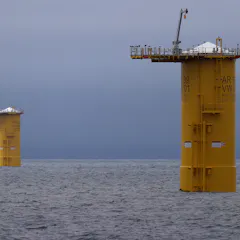
A recent study focusing on how offshore wind farms in Massachusetts waters could affect endangered right whales does not call for slowing the projects, but says monitoring will be critical.
Top contributors
-

Professor, Macquarie University
-
Senior Curator of Marine Invertebrates, Museums Victoria Research Institute
-
Executive Dean of the College of Arts, Sciences & Education and Professor of Biological Sciences, Florida International University
-
Associate Professor of Biology, Stephen F. Austin State University
-
Faculty Research Associate in Marine Biology, Arizona State University
-
Professor, Marine Biology, Adelaide University
-
Professor of Marine Botany, The University of Western Australia
-
Postdoctoral associate, University of Florida
-
Royal Society University Research Fellow, University of Sheffield
-
Research Marine Biologist, National Oceanic and Atmospheric Administration
-
Associate professor, University of Rhode Island
-
Founding Professor of the Minderoo-UWA Deep-Sea Research centre, The University of Western Australia
-
PhD Researcher in Marine Ecology, University of Exeter
-
Professor of Biology and Director, Kewalo Marine Laboratory, University of Hawaii
-
Professor in marine ecology, UNSW