

People with intellectual disability experience higher rates of mental ill health than the rest of the population, so NDIS can be doubly relevant.
Articles on NDIS
Displaying 181 - 200 of 268 articles

The NDIS aims to help people with disability live more independently. It was hoped this would reduce carers’ responsibilities and allow them more time to work. But evidence shows this hasn’t happened.

The NDIS is required by law to provide ‘reasonable and necessary’ supports. But what this means is often subjective, and depends on the assessor.

We are getting closer to being able to apply private sector rigour to the examination of public sector projects with social benefits.

We don’t actually know how NDIS participants weigh their personal goals and then make choices about achieving them through services, supports, therapies and interventions.
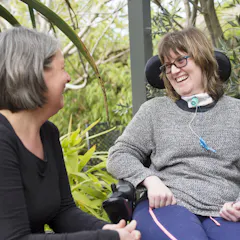
The NDIS has started to reduce the admissions of young people with disabilities to aged care facilities, but more than 6,000 are still waiting for more suitable accommodation.
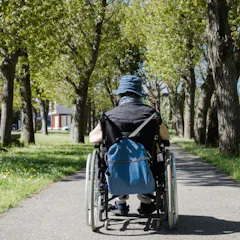
Treasurer Scott Morrison abandoned the proposed increase to the Medicare levy to pay for the NDIS. Here’s what you need to know about how the NDIS is funded, and how cost predictions have changed.

The NDIS is set to reshape Australian cities. But to achieve meaningful participation of people with disabilities, urban communities and services will also need to take action.
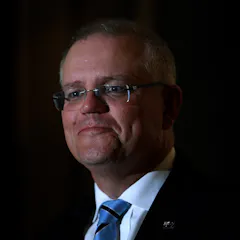
The government is pinning its hopes on making this election all about tax – casting itself as champion of lower tax and Labor as signed up to what Morrison dubs the “high tax club”.
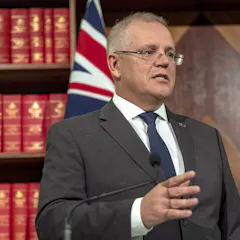
Treasurer Scott Morrison will argue that a stronger budget outlook means the increase in the Medicare levy is no longer required.

While disability carers are employed to work part-time hours, they often have long work days with short periods of work interspersed with non-work periods.

The NDIS is allowing for Specialist Disability Accommodation for 28,000 people, with 17,500 already in such housing. The potential demand for this life-changing supported housing is even greater.

The NDIS was set up with the philosophy of choice and empowerment. Yet participants have little control over their support plans and aren’t allowed to view them before they are approved.

The federal government is trying to make Australians more financially literate, but it’s using a definition that ignores many political, economic and cultural factors.

Parents need support from early childhood educators to build capacity to claim for NDIS services.

There are several problems with the recently released guidelines for diagnosing autism. But the fundamental issue is that we’re striving for diagnosis first, and help later.

The NDIS has the resources and mandate to develop a mature market that delivers suitable housing for people with high disability needs, including the more than 6,200 young people now in aged care.

The census needs to count people who identify as having a disability, as well as those who require government support.

The 2016 Census reveals that Australia is becoming much more diverse – in terms of language, country of birth, Indigenous status, and religion.

The Productivity Commission has described the roll-out to the full scheme as “highly ambitious” and expresses concern it risks not being implemented as intended.
Top contributors
-

Professor, Public Service Research, UNSW
-
Professorial Fellow, University of Canberra
-
Adjunct Professor, Summer Disability Research Centre, La Trobe University
-
Professor, Rehabilitation, Ageing and Independent Living Research Centre and Occupational Therapy Department, School of Primary and Allied Healthcare, Monash University
-
Deputy Director, The Kids Research Institute Australia, Professor of Autism Research, The University of Western Australia
-
Professor, Centre for Disability Research and Policy, University of Sydney; RMIT University
-
Disability Program Director, Grattan Institute
-
Senior Research Fellow, Crawford School of Public Policy, Australian National University
-
Professor & Senior Principal Research Fellow, The Kids Research Institute Australia
-
Professor, Social Policy Research Centre, UNSW
-
Adjunct Senior Research Fellow, Living with Disability Research Centre, La Trobe University
-
Senior Lecturer in Public Policy and Politics, UNSW
-
ARC Research Fellow in Indigenous Health, Disability and Community Development, University of Sydney
-
Senior Lecturer Economics, Deakin University
-
Senior Lecturer of Wellbeing Science, The University of Melbourne