

The fund is nothing more than a rebadging exercise in the hope people might think it is a new policy. And it’s being used to airbrush public hospitals out of the Medicare picture.
Articles on NDIS
Displaying 201 - 220 of 268 articles
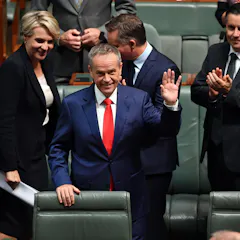
Bill Shorten has said Labor will oppose the budget’s increase in the Medicare levy hitting taxpayers on incomes under A$87,000.

Health announcements in the federal budget include a slow lifting of the Medicare rebate freeze, money for new medicines, and an increase in the Medicare levy to fund the NDIS.

The NDIS roll-out has been criticised for many glitches, but that doesn’t mean the scheme is failing.
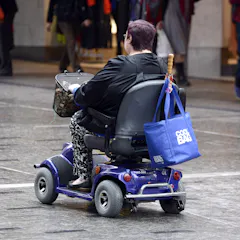
If you look at past budgets, the proposed cuts in social security programs are disproportionate to the amount the government spends.

We know predators will continue to target the vulnerable, including children and people with disability. The NDIS will mitigate some of the issues in this space, but we need a royal commission too.

New rules offer the possibility of an inclusive Australian society that enables people with the highest disability-related support needs to have equal access to mainstream services including housing.

A new study has for first time placed a dollar value on how much it would cost the government to replace those who unofficially care for family members with mental illness.

By excluding prisoners from the NDIS, the federal government is discriminating against prisoners with a disability in direct contravention of our international human rights obligations.

Shared ownership schemes can unlock access to suitable housing, although these are less common in Australia than overseas. And most are not specifically tailored for people with disability.

Health spent a lot of time in the spotlight in 2016. Medicare was a major issue in Australia’s federal election and numerous government reviews into health were announced and reported.
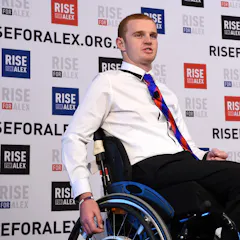
Alex McKinnon’s case marks the first time a player has directly sued rugby league’s national governing body over an on-field injury in Australia.
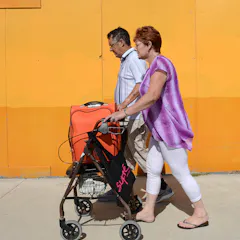
The roll out of the NDIS means disability service providers and the people they employ are exposed to more market forces and this could result in protection for workers.

Andrew Dodd talks to Rhonda Galbally and Bruce Bonyhady about their role in setting up the National Disability Insurance Scheme.

The NDIS has laudable aims but how much funding will be available to enable participation in arts therapy?
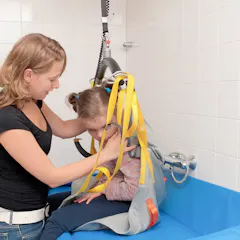
The NDIS’s aspiration of providing user choice and control represents considerable challenges to disability service providers.

The NDIS provides an opportunity to address the shortfalls of the former institutionalised service system, some of which uniquely impact Indigenous Australians.

Many people eligible for the NDIS are likely to miss out on its benefits. These groups include people who don’t think they have a disability and those who don’t know about the NDIS and how to apply.

Informal early support through intervention programs helps parents understand their child’s newly diagnosed disability. But what will happen when, under the NDIS, these services no longer exist?

Society hasn’t always seen people with disabilities as having the same rights at everyone else. So how did we get to the NDIS, which offers people with disabilities with choice and control?
Top contributors
-

Professor, Public Service Research, UNSW
-
Professorial Fellow, University of Canberra
-
Adjunct Professor, Summer Disability Research Centre, La Trobe University
-
Professor, Rehabilitation, Ageing and Independent Living Research Centre and Occupational Therapy Department, School of Primary and Allied Healthcare, Monash University
-
Deputy Director, The Kids Research Institute Australia, Professor of Autism Research, The University of Western Australia
-
Professor, Centre for Disability Research and Policy, University of Sydney; RMIT University
-
Disability Program Director, Grattan Institute
-
Senior Research Fellow, Crawford School of Public Policy, Australian National University
-
Professor & Senior Principal Research Fellow, The Kids Research Institute Australia
-
Professor, Social Policy Research Centre, UNSW
-
Adjunct Senior Research Fellow, Living with Disability Research Centre, La Trobe University
-
Senior Lecturer in Public Policy and Politics, UNSW
-
ARC Research Fellow in Indigenous Health, Disability and Community Development, University of Sydney
-
Senior Lecturer Economics, Deakin University
-
Senior Lecturer of Wellbeing Science, The University of Melbourne