

People with disabilities have a right to choose where and who they live with. Too many are currently in vulnerable arrangements.
Articles on NDIS
Displaying 121 - 140 of 268 articles
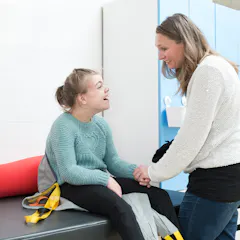
Making it possible for NDIS participants to choose registered or unregistered providers affords the ‘dignity of risk’.

A serious disability is one of the most common reasons people apply for social housing. The long wait for a suitable home just adds to the daily challenges they face.

Kids with disabilities need support to gain and maintain friendships. But there are benefits for everyone when social inclusion works.
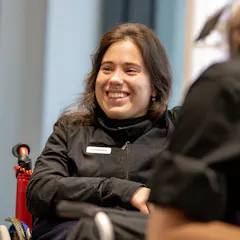
Much has been said and written about the projected cost of the NDIS. We wanted to draw on the valuable knowledge of scheme participants and their families.

The budget forecast steep NDIS costs, but also allocated funds to review and support the scheme in sustainable ways that could contribute positively to the economy.

Behind the planning process sits an opaque system of automated decision-making. It rests on a generated plan, called a ‘typical support package’.
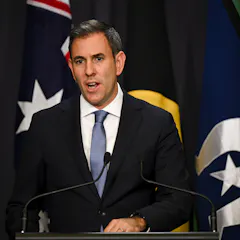
With cost blow-outs and global economic strife looming, the economic challenge for the Albanese government is great.
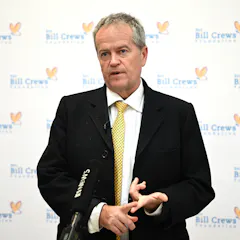
Michelle & Amanda 18.10
In this podcast, Michelle and politics + society editor Amanda Dunn discuss next week's budget, which is set to slash Coalition programs and promises and implement the Albanese government's priorities
Chalmers was careful during the campaign to reject the idea of a tax-to-GDP cap. He is going to have to raise much more tax, and start a conversation about how – beginning with next week’s budget.
Michelle & Bill Shorten
Registered providers have been warned they'll be reined in on "price gouging" as part of the bid to curb costs.

In determining eligibility, the NDIS should focus on who an individual is – their strengths, challenges and functional capacity – rather than what diagnosis they may have.
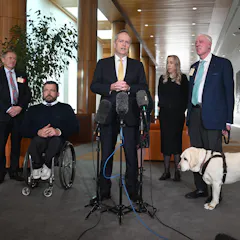
The original vision for the NDIS was that it would give people with disabilities a say in how services are delivered. The appointment of an NDIA chair who is disabled is a positive move.

NDIS participants want to call the shots when it comes to everyday support. And they want to be treated like people, not commodities.

Some NDIS participants worry if they don’t spend their annual funds, they won’t be offered the same supports in their next plan – and it’s harder for some to use what they’ve been allocated.
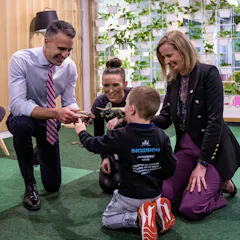
Appointing an assistant minister for autism signals the neurodevelopmental condition is a priority – but a focus on it shouldn’t come at the expense of other conditions.

The NDIS offers support for activities of daily living, but doesn’t count parenting in this category.

Reports of large scale NDIS fraud show it’s time to work with participants and involve them in oversight.
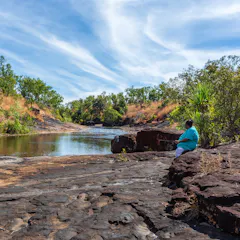
Reports of barriers facing Indigenous people with disability in remote communities are not new. Let’s stop relying on old excuses.

A decade on from the establishment of the NDIS, we spoke to participants. Their feelings about it ranged from frustration to joyous gratitude.
Top contributors
-

Professor, Public Service Research, UNSW
-
Professorial Fellow, University of Canberra
-
Adjunct Professor, Summer Disability Research Centre, La Trobe University
-
Professor, Rehabilitation, Ageing and Independent Living Research Centre and Occupational Therapy Department, School of Primary and Allied Healthcare, Monash University
-
Deputy Director, The Kids Research Institute Australia, Professor of Autism Research, The University of Western Australia
-
Professor, Centre for Disability Research and Policy, University of Sydney; RMIT University
-
Disability Program Director, Grattan Institute
-
Senior Research Fellow, Crawford School of Public Policy, Australian National University
-
Professor & Senior Principal Research Fellow, The Kids Research Institute Australia
-
Professor, Social Policy Research Centre, UNSW
-
Adjunct Senior Research Fellow, Living with Disability Research Centre, La Trobe University
-
Senior Lecturer in Public Policy and Politics, UNSW
-
ARC Research Fellow in Indigenous Health, Disability and Community Development, University of Sydney
-
Senior Lecturer Economics, Deakin University
-
Senior Lecturer of Wellbeing Science, The University of Melbourne