

New research identifies the multiple ways in which brain changes may be helpful adaptations to the challenges of aging.
Articles on Neuroscience
Displaying 1 - 20 of 866 articles
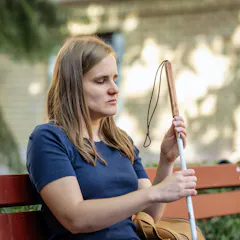
The brain’s ability to process sound more consistently may influence how well you’re able to discriminate between different sounds.

A new study compares the songs of 367 bird species with song and speech from 52 human languages to reveal shared acoustic patterns.

MRI can detect tiny changes in the brain, yet conditions such as epilepsy and migraine may leave no visible trace. Here’s what brain scans can and cannot tell us.

A recent experiment found that people working with ChatGPT generated fewer unique ideas than those who collaborated with other humans.

James Acaster, Maya Jama and King Kenny must make another contestant yawn. Is that possible?
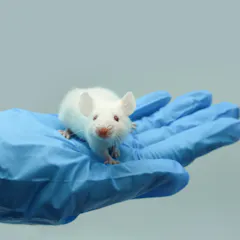
We infer what animals experience from how they behave. But can we rely on those same inferences after substantially altering their brains?
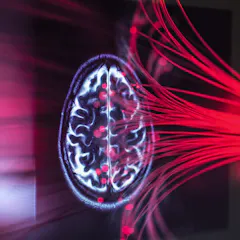
Optogenetics, a field that started with an algae gene, is shedding light on new treatments for eye and neuropsychiatric conditions.

When trying to study the brain networks that underlie the production of laughter, things can get very difficult very quickly.

From algae to a Nobel prize: listen to The Conversation Weekly podcast to hear Karl Deisseroth explain his brain science breakthrough.

Detecting impaired motor function in infants using AI-driven motion capture is producing promising results. A French research team introduces the new screening tool for spinal muscular atrophy (SMA).
Neuroscientific advances follow a pattern of visualizing the brain, measuring its function and then controlling it. Optogenetics may lead to a new era of medical treatment.
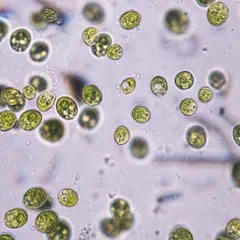
Karl Deisseroth, Peter Hegemann and Georg Nagel won for optogenetics, a technique that uses light to switch brain cells on and off.

Noises that aren’t nerve-wracking for most people can trigger intense stress in people with misophonia.

Here’s what more than 150 years of science really tells us about being left-brained vs right-brained.

Ageing isn’t all downhill – science shows we gain more than wrinkles.

Research on how heading to a museum could be good for the brain and general wellbeing suggests that culture fixes are an important resource for public health and social cohesion.

Advertising can turn our fears about aging, failure and belonging into reasons to buy, and repeated exposure can reshape what we see as a good life.
Surgery can restore communication between the hand and brain, but new research suggests the brain’s response to individual fingers may change.

An MRI study zeroes in on the brain networks that underline collective appreciation of art.
Top contributors
-

Professor of Clinical Neuropsychology, University of Cambridge
-
Penn State
-
Postdoctoral Research Associate, Cognitive Neuroscience, University of Cambridge
-
Senior Lecturer (Adjunct), Nutritional neuroscientist, Adelaide University
-
Head of Developmental Psychobiology Lab, Deakin University
-
Postdoctoral Researcher in Cognitive Neurosciences, The University of Queensland
-
Senior Research Fellow, Uehiro Centre for Practical Ethics, University of Oxford
-
Professor of Anatomy, University of Bristol
-
Professor Emeritus of Cognitive NeuroImaging, Aston University
-
Professor of Cognitive Neuroscience, Bangor University
-
Senior Research Fellow, The Perron Institute for Neurological and Translational Science, and Faculty of Health Sciences, Curtin University
-
Associate Professor of Family & Community Medicine and Pediatrics, retired, University of California, San Francisco
-
Professor of Behavioral Neuroscience, University of Richmond
-
Lead, Cognition and Consciousness Imaging Group, Division of Anaesthesia, University of Cambridge
-
Associate Professor in Clinical Psychology and Neuropsychology, Trinity College Dublin