

Debunking alien claims matters, but so does telling richer, more compelling stories about how humans shaped their own past.
Articles on Pseudoscience
Displaying 1 - 20 of 41 articles
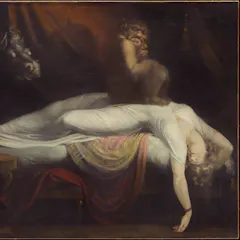
Conspiracy thinking, supernatural beliefs and pseudoscience can seem impervious to evidence. An anthropologist suggests the opposite: Extraordinary beliefs may be supported by an individual’s experience.
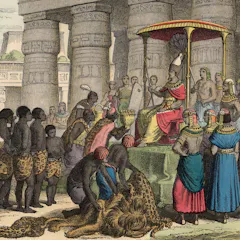
There was a reason Southern businessmen and thinkers were inspired by ancient Egypt: To them, it served as proof that all great civilizations were hierarchal societies sustained by enslaved labor.
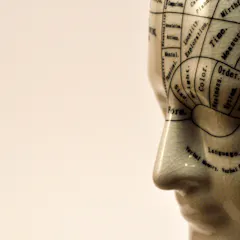
Phrenologists provided middle-class people with an early kind of self-help guidance.

It’s easy to get caught up in the promise of quick health fixes, but they are generally too good to be true.
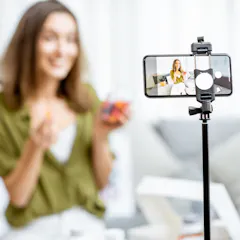
How do we distinguish between valuable information from legitimate health experts, and pseudoscientific nonsense from unscrupulous wellness influencers?
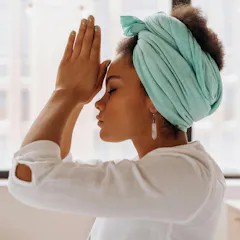
A psychology professor debunks Rhonda Byrne’s world-bestselling book and film – and her theory of personal success through a magical connection with the universe.
Big names in consciousness research have signed an open letter attacking ‘integrated information theory’ as pseudoscience, sparking uproar.

A university course teaches students why people believe false and evidence-starved claims, to show them how to determine what’s accurate and real and what’s neither.
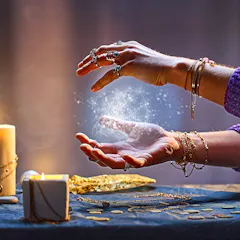
How Prince Harry using a psychic to contact his dead mother, Princess Diana, isn’t that unusual.

A sociologist unpacks how common superstitions like fear of 13 can gain steam.
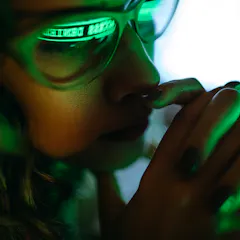
The claims made by the creators of the app – which highlights parts of words to supposedly enhance users’ reading abilities – are dubious.
Numerology ties in with how our brains work, but that doesn’t mean its claims make sense.

As Western and Indonesian academics continue to engage in co-operation, we should find common ways of counteracting discrimination, including discriminatory practices against the LGBT community.

Many elite athletes turn to alternative therapies to improve performance and enhance recovery. But are these treatments helping or hindering their quest for sporting success?

In the digital age, and the COVID era, this is more important than ever.

The internet has allowed pseudoscience to flourish. Artificial intelligence could help steer people away from the bad information.
Alternative therapies have a lot to offer consumers. The Goop Lab only serves to set back the wellness cause.
Gwyneth Paltrow’s new Netflix series, The Goop Lab, raises serious questions about the spread of health misinformation as well as the conflict of interest the show represents.
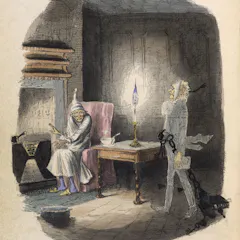
Sometimes the unknown is more appealing than the truth – and it has kept ghost hunters in business for generations.
Top contributors
-

Associate Professor in Astronomy, Monash University
-
Distinguished Professor Emeritus of Sociology, University of South Carolina
-
Professor in Applied Cognitive Psychology, Manchester Metropolitan University
-
Senior Lecturer and Researcher in Cognitive and Parapsychology, Manchester Metropolitan University
-
Deputy Director, Twins Research Australia & Professor in Genetics and Cell Biology, Deakin University
-
Doctoral Candidate in Evolutionary Anthropology, University of California, Davis
-
Professor of Research Methodology, University of Essex
-
Emerita Professor of Religious Studies, San Diego State University
-
Postdoctoral Researcher in Cognitive Neurosciences, The University of Queensland
-
Director at Pro Scientia UK, University of Birmingham
-
Senior Lecturer, Australian National Centre for the Public Awareness of Science, Australian National University
-
Emeritus professor, University of Wollongong
-
Professor of Cognitive Neuropsychology, University of Hertfordshire
-
Associate Professor of Marketing, California State Polytechnic University, Pomona
-
Previous Vice President of the Academy of Science of South Africa and DSI-NRF SARChI chair in Fungal Genomics, Professor in Genetics, University of Pretoria, University of Pretoria