
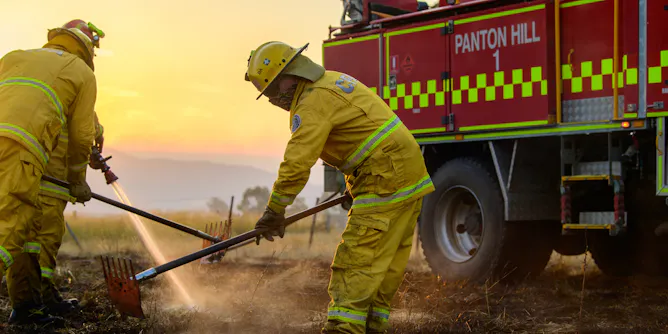
Over the past 12 months, the federal government has approved multiple fossil fuel projects and cut climate science funding.
Articles on Remote communities
Displaying 1 - 20 of 49 articles

Villagers are picking up the pieces after a catastrophic flash flood ripped through the region.

A catastrophic flash flood ripped through local villages and has claimed hundreds of lives.
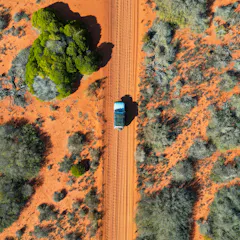
Climate change is disproportionately affecting remote First Nations communities – as three experts explain.
Remote Indigenous communities are bearing the brunt of the latest diphtheria outbreak. Inadequate housing may be one reason why.

When fires and floods hit, Aboriginal communities are often left to recover without much, if any, government support.

Evacuations do not impact everyone the same way, and Indigenous evacuees can be re-traumatized and treated poorly.

The challenge is not firefighting capacity nor convincing people to help; it is coordinating efforts to prioritize safety and efficiency.
One woman involved in our study realised her husband could be at risk of a heart condition. Her knowledge meant he got diagnosed – and had an urgent, life-saving quadruple bypass surgery soon after.

Small renewable energy systems are replacing dirty diesel generators in remote communities. This study of 20 Australian microgrid feasibility projects reveals widespread benefits.

Growing and changing demands for water and the increasing impacts of climate change are adding to the challenge of ensuring everyone has access to a safe and reliable water supply.
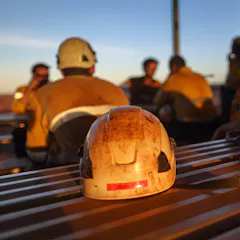
As we launch into a Future Made in Australia, we need to map and better understand the social and economic risks – as well as potential benefits – for remote and disadvantaged communities.

Last week, the High Court ruled the community of Santa Teresa could be compensated for the “distress and disappointment” caused by their poor housing. So how can such housing be better managed?
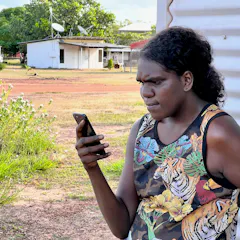
A new report shows how remote First Nations community face obstacles to digital inclusion – and what can be done to remove them.

One interviewee told us: ‘Today our lives are being governed by a bureaucrat who hasn’t seen a Blackfella in their life or haven’t spoken to one.’
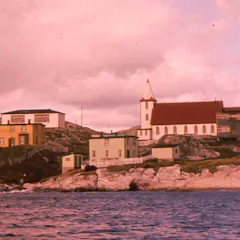
Resettled families did not receive adequate compensation for property left behind and were rarely provided with sufficient funds to build new lives.
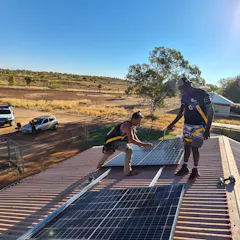
It’s 2023 and residents in remote First Nations communities still suffer from regular power disconnections. The fix is simple: put solar on every roof. But there are challenges to overcome first.

A new report finds tap water in more than 500 remote Indigenous communities isn’t regularly tested. But here’s why this isn’t news to us.
Rainwater is a vital resource in many communities, but it’s not always safe to use. This sustainable and cheap invention could help many households in remote areas.
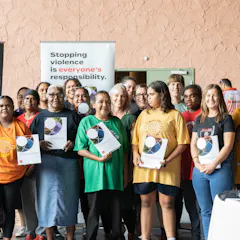
The Northern Territory has the highest rates of domestic, family, and sexual violence in Australia. The Tangentyere women’s group shows how prevention projects can address gender inequality.
Top contributors
-

Associate Professor in Public Health, The University of Queensland
-
Professor of Archaeology, College of Humanities, Arts and Social Sciences, Flinders University
-
Research Associate in Archaeology, Flinders University
-
ARC DECRA Fellow & Senior Lecturer in Construction Management, Faculty of Architecture, Building and Planning, The University of Melbourne
-
Adjunct Lecturer, Archaeology, Flinders University
-
Professor, Director, Griffith University
-
Senior Research Fellow, Menzies School of Health Research
-
Postdoctoral Researcher in Food Security and Conservation, Universidade de São Paulo (USP)
-
Associate Professor, University of Sydney
-
Professor and Director, Centre for Social Responsibility in Mining, The University of Queensland
-
Chief executive officer, Grattan Institute
-
Research Fellow in food security, Museu Paraense Emílio Goeldi, Belém
-
Conjoint Senior Lecturer, School of Medicine and Public Health, University of Newcastle
-
ARC Future Fellow, School of Education, Deakin University
-
Professiorial Fellow, The University of Melbourne