

Collecting data from sensors in remote woodlands has long required arduous treks. What if sensors could transmit data in real time?
Articles on Sensors
Displaying 1 - 20 of 38 articles

With the help of thunderstorms and everyday fiber-optic cables, these scientists are revealing a hidden world underground.
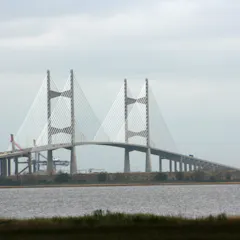
Sensors cannot replace bridge inspectors. They can help engineers see corrosion, cracks, scour and weak magnetic signals that eyes alone can miss.

By trapping different molecules, metal-organic frameworks could make for efficient breath sensors that predict lung disease, cancer or diabetes.

What if plants in the area surrounding a nuclear reactor could act as radiation detectors, with the help of a drone?
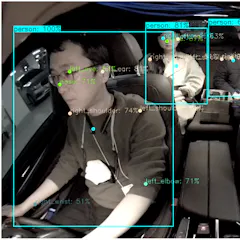
Your car’s safety technology takes you into account. But a lot of that technology helps car companies collect data about you. Researchers are working on closing the gap between safety and privacy.

Scientists don’t know what prompts turtle hatchlings to emerge from their nests and head for the water, but vibrations appear to play a role.

Even a burner phone paid for with cash can reveal your identity and where you’ve been. A data privacy expert explains.
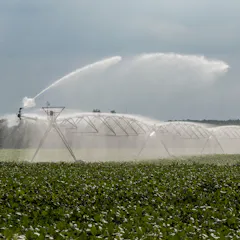
The Agricultural Internet of Things is making farming more efficient. An information technology expert describes some of the challenges of working with sensors and antennas underground.

Even a burner phone paid for with cash can reveal your identity and where you’ve been. A data privacy expert explains.

Sensors that measure sweat could be coming to the market soon, but for them to be useful, we’ll need to understand more about this fluid that our body produces.
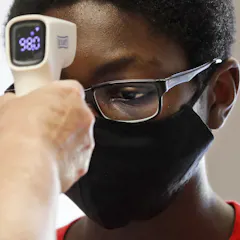
Sensors are everywhere, from your phone to your medicine cabinet. Here’s how they turn events in the physical world into words and numbers.

An optical sensor that can detect individual molecules promises early detection of diseases and environmental contamination.

Driverless vehicles rely heavily on sensors to navigate the world. They’re vulnerable to attack if bad actors trick them into ‘seeing’ things that aren’t there, potentially leading to deadly crashes.

Advancements in data analytics can prevent food wastage and save farmers from significant losses along the fresh produce value chain.
Brain functions integrate and compress multiple components of an experience, including sight and smell – which simply can’t be handled in the way computers sense, process and store data.

Nearly half of patients with congestive heart failure who are hospitalized and then discharged end up back in the hospital within 90 days. Could a toilet seat help prevent this from occurring?
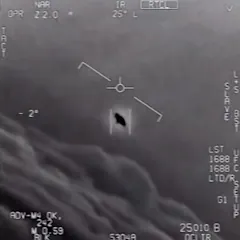
During a military mission, whether in peace or in war, the inability to identify an object within an area of operation represents a significant problem.

A pilot and researcher knows that airplanes are full of sensors – and finds a way onboard computers can use the data to detect equipment failure and tell pilots what’s a real emergency and what’s not.

Globalization is making it harder to identify and trace outbreaks of foodborne illness. Technology can help, but consumers may also have to rethink their food choices.
Top contributors
-

Professor of Cyber Security and Policy, Tufts University
-
Professor of Electrical and Computer Engineering, Tufts University
-
Professor of Intelligent and Self-Organising Systems, Imperial College London
-
Professor, ARC Future Fellow & Founding Director, Sir Ian Potter NanoBioSensing Facility, RMIT University
-
Assistant Professor, Northumbria University, Newcastle
-
Senior research associate, University of Athens
-
Associate Director, Center for Advanced Vehicular Systems; Ph.D. Student in Bagley College of Engineering, Industrial and Systems Engineering, Mississippi State University
-
Professor at the School of Computer Science and Engineering, UNSW
-
Senior Principal Research Scientist, Ecosystem Sciences, CSIRO
-
Assistant Research Professor, Center for Advanced Vehicular Systems, Mississippi State University
-
Associate Director, Community-Engaged Research, Stanford University
-
Assistant Research Professor and Associate Director for Human Factors and Advanced Vehicle System, Center for Advanced Vehicular Systems, Mississippi State University
-
Chair in Natural Computation, Edinburgh Napier University
-
Associate Professor of Biomedical Engineering, George Washington University
-
Professor of Distributed Systems & Chair in Applied Data Sciences, Queensland University of Technology