

For farmers breaking away from conventional agriculture, the Kentucky farmer-poet was a powerful example of someone who combined faith with a commitment to the environment.
Articles on Trust in science
Displaying 1 - 20 of 26 articles
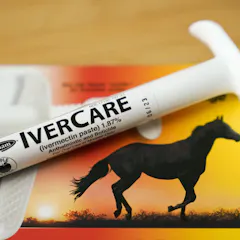
Science works at a much slower pace than social media, opening a large window for early findings to be taken at face value and misinformation to spread.
Several scientific fields rely on visual evidence to illustrate their claims. Inaccurate AI-generated images put the credibility of science at risk.
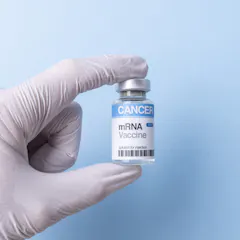
False claims that COVID-19 mRNA vaccines cause cancer could, ironically, lead to worse cancer outcomes by undermining a promising tool to prevent and treat it.
Scientists have traditionally focused on educating the public on science or correcting misinformation. But researchers from marginalized communities often have broader goals in science communication.

Science has always been part of a marketplace of ideas, where claims vie for audiences, resources and belief, and where power, persuasion and status shape which ideas are heard, trusted or forgotten.
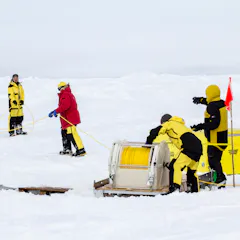
New research shows climate scientists are less trusted than other types of scientists. But there are big differences between countries and specific groups of people.

Even if there’s no acute crisis of trust in science, we shouldn’t minimise the disproportionate impact vocal minorities who distrust science may have on policy and society.

A global new survey shows there’s no crisis of trust in scientists, as some might claim. But there are some nuances.

Scientists use jargon and complicated language to describe their work. Regular folks ‘get it’ more when descriptions are simpler – and think better of the researchers themselves.
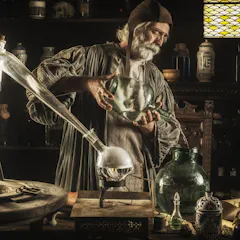
Unrealistic, outdated ideas that idealize science can set the public up to distrust scientists and the research process. A philosopher of science describes 3 aspects of how science really gets done.

Researchers want real-world impact. Lawmakers want programs that work. The public wants to benefit from taxpayer-funded research. Building a bridge from academia to legislatures is key to all three.

The phrase ‘research data management’ might make your eyes glaze over, but it’s actually this behind-the-scenes work that allows for large-scale scientific discoveries and collaborations.

Biobanks collect and store large amounts of data that researchers use to conduct a wide range of studies. Making sure participants understand what they’re getting into can help build trust in science.
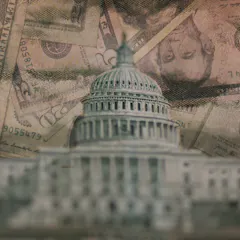
Public data about individual donors’ political contributions supports the perception that American academia leans left.

It’s tempting to focus on the minority of Americans who hold negative views about scientists. But blaming others for their lack of trust won’t build the relationships that can boost trust.

Your willingness to get a vaccination is tied to your political party. And that may have deadly consequences.

Scientists can be asked to help find solutions during disasters. A study of how archaeologists worked on the problem of looting during the Syrian war offers lessons for science done during crisis.

Republicans are four times as likely as Democrats to say they’re not going to get the COVID-19 vaccine. What’s behind the polarization of who trusts or denies science?

New Zealand’s government seems to trust scientists the most, the US government, the least.
Top contributors
-

Professor of Public Relations, Michigan State University
-
Assistant Professor of Cancer Prevention and Control, Health Communication Researcher, West Virginia University
-
Assistant Professor of Marketing, University of Portland
-
Professor of Psychology, Stetson University
-
PhD Candidate in Science and Society, Te Herenga Waka — Victoria University of Wellington
-
Postdoctoral Scholar, University of California, Los Angeles
-
Associate Research Professor of Human Development and Family Studies and Director of the Research Translation Platform, Penn State
-
Professor of Economics, UMass Amherst
-
Professor of Philosophy, Wake Forest University
-
Professor of Information Sciences, University of Tennessee
-
Director of External Research for frank, College of Journalism and Communications, University of Florida
-
Professor of Political Science, Baruch College, CUNY
-
Dean of Global Business, The Fletcher School, Tufts University
-
Professor of Political Science, Fordham University
-
Open Evidence Research, UOC - Universitat Oberta de Catalunya