
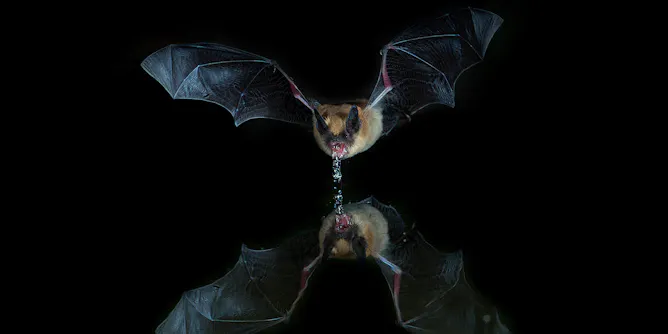
Scientists often use animals and plants as indicators to assess whether ecosystems are polluted. Tracking bats, which cover wide areas and need clean water, could become a way to find potable water.
Articles on Bats
Displaying 101 - 120 of 143 articles

Ultra-violet (UV) light can destroy a fungus that’s devastating the animals in North America.
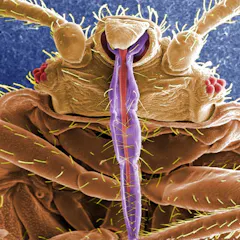
Bed bugs make us shudder and cringe. So arm yourself with the courage to learn about the biology and successes of Cimex lectularius – as well as the ways to get rid of it.
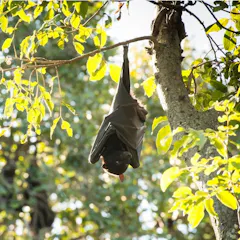
We need balanced media reporting about bat-borne diseases to help avoid vilification of Australia’s under-appreciated creatures of the night.
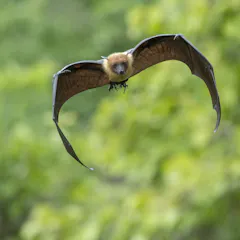
Scientific studies show that bats may carry “coronoviruses” causing SARS and MERS - without showing symptoms of disease. Could the bat immune system be key to human survival in future pandemics?
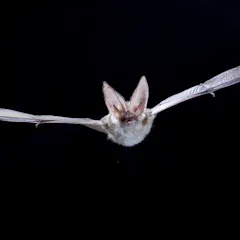
A new framework has been developed to identify wildlife populations under threat.
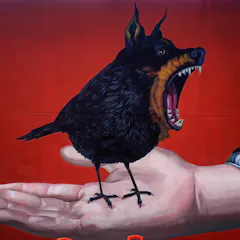
A collection of The Conversation Global’s best articles on animals, from glow-in-the-dark frogs to the wood beetles that do humanity’s dirty work.

From shapeshifting octopi to acid-firing beetles.
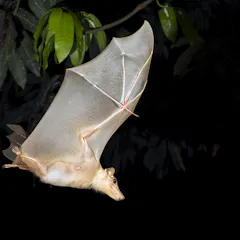
Consuming bushmeat is thought to have contributed to the outbreak of Ebola in west Africa. Countries in the region are trying to slow down consumption.

They kill thousands of animals and people every year by spreading rabies. New research findings could solve the problem.
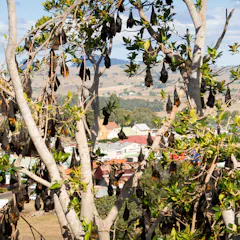
Flying-foxes can cause conflict - just ask the people of Batemans Bay, NSW. But plans to disperse them won’t necessarily work without understanding these highly mobile animals’ behaviour.
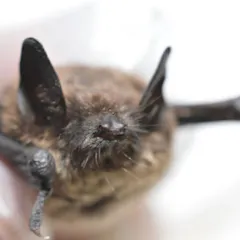
More bad news for America’s beleaguered bats as white nose syndrome spreads to the West Coast. A wildlife biologist explains why this change has the bat community so worried.
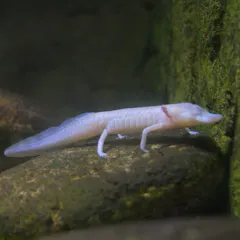
A new project hopes to drill through the Earth’s crust for the first time. But what beasties lurk deep beneath our feet?

An expedition to the Solomon Islands to investigate rare monkey-faced bats and giant rats will help preserve these remarkable species.
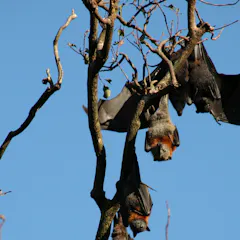
Bats can carry some of the deadliest diseases known to affect humans and yet they don’t seem to get sick. So what can we learn from a bat’s immune system?
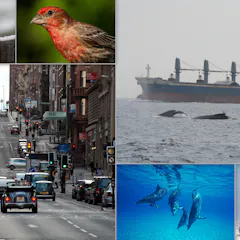
Noise pollution, whether on land or under water, can affect animals in interesting – and not always positive – ways.
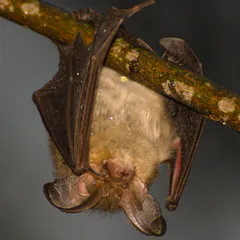
Bat populations have been hammered by deforestation. Efforts like tree-planting schemes are a step forward, but they’re doomed to fail unless we apply a bit more local knowledge.
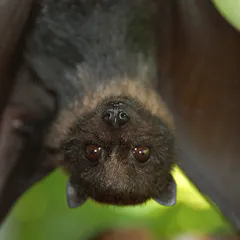
Bats get a bad press but the good far outweighs the bad.
Public health is not the only way to manage epidemic outbreaks like the Ebola virus.
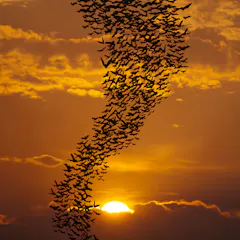
Bats have developed special attack mechanisms for hunting moths, and moths have responded by developing defence mechanisms to avoid being eaten.
Top contributors
-

Professor of Animal Ecology, Western Sydney University
-
Biodiversity Coordinator, Wilderness, University of the Witwatersrand
-
Senior Lecturer in Applied Mathematics, Cardiff University
-
Principal Scientist and Canada Research Chair in Zoonotic Virus and Animal Reservoirs at the Vaccine and Infectious Disease Organization and Co-Lead of One Health at the University of Saskatchewan, University of Saskatchewan
-
Postdoctoral Research Associate in Biological Sciences, University of Bristol
-
Adjunct Asssociate Professor, James Cook University
-
Senior Lecturer in Physical Geography, James Cook University
-
Assistant Professor of Microbiology, Kennesaw State University
-
Wellcome Trust Senior Research Fellow, University of Glasgow
-
The University of Melbourne
-
Professor of Environmental Biology, University of Sussex
-
Researcher, Max Planck Institute of Animal Behavior
-
Maître de Conférences (HDR) à Sorbonne Université, ISYEB - Institut de Systématique, Evolution, Biodiversité (CNRS, MNHN, SU, EPHE, UA), Muséum national d’histoire naturelle (MNHN)
-
The University of Melbourne
-
Research scientist, CSIRO