
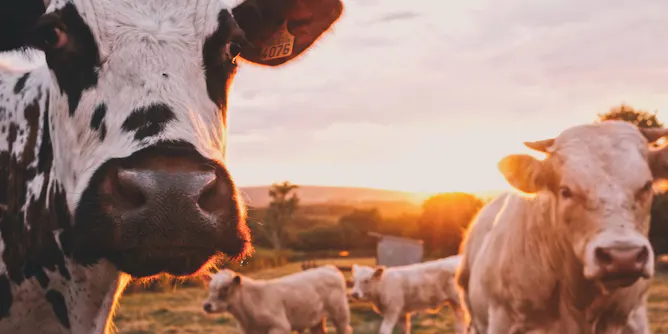
Animal suffering not only harms other species, it endangers our own. Here’s how we can do better.
Articles on Bats
Displaying 81 - 100 of 143 articles
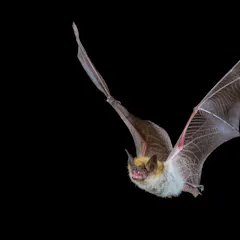
Bats get a lot of negative press, but they also make positive contributions to the environment and to our lives.
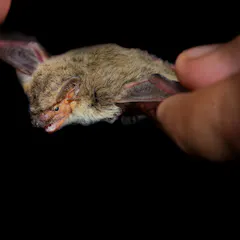
Bats have been the reservoir for recent disease outbreaks, including SARS and the current COVID-19 pandemic. But it’s human activity that allows the virus to cross over.
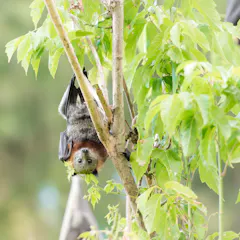
Australian bats are getting unfairly targeted. Here’s why we should be giving them a fair go instead.
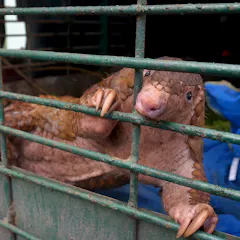
Covid-19, like other major epidemics, is not unrelated to the biodiversity and climate crisis we are experiencing.
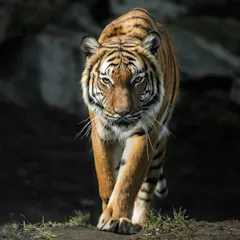
A four-year-old female Malayan tiger has tested positive for COVID-19, with six other tigers and lions showing symptoms. It’s the first known case of a ‘wild’ animal catching the disease.
Using distance to avoid getting sick has deep evolutionary roots for humans and many other species.
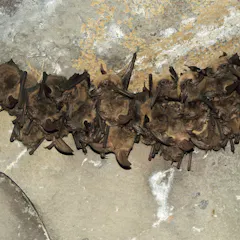
The value that bats provide to humans by pollinating crops and eating insects is far greater than harm from virus transmission – which is mainly caused by human actions.
The SARS-CoV-2 virus responsible for the COVID-19 pandemic is undergoing extensive genetic analysis around the world to understand its origin and evolution.

COVID-19 is not the first – nor likely the last – to emerge from the two continents.
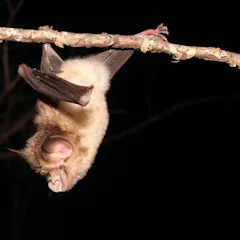
Understanding the many factors that may play a role in spillover of pathogens from bats to humans requires systematic surveillance of bat populations.
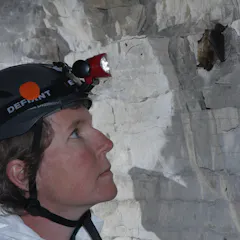
Researchers are puzzled by a fungus that is killing millions of bats.
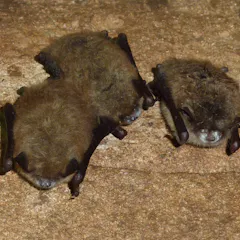
It’s been a deadly summer for Australia’s wildlife. But beyond the fires, we need to act now to protect bats – which make up a quarter of Australian mammal species – from a silent overseas killer.
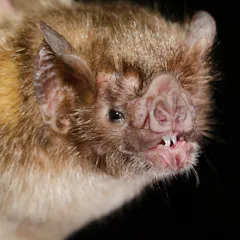
Vampire bats form social bonds similar to human friendships – and they’re good friends to those in need.
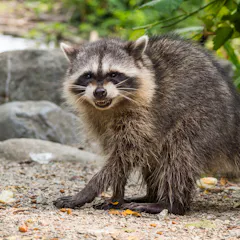
Rabies is almost always fatal once the symptoms appear. It is also completely preventable, so long as you know how to protect yourself.
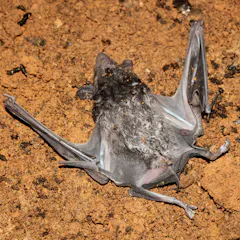
Ancient poo from bats and birds can tell you what type of vegetation they were feeding on at that time.
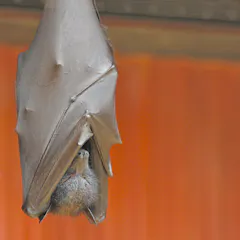
Sometimes, two different animals will evolve to have a similar adaptation, even when they are not closely related. Flight is an excellent example.
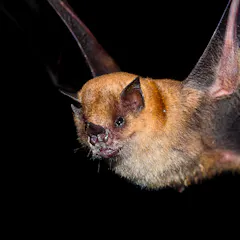
Scientists identify the risk of bat flu spreading to humans.

Museums’ collections are a priceless resource for scientists, but they’re not easy to access. Digitizing specimens – like the 700 bat skulls the author studied – is a way to let everyone in.
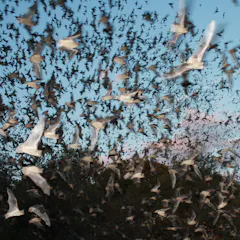
Bats have symbolised everything from insanity to good luck. A new book explores their place in our collective imagination.
Top contributors
-

Professor of Animal Ecology, Western Sydney University
-
Biodiversity Coordinator, Wilderness, University of the Witwatersrand
-
Senior Lecturer in Applied Mathematics, Cardiff University
-
Principal Scientist and Canada Research Chair in Zoonotic Virus and Animal Reservoirs at the Vaccine and Infectious Disease Organization and Co-Lead of One Health at the University of Saskatchewan, University of Saskatchewan
-
Postdoctoral Research Associate in Biological Sciences, University of Bristol
-
Adjunct Asssociate Professor, James Cook University
-
Senior Lecturer in Physical Geography, James Cook University
-
Assistant Professor of Microbiology, Kennesaw State University
-
Wellcome Trust Senior Research Fellow, University of Glasgow
-
The University of Melbourne
-
Professor of Environmental Biology, University of Sussex
-
Researcher, Max Planck Institute of Animal Behavior
-
Maître de Conférences (HDR) à Sorbonne Université, ISYEB - Institut de Systématique, Evolution, Biodiversité (CNRS, MNHN, SU, EPHE, UA), Muséum national d’histoire naturelle (MNHN)
-
The University of Melbourne
-
Research scientist, CSIRO