
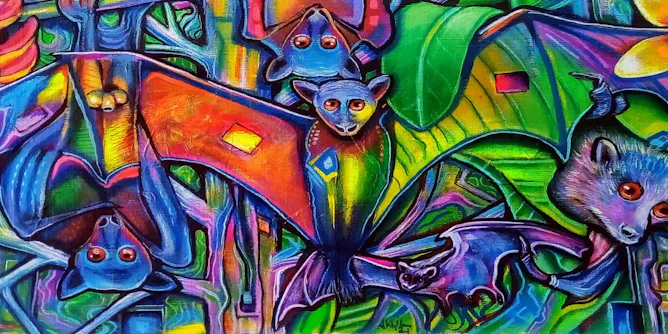
There are 191 different species of bat across the Pacific Island. They are vital parts of the region’s biodiversity, and many species have cultural significance.
Articles on Bats
Displaying 61 - 80 of 143 articles
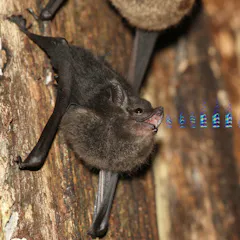
Vocal imitation is a key part of how humans learn to speak. New research shows that bats babble to learn and use baby talk to teach, just like people do.
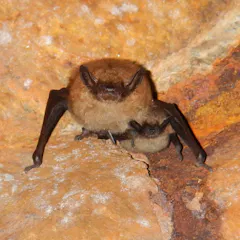
White-nose syndrome has wiped out millions of bats in North America, pushing researchers to look at alternative roosts like bat boxes. But the U.S. bat box designs may not suit Canadian bats.

Baobab flowers have male and female parts but individual trees appear to be favouring one rather than the other. To keep tree populations healthy and fruitful, both types are needed.
Bat hosts, lab leaks – tracing SARS-CoV-2 to its origins involves more than just tracking down patient zero.
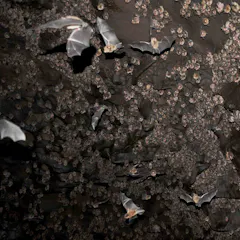
Laboratory experiments with bat poo reveal how archaeological materials in tropical caves have been chemically altered over the millennia.
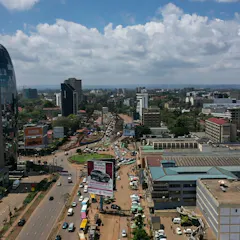
Nairobi harbours all the ingredients for zoonotic spillover to occur between animals and people, particularly in the most densely populated areas of the city.
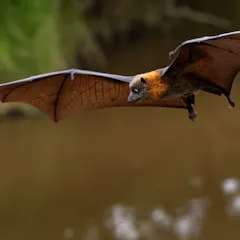
Echolocation evolved multiple times in bats over millions of year. Yet the earliest bat ancestors probably didn’t have this skill — or if they did, it was likely very primitive.
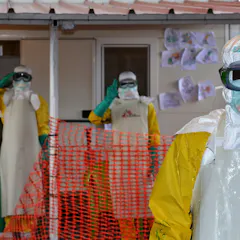
The virus is always present in nature and when circumstances allow, it may jump from one species to another.

Plus we talk to an American virologist testing wild animals for COVID-19. Listen to episode 2 of The Conversation Weekly podcast.
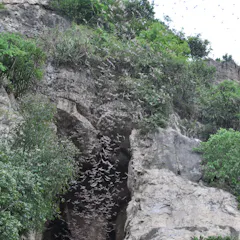
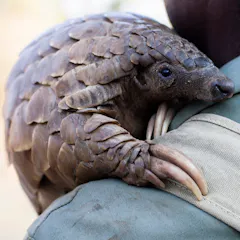
A bat virus discovered a decade ago in Cambodia indicates that pangolin trafficking remains a credible explanation for the origin of the Covid-19 pandemic.
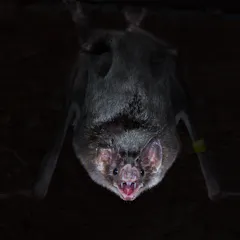
The genome of hepatitis D doesn’t resemble any known virus, making its origin a mystery. But by mining virus sequences from genetic datasets, a new study may have found the answer.

Conflict between fruit-growers, the Mauritian government and conservationists has dragged on for years – it’s time for a new approach.
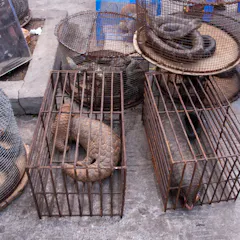
To better anticipate and manage the emergence of new pandemics, a paradigm shift is needed to take into account the complex interactions between human health, animal health, the environment and the economy.
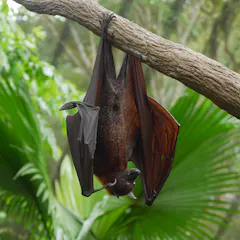
If we can pinpoint the origins of a virus, we can find out what factors led to it infecting humans. But viruses can emerge across the globe.
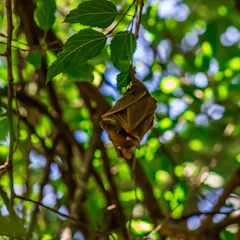
Investigating different factors influencing the behaviour of South African bat species contributes to our understanding of these understudied animals.
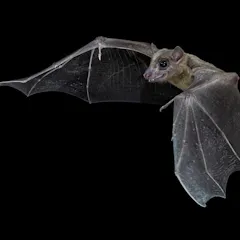
This important discovery demonstrates that cognitive maps are not the exclusive domain of humans and a few other species.
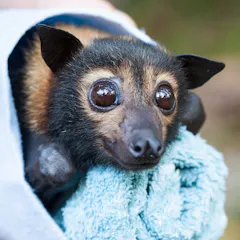
Do bats hold the secret to defeating coronaviruses?
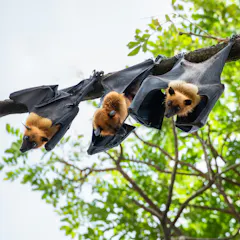
Up to 8,000 spectacled flying-foxes, around 12% of the species’ population, will be forced to leave their home in central Cairns.
Yellow fever, malaria and Ebola all spilled over from animals to humans at the edges of tropical forests. The new coronavirus is the latest zoonosis.
Top contributors
-

Professor of Animal Ecology, Western Sydney University
-
Biodiversity Coordinator, Wilderness, University of the Witwatersrand
-
Senior Lecturer in Applied Mathematics, Cardiff University
-
Principal Scientist and Canada Research Chair in Zoonotic Virus and Animal Reservoirs at the Vaccine and Infectious Disease Organization and Co-Lead of One Health at the University of Saskatchewan, University of Saskatchewan
-
Postdoctoral Research Associate in Biological Sciences, University of Bristol
-
Adjunct Asssociate Professor, James Cook University
-
Senior Lecturer in Physical Geography, James Cook University
-
Assistant Professor of Microbiology, Kennesaw State University
-
Wellcome Trust Senior Research Fellow, University of Glasgow
-
The University of Melbourne
-
Professor of Environmental Biology, University of Sussex
-
Researcher, Max Planck Institute of Animal Behavior
-
Maître de Conférences (HDR) à Sorbonne Université, ISYEB - Institut de Systématique, Evolution, Biodiversité (CNRS, MNHN, SU, EPHE, UA), Muséum national d’histoire naturelle (MNHN)
-
The University of Melbourne
-
Research scientist, CSIRO