
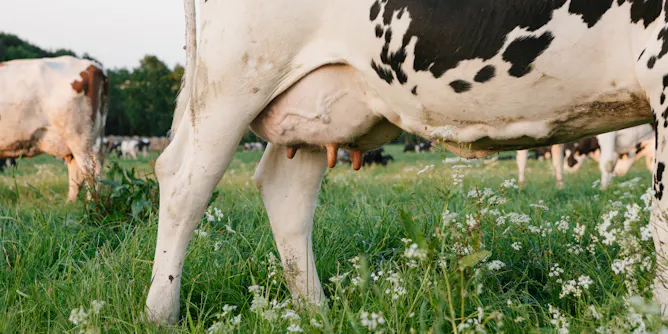
Milk is never just milk. It’s saturated with meaning, emotion and contradiction, and provokes strong responses in people.
Articles on Cows
Displaying 1 - 20 of 67 articles
Could working with dairy cows offer a surprising path to rehabilitation for prisoners?
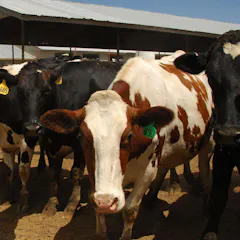
A veterinarian and epidemiologist who studies infectious diseases in dairy cows discusses the outbreak, how cows recover and what the government is doing to keep the milk supply safe.

The genetic mutations responsible for the unusual physical features in animals can also cause great harm.
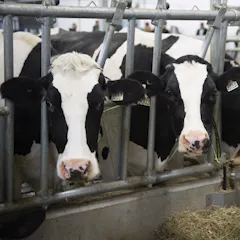
Bird flu in U.S. dairy cows has Canadian public health experts on high alert. With one human case identified in Texas, what is the likelihood of H5N1 influenza moving from birds to mammals to people?
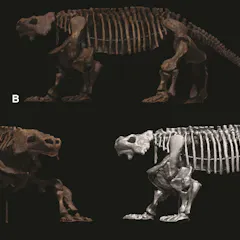
Large pareiasaurs are among the earliest huge plant-eating tetrapods to appear in the history of the development of life on Earth.

Climate change threatens longer and more severe droughts. What will it mean for our diets?

A recent evidence review found children who ate full-fat dairy were healthier and leaner.
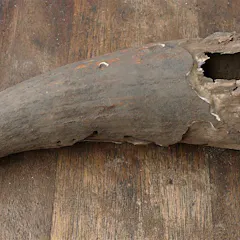
The medicine container was found in a painted rock shelter. A radio carbon date of the horn container places it at around AD 1461-1630.
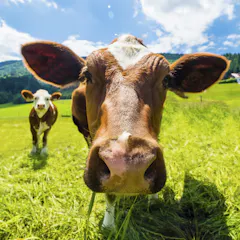
New Zealand is considering a plan to tax methane from cows. But while cows and cars both emit greenhouse gases, they don’t have the same impact over time.
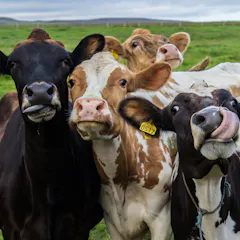
If the UK government is to cut methane emissions by 30% before 2030, it needs fewer cows and more crops.
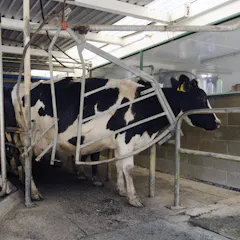
A new study of dairying in Canterbury shows previous estimates vastly underestimate the impact of intensive farming. A 12-fold reduction in cow numbers could be needed to meet safe water standards.
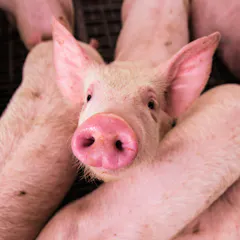
Psychologists have described a ‘meat paradox’ in the minds of meat-eating animal lovers.
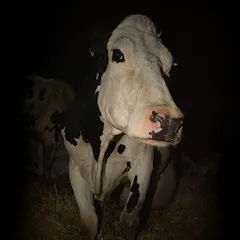
Andrea Arnold’s new film chronicles the daily strife of Luma – a dairy cow and mother.

Recent estimates put atmospheric methane at 1,900 parts per billion – close to triple its pre-industrial average.

Technological changes on the horizon will likely disrupt the dairy industry as we know it — plans to mitigate the risks this transition poses to farmer livelihoods and animal welfare should start now.

This grass may hold the key to improving milk yields from cows kept by small-scale farmers across the African continent.
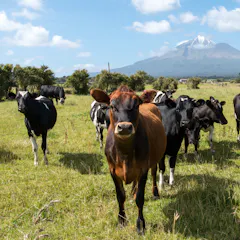
Capturing cow urine could allow us to reduce the amount of damaging nitrate and nitrous oxide that ends up in the environment.

The basic payments scheme that sustains 90% of farmers will be gone by 2028, but the reductions are biting already.
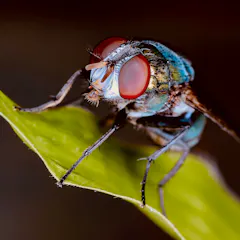
New findings suggest the loss of fertility at high temperatures is a major threat to the survival of some species.
Top contributors
-

Adjunct Professor in Animal Welfare, Curtin University
-
Professor & Director, Primary Industries Climate Challenges Centre, The University of Melbourne
-
Professor, Aligarh Muslim University
-
Researcher, Department of Animal Science, University of California, Davis
-
Associate professor, UNSW
-
PhD Candidate, Civil and Environmental Engineering, UC Davis, University of California, Davis
-
Professor of Animal Science, University of California, Davis
-
Assistant Professor of Marketing, University of Oregon
-
Food Climate Research Network Leader, University of Oxford
-
Lecturer in Social Anthroplogy and Law , King's College London
-
Associate Professor, Psychosocial Difficulties, University of Oslo
-
Associate, Sustainability Science, Harvard Kennedy School, Harvard University
-
Future Fellow, The University of Melbourne
-
Professor of Animal Science, University of Connecticut
-
Chen Su Lan Centennial Professor in Medical Ethics, National University of Singapore; Distinguished Visiting Professor in Law, University of Melbourne; Uehiro Chair in Practical Ethics, The University of Melbourne