
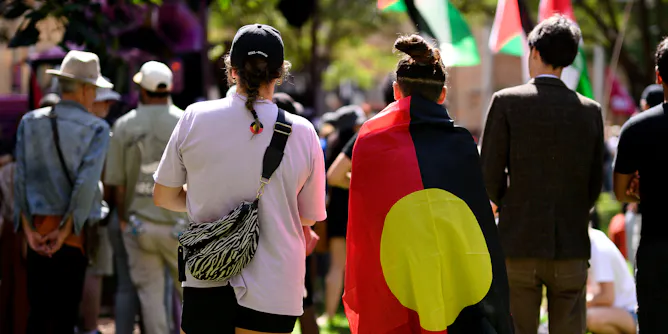
Latest data show First Nations women are much more likely to be killed than non-Indigenous women. It demands action.
Articles on Indigenous
Displaying 41 - 60 of 769 articles
New national research shows unmet housing need among First Nations households is double the rate of other Australians. But there are solutions.

Native American lands contain 30% of the nation’s coal, 50% of its uranium and 20% of its natural gas, as well as copper, lithium and rare earth elements.
As Canada rushes to build housing similar to the post-Second World War era, it must not forget how many chronic economic, health and housing challenges that onetime boom created for the North.
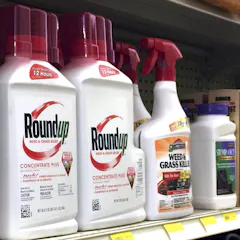
The recent retraction of peer-reviewed research claiming glyphosate is safe confirms what Indigenous communities have said for years.

The Indigenous Seniors Research Committee examined the housing and care needs of Indigenous older adults in Winnipeg, Manitoba. And the evidence suggests a housing crisis that is economic and cultural.
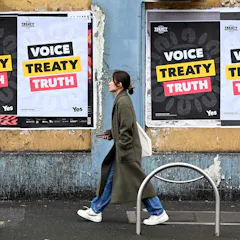
Democracies thrive on adapting and changing to new injustices and problems. The failure of the Voice referendum raises questions about Australia’s democratic health.
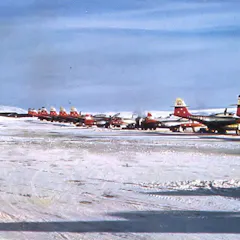
In 1951, the French Explorer Jean Malaurie witnessed the building of a US military base in Greenland in near total secrecy, which marked an irreversible turning point for Inuit societies.
Sometimes the bravest and most important thing you can do is cook dinner and gather with the people you love.

Protecting heritage in Canada requires training more archeologists and equipping them with the tools and education to do so.

Calling Ksi Lisims a “nation-building” project masks unresolved questions about who benefits, who bears the risks and how the project fits into a rapidly changing global liquefied natural gas market.
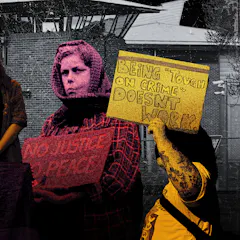
More First Nations people have died in custody in the past year than in any since 1980. It’s the inevitable result of policies that flout evidence of what would help.
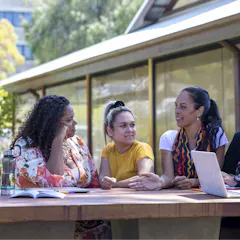
A review of 127 studies from around the world found the challenges are more pronounced in mainstream organisations.
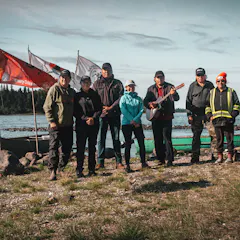
Ontario’s Bill 5 eliminates key environmental protections and grants the provincial government sweeping powers to fast-track development with little to no oversight.

Despite a decade of commitments, audits and Calls to Action, the federal government has failed to deliver meaningful and measurable improvements in First Nations health services.
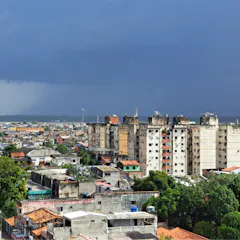
The realities of climate and land use change are jarringly obvious in Amazonia.

The UN climate conference in the Brazilian Amazon marks an unprecedented effort to elevate Indigenous concerns in negotiating rooms and on the streets.
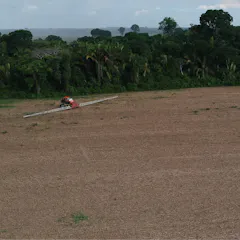
A study argues that the use of glyphosate produces a slow form of chemical violence that suffocates people, ecosystems and ways of life. This violence forces riverside communities to leave and makes way for soya to advance.
How activists and artists across the world are challenging popular, generalised climate memes, such as those of melting and sinking.
While the rest of nature rises and slumbers to lunar and solar cycles, humans work and sleep to the resetting of their artificial clocks.
Top contributors
-

Professor of Law, University of Technology Sydney
-
Professorial Fellow, University of Canberra
-
Professor, Faculty of Education, University of Manitoba
-
Professor of Political Science, University of Guelph
-
Associate Professor, Departments of History and Indigenous Studies, University of Manitoba
-
Assistant Professor, Indigenous Methodologies, Chanie Wenjack School of Indigenous Studies, Trent University
-
Professor of Economics and Public Policy, ANU College of Arts and Social Sciences, Australian National University
-
Associate professor, McGill University
-
Executive Co-Director, UNU Hub on Empowering Communities to Adapt to Environmental Change, Institute for Water, Environment and Health, United Nations University; University of Calgary
-
Professor, Critical Indigenous Studies and Director of The Centre for Global Indigenous Futures, Macquarie University
-
Associate Professor, UNSW
-
Professorial Fellow, Jumbunna IHL, University of Technology Sydney
-
Associate Professor, Faculty of Law & Justice, UNSW
-
Associate Professor of Gender, Religion and Critical Studies, University of Regina
-
Associate Professor of Public Policy, Crawford School of Public Policy, Australian National University