

Indigenous people and communities are up against unequal and harmful effects that are not only economic, but also social and cultural.
Articles on Indigenous
Displaying 101 - 120 of 769 articles
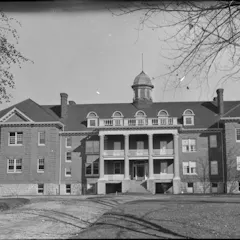
Scholars are working to piece together information about Indigenous children who attended a residential school in Brantford and Inuit patients taken to a sanatorium in Hamilton, Ontario.

With funding for a government food voucher program ending and Parliament prorogued, many Inuit children in Nunavut may soon go hungry.
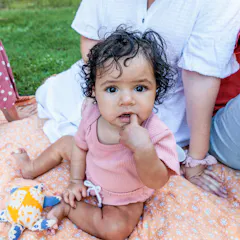
Indigenous children are 11 times more likely to be removed than non-Indigenous children. Babies under one are at greatest risk.
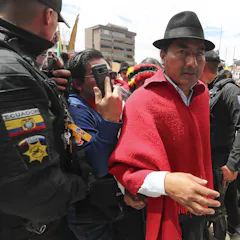
Ecuadorians will choose their next president in a runoff vote in April after the first round produced no clear winner.

A recent update to the Unicode Standard means that Haíɫzaqvḷa can finally be fully written and read on all digital platforms.
Two inquiries of recent times came with myriad recommendations to save Indigenous lives from domestic violence, but few have been acted upon.
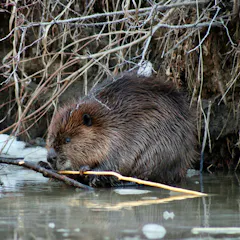
When it comes to equitable and sustainable infrastructure, we can learn a lot from beaver dams — according to both traditional Indigenous oral history as well as NASA researchers.
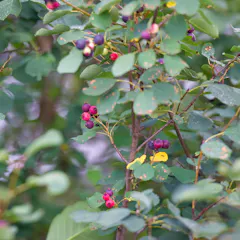
Robin Wall Kimmerer envisions an economy of gratitude and reciprocity with nature, using the serviceberry tree as a key witness.
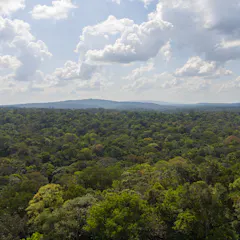
An agreement between an indigenous community and an energy company secured the development of a power plant in exchange for community benefits. But the deal does not meet energy justice principles.
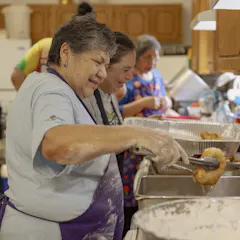
Frybread — a simple, versatile “comfort food” for many Indigenous communities — embodies the contradictions that have dictated Indigenous food and health in North America since colonization.

The report focuses on unaccounted missing children, unmarked grave sites, and the roles of government and churches in the Indian Residential School genocide.
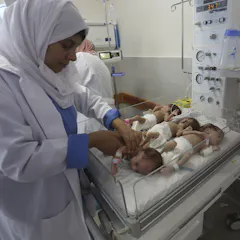
Health-care workers have a direct impact in areas of conflict due to their ability to provide care — and bear direct witness to atrocities. In Gaza, Canada and beyond, they must be heeded.

On July 4, 1891, Oklahoman farmer Oscar Weber Bilby served his neighbors the very first hamburgers on buns.
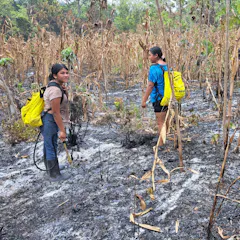
Recent wildfires in Belize shows how we must work together to revitalize Indigenous knowledge systems and plant the seeds of collaborative climate action.
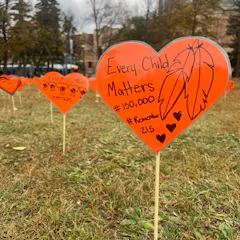
When universities declare commitments to reconciliation, these commitments must accompany changes necessary to ensure Indigenous students are truly welcomed and celebrated on campuses.

The Canadian Medical Association’s apology for harms to Indigenous Peoples is an opportunity to reflect on the gap between apologies and the work of true repair necessary for reconciliation.
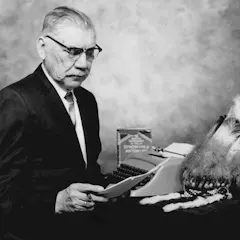
‘Brown Tom’s Schooldays’ was first self-published decades ago, and shows how one First Nations boy came of age and grappled with the assimilation agenda of Indian Residential Schools.

This playlist of podcast episodes invites listeners to engage in learning and unlearning; to acknowledge the tragic legacies of residential schools and to move beyond a single day of remembrance.

A new mathematical model shows the numbers able to speak te reo Māori will likely keep growing – as long as the right government policies and public support are maintained.
Top contributors
-

Professor of Law, University of Technology Sydney
-
Professorial Fellow, University of Canberra
-
Professor, Faculty of Education, University of Manitoba
-
Professor of Political Science, University of Guelph
-
Associate Professor, Departments of History and Indigenous Studies, University of Manitoba
-
Assistant Professor, Indigenous Methodologies, Chanie Wenjack School of Indigenous Studies, Trent University
-
Professor of Economics and Public Policy, ANU College of Arts and Social Sciences, Australian National University
-
Associate professor, McGill University
-
Executive Co-Director, UNU Hub on Empowering Communities to Adapt to Environmental Change, Institute for Water, Environment and Health, United Nations University; University of Calgary
-
Professor, Critical Indigenous Studies and Director of The Centre for Global Indigenous Futures, Macquarie University
-
Associate Professor, UNSW
-
Professorial Fellow, Jumbunna IHL, University of Technology Sydney
-
Associate Professor, Faculty of Law & Justice, UNSW
-
Associate Professor of Gender, Religion and Critical Studies, University of Regina
-
Associate Professor of Public Policy, Crawford School of Public Policy, Australian National University