
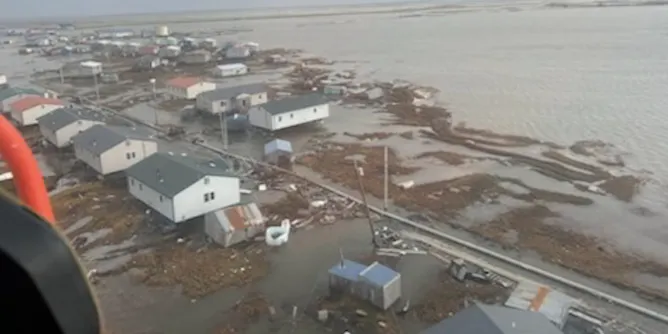
‘As the storm approached Alaska, everything went sideways,’ leaving people no time to evacuate and little time to prepare. An Alaska meteorologist explains what happened and the challenges ahead.
Articles on Indigenous
Displaying 61 - 80 of 769 articles

The Family Wellbeing Program has decades of evidence backing it to help Indigenous people live better lives. Here’s how it works.
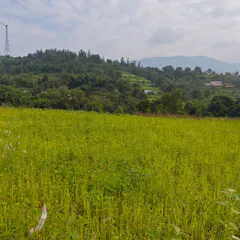
Defending land and seed sovereignty could be a clear form of reparation for India’s Indigenous farmers.

Scientists have been exploring the role that neuroscience plays in ocean navigation.

Archives are full of letters from Curve Lake dating back to the 19th century, demanding better pay for teachers, requesting Indigenous teachers and even asking for their own school boards.

Cancer. Diabetes. Aging itself. Rapamycin’s potential to treat an array of diseases has been a source of scientific fascination. But many aren’t aware of its origins – and its complicated legacy.
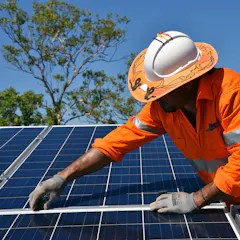
Energy stress is a significantly bigger problem for Indigenous households. Indigenous communities also need a genuine say on renewable or mineral projects on their land.

Indigenous forest management practices can help control wildfires’ frequency and severity, while also restoring people’s connections to the land.

Evacuations do not impact everyone the same way, and Indigenous evacuees can be re-traumatized and treated poorly.

The challenge is not firefighting capacity nor convincing people to help; it is coordinating efforts to prioritize safety and efficiency.
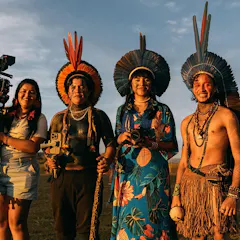
A fast-growing digital movement means Indigenous people no longer rely on outsiders to speak for them.
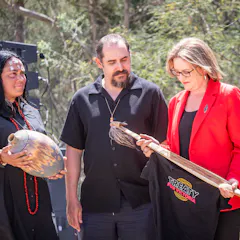
If successful, Victoria will demonstrate to the nation that truth, justice, and Indigenous self-determination can finally move from rhetoric to reality.

We tend to view private property as a sacrosanct, never-changing principle. But property rights are legal constructs — never absolute and always evolving.

Public and political conversations about environmental management often reduce complex issues to binary opposing opinions.

Researchers highlight the experiences of workers across Canada whose livelihoods and communities have been impacted by climate change.
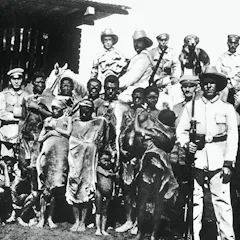
Germany’s genocide of the Ovaherero and Nama has been well documented, but the massacre of the Bushmen from 1912 to 1915 is seldom discussed.

Reducing risk and managing beneficial fires require co-ordinated action from governments, communities and individuals.

Colonialism, corporate greed and lax regulation led to widespread pollution, particularly affecting Yellowknives Dene communities.

Economic reconciliation requires support for Indigenous training, providing access to capital for Indigenous organizations and reforming institutions.

As more countries look to space, experts argue that it’s worth asking why we want to go at all, and who should lead the charge.
Top contributors
-

Professor of Law, University of Technology Sydney
-
Professorial Fellow, University of Canberra
-
Professor, Faculty of Education, University of Manitoba
-
Professor of Political Science, University of Guelph
-
Associate Professor, Departments of History and Indigenous Studies, University of Manitoba
-
Assistant Professor, Indigenous Methodologies, Chanie Wenjack School of Indigenous Studies, Trent University
-
Professor of Economics and Public Policy, ANU College of Arts and Social Sciences, Australian National University
-
Associate professor, McGill University
-
Executive Co-Director, UNU Hub on Empowering Communities to Adapt to Environmental Change, Institute for Water, Environment and Health, United Nations University; University of Calgary
-
Professor, Critical Indigenous Studies and Director of The Centre for Global Indigenous Futures, Macquarie University
-
Associate Professor, UNSW
-
Professorial Fellow, Jumbunna IHL, University of Technology Sydney
-
Associate Professor, Faculty of Law & Justice, UNSW
-
Associate Professor of Gender, Religion and Critical Studies, University of Regina
-
Associate Professor of Public Policy, Crawford School of Public Policy, Australian National University