
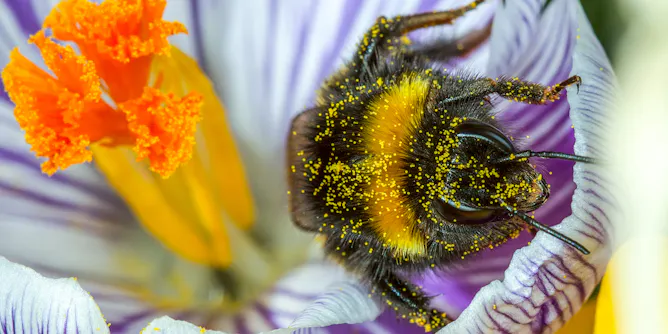
For human planting to support bee diversity, we need to know which flowers the insects want to visit.
Articles on Pollinators
Displaying 121 - 140 of 179 articles
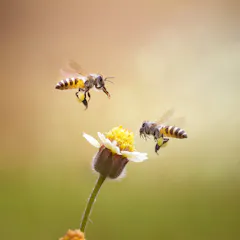
Bees need flowers to live, and we need bees to pollinate our crops. Understanding bee vision can help us better support our buzzy friends and the critical pollination services they provide.
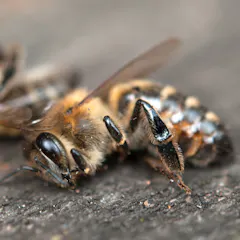
Bee colonies are threatened by a mite. However, a different mite has been evaluated for its potential to address this threat.
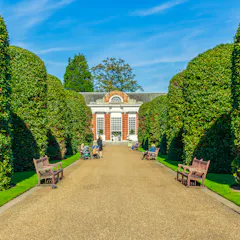
Keeping urban habitats such as parks neat and tidy by removing dead wood and leaves is driving the species which live there to extinction.
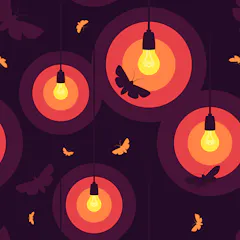
Turning street lights off at midnight could save money, energy and help nocturnal ecosystems thrive.
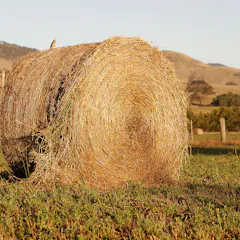
Agriculture and the environment don’t need to be at odds with each other. They are more closely interdependent than we realize.
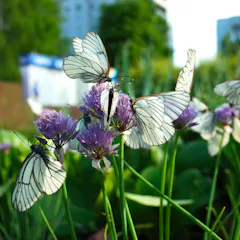
Evidence-based advice from experts on how to make your garden a friendly environment for pollinators.
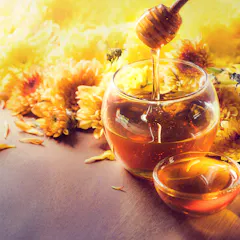
Research shows that managed honey bees may pose a threat to free roaming honey bee populations.
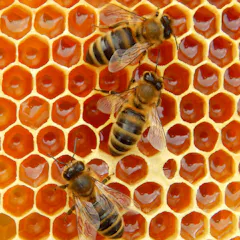
Remote sensors allowed us to observe the in-hive activities of honeybees, which could be key to keeping bee colonies worldwide healthy.
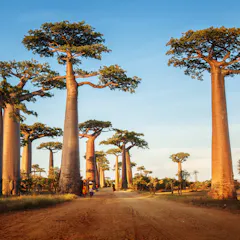
Without an array of ecosystems and species, it’s tough for farmers to grow crops or ranchers to raise animals.
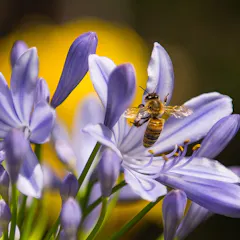
The world’s most widely used herbicide poses a threat to honey bees.

All too often the media buzz is centred around the managed honeybee, at the expense of other wild bee species.
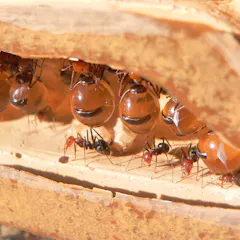
Honey might be synonymous with bees, but they’re not the only insects that come up with the goods.

Pollination by commercially raised bees is important to a variety of crops but none more than California almonds. In turn, beekeepers depend on them.
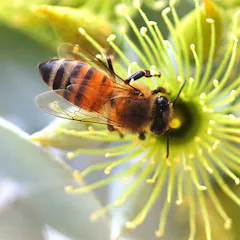
Australia’s distinctive native plants give our honey a distinctive stamp. Welcome to melissopalynology: the study of pollen.
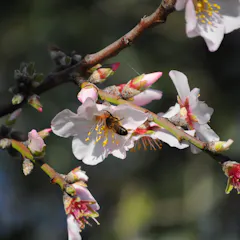
Many fruits, nuts and other crops rely on bees to pollinate their flowers at just the right time of year. Many farmers rent bees to get the job done at pollination time.
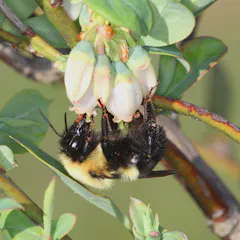
Honeybees receive a lot of attention, but the first North American bee to be listed as an endangered species is a wild bumble bee. Wild bees are vital pollinators, and some are declining rapidly.
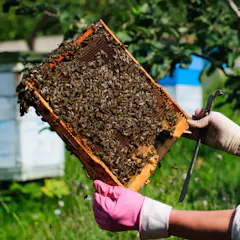
Meta-analysis studies have made it possible to sort through apparently contradictory research by looking at the bigger picture.

Rather than trying to out-compete each other, flowers may work together to attract bees en masse. It’s the sort of approach that is effective in the world of advertising too.
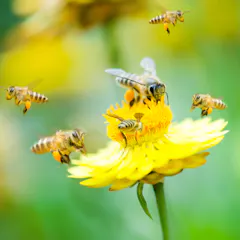
Honeybees are responsible for only a third of crop pollination in Britain.
Top contributors
-

Lecturer in Ecology, University of New England
-
Associate Professor in Entomology, University of Sydney
-
Research Affiliate in Human Ecology, University of California, Davis
-
Associate Professor, Department of Physiology, Monash University
-
Senior Research Associate in Entomology, Lancaster University
-
Senior Research Associate, School of Agriculture, Food and Ecosystem Sciences, The University of Melbourne
-
Professor of Ecology, University of Bristol
-
Emeritus Professor of Apiculture, University of Sussex
-
Associate Professor in Ecology, Northumbria University, Newcastle
-
Adjunct Research Fellow, Curtin University
-
Associate Professor, Faculty of Environmental and Urban Change, York University, Canada
-
Professor of Biodiversity and Ecosystem Services, University of Reading
-
Professor of Behavioural Ecology, UCL
-
Lecturer in Conservation Ecology, Anglia Ruskin University
-
Extension Agent, University of Florida