
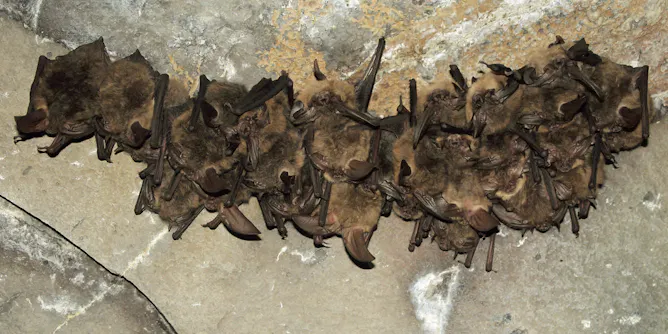
The value that bats provide to humans by pollinating crops and eating insects is far greater than harm from virus transmission – which is mainly caused by human actions.
Articles on Pollinators
Displaying 101 - 120 of 179 articles
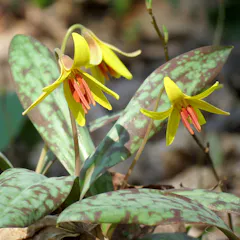
Climate change has advanced the arrival of spring by as much as several weeks in some parts of the US. This can mean major crop losses and disconnects between species that need each other to thrive.

Indigenous land stewardship, resource extraction and corporate interests remain critical issues to addressing large-scale environmental concerns such as pollinator loss in Canada and beyond.
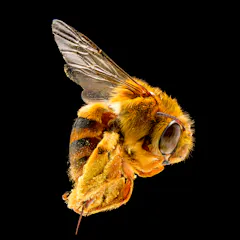
In NSW, honeybees are listed as a key threatening process to biodiversity.

‘Bee-washing,’ marketing claims that purport to help bees, can diminish the important distinction between a honey bee and native bee.
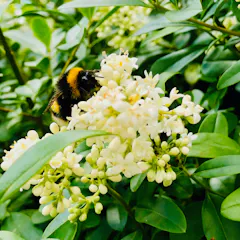
A new study has found that European and North American bumblebee populations have shrank by a third since 1970.
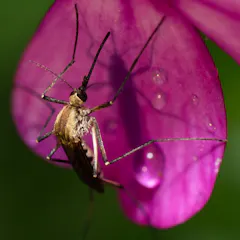
Mosquitoes have intricate and essential relationships with plants. Understanding their important work as pollinators would help to understand their role in different ecosystems.
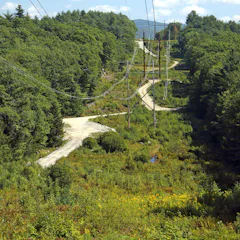
Wild things thrive in transmission pathways that crisscross states.

Britain’s councils are cutting roadside verges less often to allow vibrant wildflower meadows to bloom.
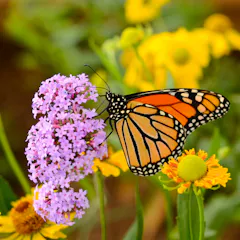
Wildflowers, bees and butterflies – your lawn is a vibrant ecosystem waiting to be unleashed.
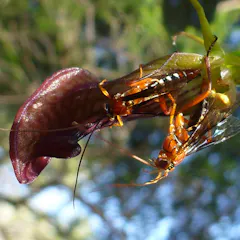
You can barely communicate with your kids, but these creatures are sending complex interspecies instructions.
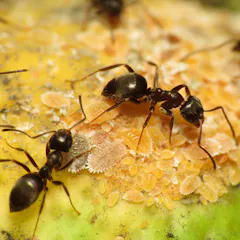
They might be a hated household pest, but ants actually live fascinating and complex lives.
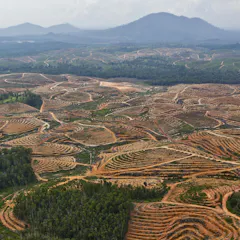
New research has found that different types of habitat loss can change the stability of whole plant and animal communities.

Wild bees pollinate trees and shrubs that feed and shelter wildlife, provide flood control, prevent soil erosion and help regulate the climate.

Urban beekeeping is growing in popularity, but so is the backlash against honey bees.
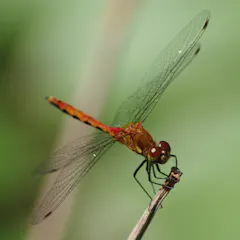
Alarm bells went off when several recent studies reported mass insect die-offs in different parts of the world. But reports of an ‘insect apocalypse’ have been greatly exaggerated.
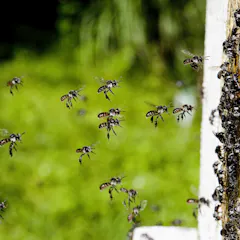
Bees might not be able to survive inside a person’s eye, but they can be drawn to disgusting food sources.
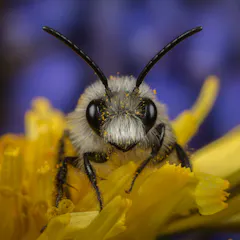
Amid the insect extinction crisis, some species are actually increasing. Here’s why that’s not necessarily a good thing.
The guinea flower grows right across Australia.
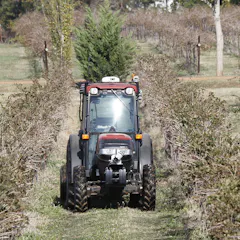
Digital innovations have the potential to empower farmers and revolutionise agriculture, but many could also lock them in to unsustainable methods.
Top contributors
-

Lecturer in Ecology, University of New England
-
Associate Professor in Entomology, University of Sydney
-
Research Affiliate in Human Ecology, University of California, Davis
-
Associate Professor, Department of Physiology, Monash University
-
Senior Research Associate in Entomology, Lancaster University
-
Senior Research Associate, School of Agriculture, Food and Ecosystem Sciences, The University of Melbourne
-
Professor of Ecology, University of Bristol
-
Emeritus Professor of Apiculture, University of Sussex
-
Associate Professor in Ecology, Northumbria University, Newcastle
-
Adjunct Research Fellow, Curtin University
-
Associate Professor, Faculty of Environmental and Urban Change, York University, Canada
-
Professor of Biodiversity and Ecosystem Services, University of Reading
-
Professor of Behavioural Ecology, UCL
-
Lecturer in Conservation Ecology, Anglia Ruskin University
-
Extension Agent, University of Florida