
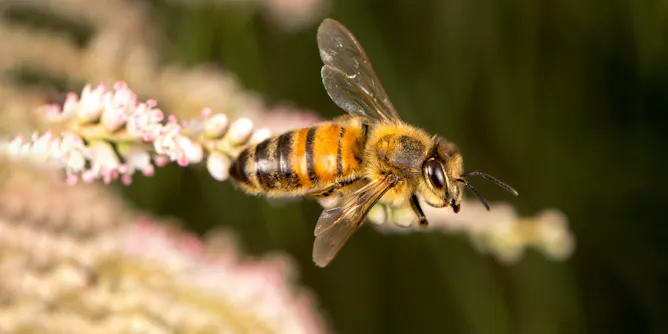
Feral honeybees have become a major problem in Australia. It’s time to develop effective and practical control measures.
Articles on Pollinators
Displaying 41 - 60 of 179 articles
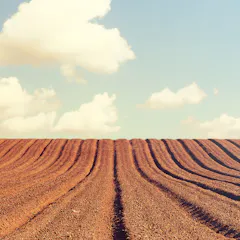
Farms have become less friendly for our insect friends – this must be reversed if we want food to eat.
Picking the correct flowers is a crucial job for honey bees, so it’s no wonder they are incredibly efficient at it. But how can such little brains do it?
New research suggests insects have pollinated flowers since the pollen-bearing blooms first evolved more than 140 million years ago.

Australia is the last continent to be invaded by the dangerous honey bee parasite, and has an opportunity to be the first to eradicate it.

The optimal trade-off between restoring habitat and crop production hinges on pollinators. A new study shows giving pollinators more natural habitat on the farm leads to big increases in production.
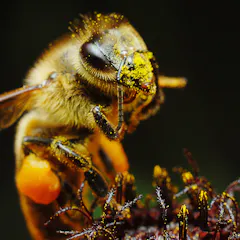
We all know bees are vital pollinators. But they’re also art critics, social learners, dancers and so much more.

As we approach the start of gardening season, it’s a good time to ask some questions about what to plant and who gets to plant.
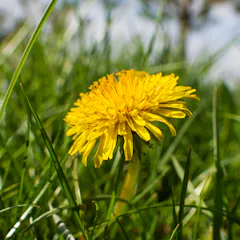
Before you reach for the weed killer, spare a thought for struggling pollinators.

Two food scientists, an entomologist, an anthropologist, a veterinarian and a historian walk into a bar (of chocolate) and tell bitter and sweet stories of this favorite treat.
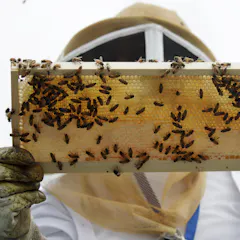
A vaccine for bees may evoke images of teeny hypodermic needles, but this product works in a sophisticated way that reflects the social structure of honeybee colonies.

Honey bees, wild and native bees face threats from parasites, pesticides and habitat loss. Shorter winters, more extreme weather and more habitat destruction won’t help.

Honey bees have what it takes to pollinate blueberries, boosting the quality and quantity of the popular fruit.
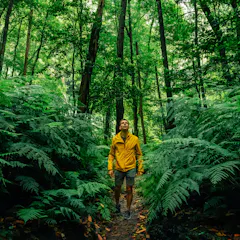
People wouldn’t last long without the countless other species we depend on for survival.
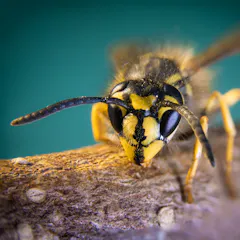
Why you shouldn’t get in a flap over reports that swarms of wasps are descending on Britain.

Plant care advice abounds on TikTok, Twitter, Instagram and YouTube – but not all of it is good. A plant expert debunks four common recommendations.

Butterflies are important pollinators. To find out how predators affect butterfly populations and diversity, butterfly decoys were used.
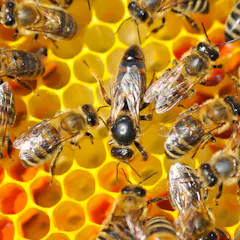
Studying bee sperm is difficult because of the way it coils, but fluorescent light illuminates the head of the sperm. Sperm quality may indicate stress levels in the bee colony.
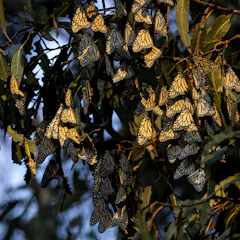
The iconic monarch butterfly has been added to the Red List of endangered species, but hasn’t received protection in the US yet. That’s not necessarily a bad thing.
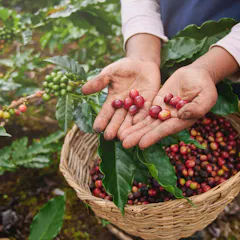
Many people can’t get by without the buzz from their daily coffee habit.
Top contributors
-

Lecturer in Ecology, University of New England
-
Associate Professor in Entomology, University of Sydney
-
Research Affiliate in Human Ecology, University of California, Davis
-
Associate Professor, Department of Physiology, Monash University
-
Senior Research Associate in Entomology, Lancaster University
-
Senior Research Associate, School of Agriculture, Food and Ecosystem Sciences, The University of Melbourne
-
Professor of Ecology, University of Bristol
-
Emeritus Professor of Apiculture, University of Sussex
-
Associate Professor in Ecology, Northumbria University, Newcastle
-
Adjunct Research Fellow, Curtin University
-
Associate Professor, Faculty of Environmental and Urban Change, York University, Canada
-
Professor of Biodiversity and Ecosystem Services, University of Reading
-
Professor of Behavioural Ecology, UCL
-
Lecturer in Conservation Ecology, Anglia Ruskin University
-
Extension Agent, University of Florida