
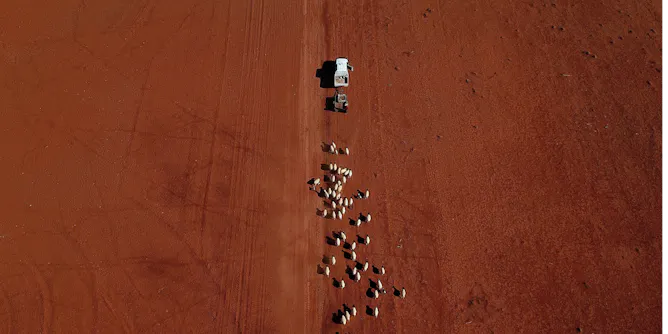
‘Thirsty air’ can create rapid and devastating drought – new research offers hope we might be able to see it coming in advance.
Articles on Rainfall
Displaying 101 - 120 of 184 articles
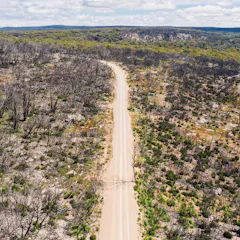
New research shows nature started its long road to recovery in 2020 – especially in NSW and Victoria. But overall conditions across large swathes of the country remain poor.

The NSW floods are a textbook example of the theoretical impacts we can expect on Australian rainfall as climate change continues.

New research shows that one-third of yearly nitrogen runoff from Midwest farms to the Gulf of Mexico occurs during a few heavy rainstorms. New fertilizing schedules could reduce nitrogen pollution.
The threats of climate change to plants, animals and people in Africa mean that the continent is an excellent place for biometeorological research.
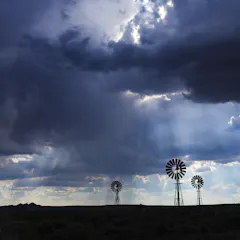
Trends across the different rainfall zones can be linked to changes recorded for large-scale climate systems.
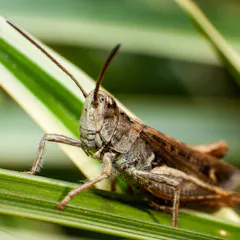
Locust outbreaks are driven by unusual climatic conditions.
Mosquitoes love the wetter weather La Niña brings to some parts of Australia. But will we see more mosquito-borne disease?
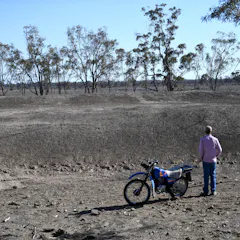
To fully understand why droughts begin, persist and end, we need to answer the question: where does Australia’s rainfall come from? It may seem basic, but the answer isn’t so simple.
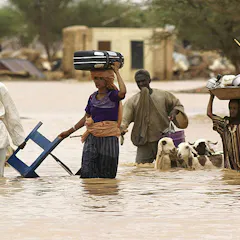
To prevent the humanitarian disasters that follow floods in Sudan, more attention needs to be paid to infrastructure planning.
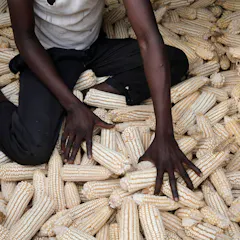
Low productivity is one of the biggest challenges facing Uganda’s maize industry. But smallholder farmers still won’t adopt improved seed.
Downpours in eastern Australia this year have been good for crops and some dams. But when it comes to drought, Australia is not out of the woods yet.

It’s a lot more than you might think.
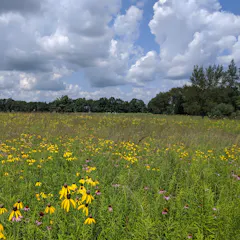
Restoring former prairies that have been plowed under for farming delivers land, wildlife and climate benefits. But a new study finds that the weather plays a surprising role.

Finding could be useful for attempts to manipulate the weather using technology.

“Nairobi fly” are obvious due to their red and black colouration; these are warning colours of their toxicity.
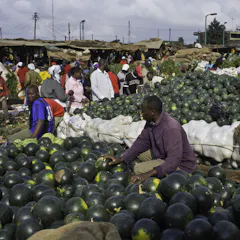
County governments and the health ministry should allow produce markets to operate in urban areas.

The findings suggest that farmers will benefit from more accurate crop yield monitoring.
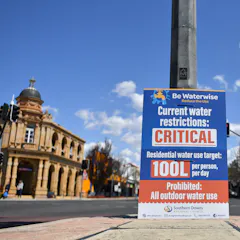
Five capital city water storages fell over summer, and some appear to be facing dramatic long-term declines. Late drenching rains fell on southeastern Australia, but some unlucky centres missed out.
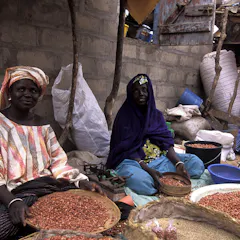
We need to understand colonial histories to understand climate risks.
Top contributors
-

ARC Future Fellow and Associate Professor in Climate Science, ARC Centre of Excellence for 21st Century Weather, The University of Melbourne
-
Professor, Water and Landscape Dynamics, Fenner School of Environment & Society, Australian National University
-
Professor of Physical Geography, University of the Witwatersrand
-
Postdoctoral Research Fellow in Atmospheric Sciences, The University of Melbourne
-
Climate scientist, Australian Bureau of Meteorology
-
Researcher, Agricultural Research Council
-
Associate Professor, ARC Centre of Excellence for Weather of the 21st Century, Monash University
-
Climate Scientist, Australian Bureau of Meteorology
-
Professor of Atmospheric Science and Colorado State Climatologist, Colorado State University
-
Adjunct Professor (Practice) in Climate Science, School of Earth, Atmosphere and Environment, Monash University
-
Climate Scientist, Australian Bureau of Meteorology
-
Professor of Climate Science, UMass Lowell
-
Senior Research Fellow, ARC Centre of Excellence for Weather of the 21st Century, Australian National University
-
Professor in Cloud Microphysics, Monash University
-
Research academic, Fenner School of Environment & Society, Australian National University