
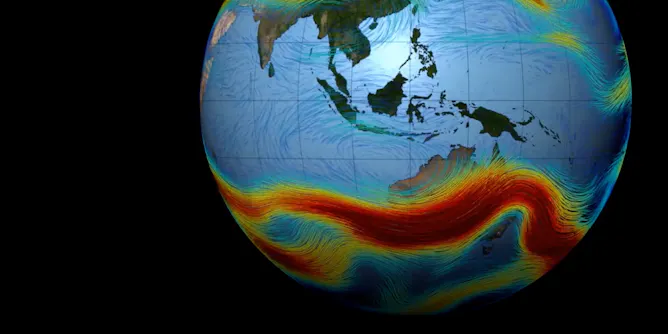
Global warming is changing the high-altitude autumn winds over southeast Australia, which means less rain and trouble for air travel.
Articles on Rainfall
Displaying 81 - 100 of 184 articles
Would you trust a weather forecast made by a machine that had learned how weather systems behaved by reviewing thousands of past weather maps?

Clearing alien trees from mountain catchments is a more cost-effective approach to providing water than building and maintaining desalination plants.
New data has revealed rainfall records from as far back as 1677.

By following moisture from the oceans to the land, researchers worked out exactly how three oceans conspire to deliver deluges of rain to eastern Australia.
Tree rings are ‘nature’s weather stations’ and reveal far more of the Daly River’s history than scientific records can.
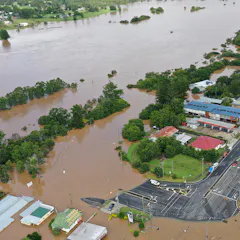
A weather system called ‘atmospheric rivers’ is causing this inundation. In March last year, an atmospheric river brought 800kg of water vapour over Sydney every second.
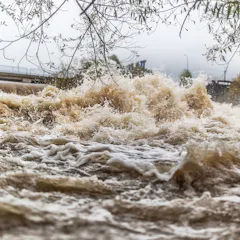
Southern Africa’s current above-average rainfall is a climate variability signal - a short-term fluctuation in average wet-season conditions.

A draft plan for Sydney’s water supplies includes expanding desalination and potentially adding highly treated sewage to drinking water. All options must be on the table as the climate warms.
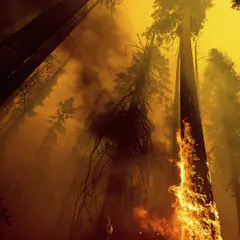
US disasters in 2021 told a tale of two climate extremes. A climate scientist explains why wet areas are getting wetter and dry areas drier.
Extended periods of rain are most likely found in locations where mountains are near oceans.
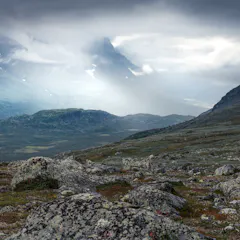
New climate simulations show that there will be more rain and less snow falling in the Arctic by the end of the century, particularly in the fall and winter.
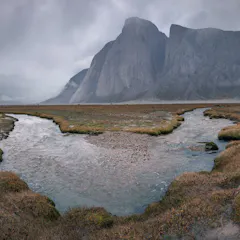
Some Arctic regions will see more rain than snow decades earlier than previously thought, say scientists.
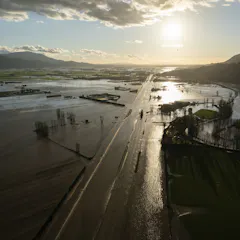
An atmospheric river is a band of warm, moisture-laden air many hundreds of kilometres long and hundreds of kilometres wide. It can dump prodigious amounts of rain over a large area.
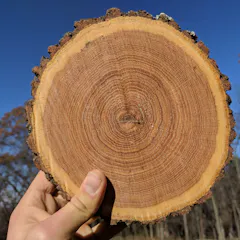
Tree rings carry a wealth of information, which can be used to uncover climate data from hundreds of years ago.
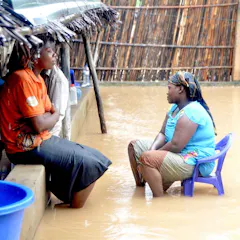
Small and medium-scale farmers and agri-businesses in Southern and Eastern Africa, which are at the heart of inclusive food value chains, are not receiving fair prices for their produce.
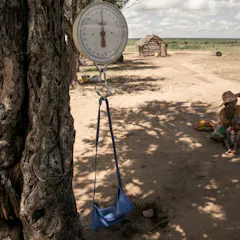
Out of the last six years in Madagascar, five years have had poor or very bad rainy seasons.
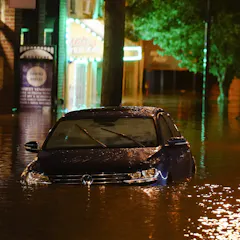
Evidence is mounting that, as the climate warms, the amount of rain falling in heavy storms is increasing, especially in the central and eastern US.
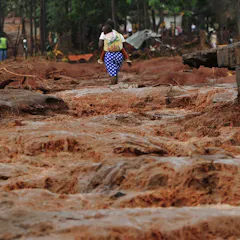
The report projects an increase in mean temperatures and hot extremes across the continent. Worryingly the rate of temperature increase across the continent exceeds the global average.
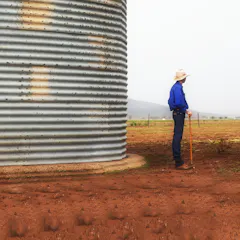
New ABARES research examines the climate change challenge facing Australian farmers
Top contributors
-

ARC Future Fellow and Associate Professor in Climate Science, ARC Centre of Excellence for 21st Century Weather, The University of Melbourne
-
Professor, Water and Landscape Dynamics, Fenner School of Environment & Society, Australian National University
-
Professor of Physical Geography, University of the Witwatersrand
-
Postdoctoral Research Fellow in Atmospheric Sciences, The University of Melbourne
-
Climate scientist, Australian Bureau of Meteorology
-
Researcher, Agricultural Research Council
-
Associate Professor, ARC Centre of Excellence for Weather of the 21st Century, Monash University
-
Climate Scientist, Australian Bureau of Meteorology
-
Professor of Atmospheric Science and Colorado State Climatologist, Colorado State University
-
Adjunct Professor (Practice) in Climate Science, School of Earth, Atmosphere and Environment, Monash University
-
Climate Scientist, Australian Bureau of Meteorology
-
Professor of Climate Science, UMass Lowell
-
Senior Research Fellow, ARC Centre of Excellence for Weather of the 21st Century, Australian National University
-
Professor in Cloud Microphysics, Monash University
-
Research academic, Fenner School of Environment & Society, Australian National University