
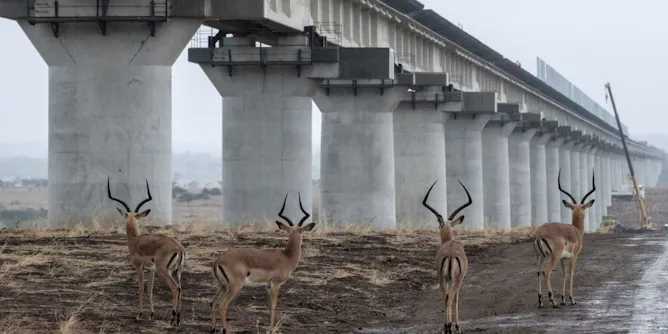
These types of projects can be quite harmful. They affect the land, people and biodiversity and must be planned with all this in mind - building in future climate scenarios too.
Articles on Tanzania
Displaying 121 - 140 of 356 articles

Not only are physical banks out of reach, people also face barriers to using digital financial services.
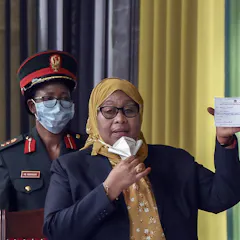
President Samia Hassan has set Tanzania on a change of course – time will tell if the pattern holds and addresses the country’s challenges.

Antimicrobial resistance disproportionately affects the world’s poorest and most vulnerable populations in low- and middle-income countries.
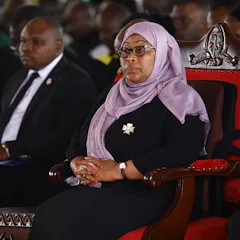
President Samia Hassan may have been an ‘accidental president’ but Tanzania’s leader has set out to showcase her own political strategy.
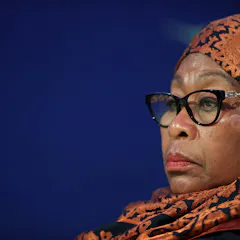
Hassan is winning party loyalists, and has launched a diplomatic charm offensive ahead of 2025 polls.
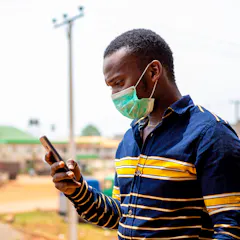
This is not an alternative to traditional disease surveillance, but a complementary tool.
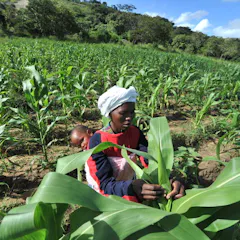
Insurance, stress-tolerant seeds and tailored credit can make smallholder farming profitable.
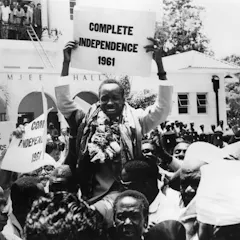
Over two millennia, Swahili has built bridges among people across Africa and into the diaspora.

Young academies, which generally represent early career scientists, fared far better than their senior counterparts - a promising sign for the future.
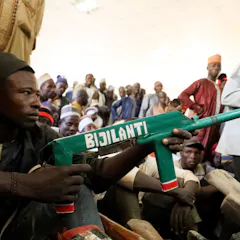
Aside from human rights abuses, vigilantes may be unreliable, poorly skilled, and lacking transparency and accountability.
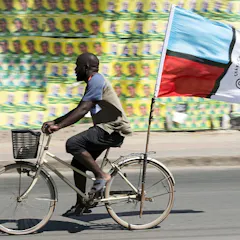
Peace on its own is not enough to meet the unfulfilled promise of prosperity and economic advancement.

A new study finds more than one early human species lived on the landscape in Northern Tanzania 3.66 million years ago. But there are reasons to be cautious about the findings.
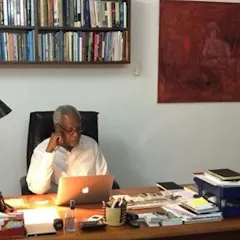
Despite a succession of different challenges, Bgoya’s approach has been consistent.

African livestock keepers need help: without proactive interventions, increasing temperatures will reduce meat and milk production.
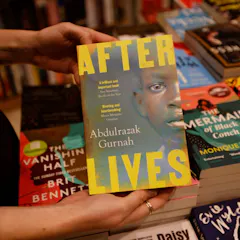
Gurnah’s novels delve deeply into family separation, endless betrayals of core familial relations, and the inexorable pull of the lost past.
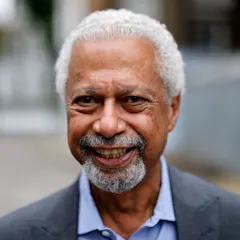
Abdulrazak Gurnah’s stories suggest that it is important to see others in relation to ourselves, to perceive their right of abode even if they cannot claim national belonging.
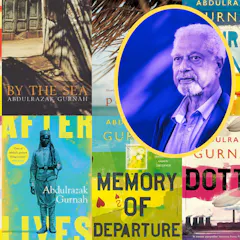
Gurnah won the prize for his “uncompromising and compassionate” look at the “effects of colonialism and the fate of the refugees”.
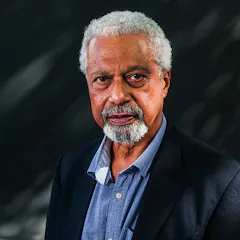
The power in Gurnah’s writing lies in his ability to complicate the Manichean divisions of enemies and friends.
This is a transcript of part 1 of Climate Fight: the world’s biggest negotiation, a series from The Anthill podcast.
Top contributors
-

Researcher, United States International University
-
Lecturer, Tumaini University Makumira
-
Assistant professor, University of Sussex
-
Post-Doctoral Research Fellow, SARChI in Higher Education and Human Development Research Group, University of the Free State
-
PhD Candidate, Department of Political Science and Public Administration, University of Nairobi
-
Senior Lecturer in Politics and International Relations, University of East London
-
Professor of Democracy, University of Birmingham
-
Research Associate Plant Systematics, Bayreuth University
-
Associate Professor of International Studies, University of Nottingham
-
Lecturer in Wildlife Conservation
-
Professor of French and Critical Disability Studies, Lancaster University
-
Asso. Professor in Anthropology, University College London, UCL
-
Professor of Disease Ecology and Public Health, University of Glasgow
-
Senior Lecturer in Social Work, Australian Catholic University
-
Researcher, SAMRC/Centre for Health Economics and Decision Science- PRICELESS SA, University of the Witwatersrand