

Cities benefit from trees, which can cool concrete sprawls and improve air quality.
Articles on Urban forests
Displaying 1 - 20 of 34 articles
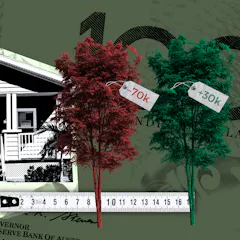
In the first study of its kind, researchers matched more than 1,500 Sydney house sales with data on nearly 50,000 public trees. They found location is crucial.

As urbanisation accelerates across India, the importance of urban forests is becoming more crucial.
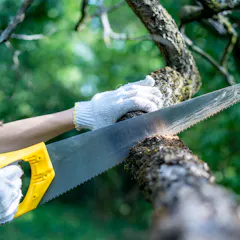
Trees provide shade and cool our cities, but poor management can make them a hazard.

Nature-centric housing solutions already exist in places Brazil, Italy and the Netherlands. The challenge is how to build these at scale and adapt them to the UK.

Have you heard of the 3+30+300 rule for urban forestry? See how Melbourne and Sydney compare to New York, Denver, Seattle, Buenos Aires, Amsterdam and Singapore on trees, canopy and park proximity.
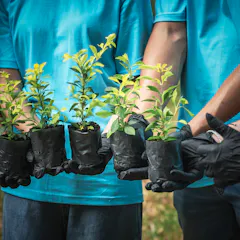
Interviews with tree experts reveal that while half of them supported the Miyawake method, especially in specific urban areas, concerns remained about tree mortality and high costs.

Trees are better at designing habitat than we are. Can we use machine learning to get some tips?

South Australia stands out as having the weakest tree-protection laws, but cities around the nation are losing tree cover at a time when climate change makes them more important than ever.
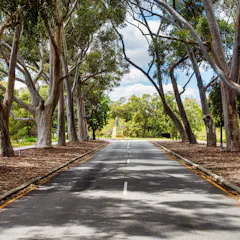
It’s spring, but many street trees look stressed and sick. Heat and insect attack are arriving early. But our cities are also steadily losing canopy cover.
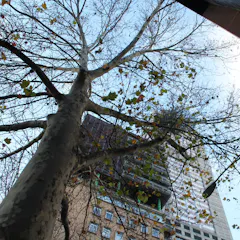
Mistletoes are ecological keystones that boost habitat value for wildlife, so we added them to established plane trees in the inner city.

Food forests are urban oases that pack a lot into small spaces, including food production, local cooling and social connections.

In 2015, 6,700 premature deaths were caused by urban heat – this can be reduced by a third by planting more trees.
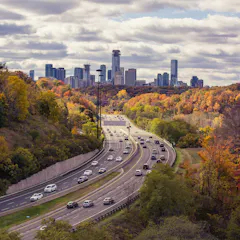
We cannot think of nature as something set aside in wildernesses, far from human activity. We need to conserve some elements of nature everywhere, including in the cities we live in.

Urban plantings are part of the solution to living in warmer cities, but most tree and shrub species in the world’s cities will struggle too. The impacts on liveability could be huge.

Well-designed residential developments with abundant tree cover can help protect cities against urban heat and flooding.
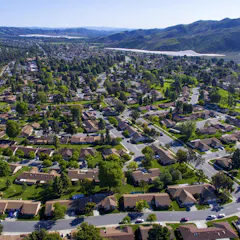
During heatwaves, the highest temperatures are often found in urbanized areas. Small green spaces are often overlooked as a way to cool urban areas.

There is a growing interest in planting small trees in urban areas. However, large trees have significant advantages.

Invasive mammals have already removed some native bird species from our cities. It’s why urban forest restoration and predator control are crucial to support the ‘ghosts of predation past’.
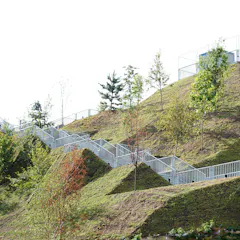
Pop-up spaces can be successful, they just need to be better thought through and created with urban ecology in mind rather than economics.
Top contributors
-

Vice-Chancellor's Research Fellow, Centre for Urban Research, RMIT University
-
Associate Director Smart Green Cities, Macquarie University
-
Associate Professor in Urban Science, University of California, Davis
-
Professor and ARC Future Fellow, Hawkesbury Institute for the Environment, Western Sydney University
-
Professor, Sustainability and Urban Planning, RMIT University
-
Distinguished Professor, Director of Smart Green Cities, Macquarie University
-
National Technical Executive in Ecology at WSP Australia Pty Ltd. Adjunct Associate Professor, School of BioSciences, The University of Melbourne
-
Research Fellow, School of Ecosystem and Forest Sciences, The University of Melbourne
-
Ecologist, School of Biological Sciences, Adelaide University
-
PhD Candidate and Vanier Scholar, York University, Canada
-
Senior DECRA Research Fellow, The University of Melbourne
-
Professor, School of Design, University of Technology Sydney
-
Senior Research Fellow, Institute for Climate, Energy and Disaster Solutions, Australian National University
-
Professor, School of the Built Environment, University of Technology Sydney
-
Associate professor, The University of Melbourne