

The Hauraki Gulf is already experiencing more frequent and longer lasting marine heatwaves. Seabirds now have to travel further to find enough food.
Articles on Zooplankton
Displaying 1 - 20 of 23 articles
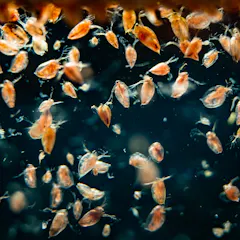
Zooplankton are microscopic in size, but crucial for regulating aquatic ecosystems and moving nutrients up the food chain. This is affected by human activities including pollution and climate change.
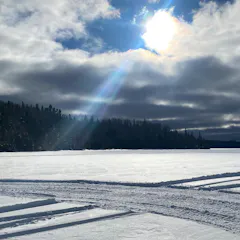
Canadians are no strangers to cold winters, when everything in nature appears to be frozen solid. However, under the ice cover of lakes, many animals remain active during the winter.
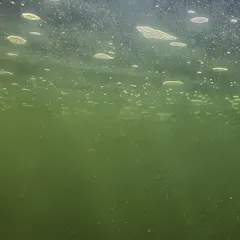
Some plant plankton engage in predatory behaviour and consume bacteria. This can contribute to climate change as these plankton stop photosynthesis in warmer temperatures.
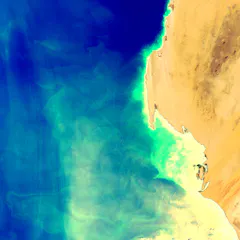
Taking more carbon dioxide out of the atmosphere by stashing it in the ocean seems like a good idea, but it could backfire if tiny marine animals called zooplankton get extra hungry.
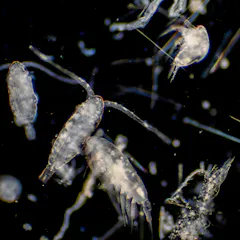
Explore the incredible underwater world of plankton.
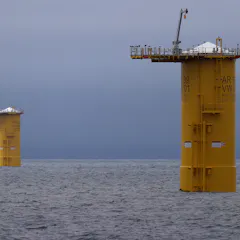
A recent study focusing on how offshore wind farms in Massachusetts waters could affect endangered right whales does not call for slowing the projects, but says monitoring will be critical.

Muttonbird ‘wrecks’ are becoming more common. Despite speculation about many possible causes, the evidence points to changes in the Arctic ocean ecosystem from where the birds migrate to Australia.
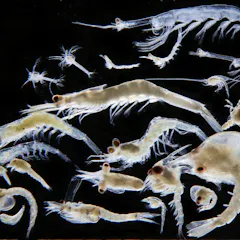
Marine life known as zooplankton might be the biggest problem with getting carbon cycling right in climate models. The potential variations in carbon uptake are greater than global transport emissions.
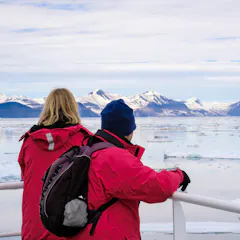
Arctic sea ice algae contaminated with microplastics have serious consequences for ecosystems and the climate.
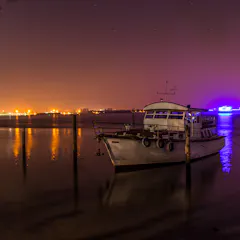
Artificial lighting from cities illuminates coastal waters and can change the physiology and behaviour of marine organisms.
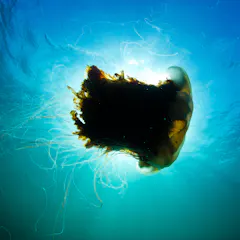
Plankton, some of the smallest organisms on Earth, are leading big changes in the ocean.
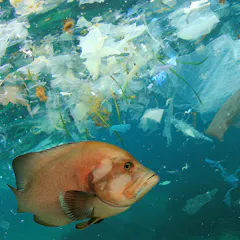
We need to advance our understanding of the effects of microplastics on aquatic ecosystems, especially on small animals at the base of food webs that might be ingesting more of these particles.
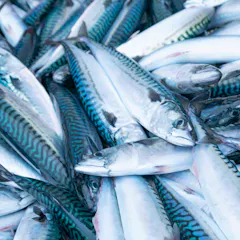
Suspending mackerel and spring herring fishing in the southern Gulf of St. Lawrence will impact the fishing industry on many levels.
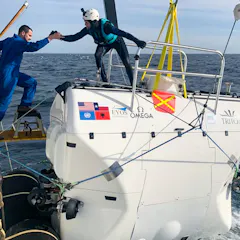
Unless we know what is in the ocean, we can’t protect the biggest part of the planet.
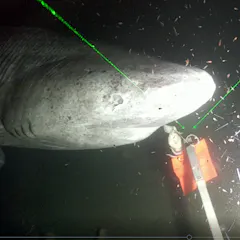
The eastern Arctic and sub-Arctic marine areas of Canada are changing rapidly under climate change.
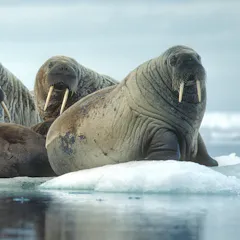
Algae at the bottom of the Arctic food chain relies on sea ice.
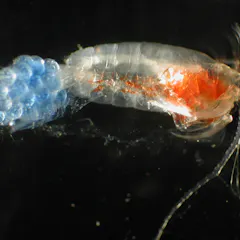
DNA sequencing is making it possible for scientists to identify thousands of species of zooplankton – drifting animals that are key links in ocean food webs.
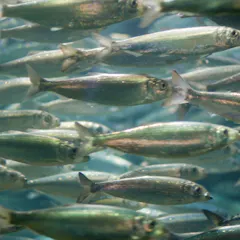
Fish are a key food source for millions of people worldwide. But a recent study finds long-term warming over the next 200 years could starve tiny plankton, with impacts that would ripple up food chains.
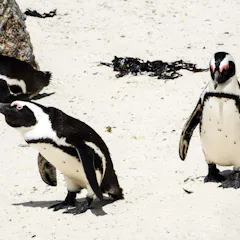
Young African penguins are following the usual cues to feeding grounds only to find that the sources of food in these places is no longer available. This is devastating for their numbers.
Top contributors
-

Associate Professor of Marine Conservation, University of Plymouth
-
ARC DECRA Fellow/Senior Lecturer, IMAS, University of Tasmania
-
Beatrix Beisner is a Friend of The Conversation.
Professor, Aquatic ecology; Groupe de recherche interuniversitaire en limnologie (GRIL), Université du Québec à Montréal (UQAM)
-
PhD Candidate, Evolutionary and Ecological Parasitology research group, University of Otago
-
Research Fellow in School of Earth and Ocean Sciences, Cardiff University
-
Honorary Research Associate and Research Manager at SANCCOB, University of Cape Town
-
Assistant Professor of Earth, Ocean & Environment, University of South Carolina
-
Professor of Conservation Technology in Environment and Engineering, Duke University
-
Research Fellow, Bristol Zoological Society and University of Exeter; Extraordinary Professor: Department of Biodiversity and Conservation Biology, University of the Western Cape, University of Exeter
-
Professor of Earth System Science, University of California, Irvine
-
PhD Student, Department of Biology, University of Victoria
-
Postdoctoral fellow, Marine Ecology, University of Victoria
-
Professor of Marine and Freshwater Biology, University of Essex
-
Professor, The University of Queensland
-
ARC DECRA Fellow, Institute for Marine and Antarctic Studies, University of Tasmania