
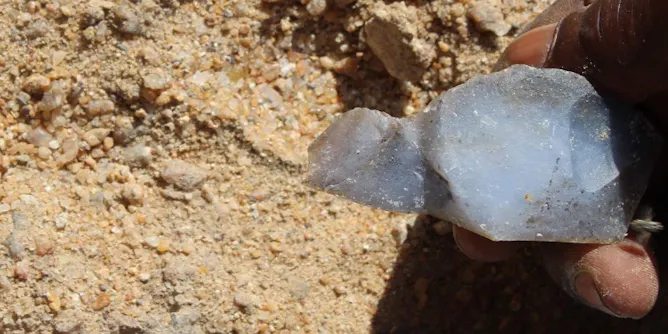
The age of the oldest known Oldowan stone tools from east Turkana has been pushed back by 700,000 years.
Articles on Archaeology
Displaying 41 - 60 of 654 articles

The discovery that small stone arrow tips were treated with plant poison 60,000 years ago means that ancient African hunters were capable of complex thinking.

An ancient cremation would have been a community spectacle in a place returned to and reignited over many generations. What was behind this unexpected funeral ritual?

Pharaohs may have used this vessel to hunt hippopotami.

An archaeologist reveals what she learned from sifting through a 200-year-old rat nest recovered from a historic Philadelphia home.

Long ago, people identified fossils in their environment and explained them within their own cultural framework. This was early citizen science.

By working closely with the objects, students will learn how to become archeological detectives and engage with the process of museum research from start to finish.

Studying ancient genes can tell us more about the evolution of humans’ anatomy, behaviour and thinking.
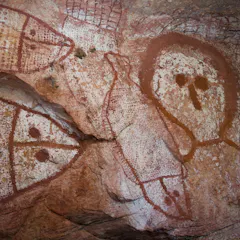
New research confirms humans first reached the Sahul super-continent by two different routes around 60,000 years ago.

The tools reveal how Aboriginal ancestors survived and thrived in the continent’s interior more than 100 years ago.
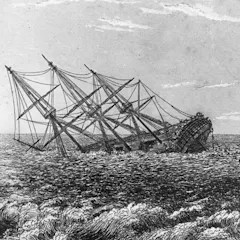
The British Navy’s HMS Pandora struck the Great Barrier Reef around 1791 and sank, taking 35 men with it.

New research details Aboriginal craftsmanship – along with accompanying wall art – at a remote site in the Cape York Peninsula.

Dogs were already remarkably diverse more than 10,000 years ago, long before kennel clubs and pedigrees.

Like the bronze and iron ages, plastic is defining an archaeological era.

The decades-long search for Amelia Earhart, her aircraft, and her navigator Fred Noonan, has been both controversial and costly.

An ancient band of thousands of precisely aligned small pits stretching 1.5 kilometres across the Pisco Valley in Peru has baffled experts for almost a century.

A new comprehensive map reveals the true scale of the ancient Roman road network – but it is still incomplete.

Cylinder seals were intimately tied to their owner, showcasing their identity, beliefs and social status.
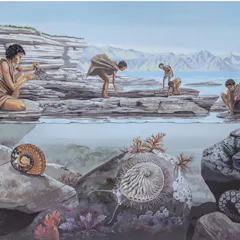
A coastal migration up and out of Africa was more likely to succeed than an overland journey.
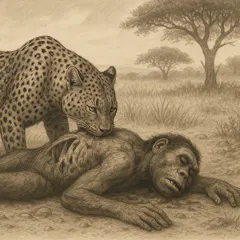
Paleoanthropologists have thought that Homo habilis was the first stone-tool maker and meat-eater in our genus. But new research suggests H. habilis might not have been so advanced.
Top contributors
-

PhD Candidate, Anthropology and Archaeology, University of Bristol
-
Associate Professor of Archaeology, Griffith University
-
Director, Australian Research Centre for Human Evolution, Griffith University
-
Professor in Geochronology and Geochemistry, Southern Cross University
-
Associate Professor and Director, Flinders Microarchaeology Laboratory, Flinders University
-
Professor of Archaeology and Biological Anthropology, School of Social Science, The University of Queensland
-
Professor of Environmental and Geographical Sciences, Bournemouth University; University of Reading
-
Professor of Archaeology, Griffith University
-
Curator of Human Evolution of the Cleveland Museum of Natural History and Research Assistant Professor of Anthropology, Stony Brook University (The State University of New York)
-
Associate professor, University of Johannesburg
-
Associate Professor in Archaeology and Space Studies, Flinders University
-
Honorary Associate Professor, UNSW
-
Research Associate, African Centre for Coastal Palaeoscience, Nelson Mandela University
-
Head, Public Engagement, Chau Chak Wing Museum, University of Sydney
-
Associate Professor of Anthropology, Rice University