

A host of unique crocodylian species ruled the roost in Australia and surrounds for millions of years – until humans came along.
Articles on Archaeology
Displaying 21 - 40 of 654 articles
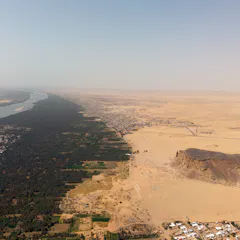
The ancient Kush city of Jebel Barkal rose up in the Nile River Valley starting around 2000 BCE. New research dug deep to learn more about what this landscape was like over the past 4,000 years.

The fragment wasn’t placed besides the body, but stuffed inside it.

The circular mass graves were filled with the bones of people and animals, often carefully arranged around a key person at the centre.

Trance states may influence the movements depicted in rock art.

An archaeologist examines the cultural obliteration Iran has incurred as a result of strikes in the US-Israel-Iran conflict. How can such damage be compensated and which global organisations can the country turn to?

Evidence of hominins butchering huge animals suggests that our human ancestors lived in big social groups.

Did Earth’s major diversification event really happen in one sudden explosion? Our fossil discovery suggests not.

Based on international collaborations lasting decades, two new studies have unlocked previously unavailable information from the bones of dogs long dead.
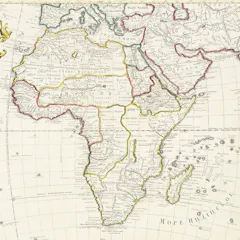
Archaeology offers a useful way to counter some biases.
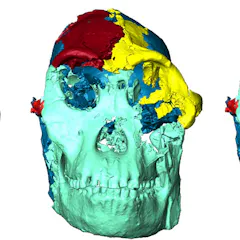
What did the face of our ancestors looks like 3 million years ago? Meet the reconstructed skull of “Little Foot” which provides valuable insights into how our ancestors adapted to their environment.

Tiny triangular-shaped flints from arrowheads found in Uzbekistan shed light on how the first settlement of ‘Homo sapiens’ – our modern human ancestors – came to Europe.

Our study has finally uncovered the circumstances surrounding the death of 77 people, mostly women and girls.

The discovery points to a long evolutionary history in north Africa, much earlier than modern Homo sapiens.

Some of the dances depicted in rock art are just about entertainment, not ritual.

The recently discovered heart-shaped locket may offer a rare glimpse into the king’s personal affections.

Digital tools allow archaeologists to identify similarities between fragments and artifacts and potentially recover previously unknown parts of their stories.
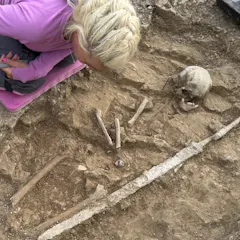
Swords found in early medieval graves show the complex cultural meanings that weapons can hold.

Aerial lidar raises ethical questions because it can collect data remotely without the knowledge or consent of Indigenous and descendant populations that are on the ground.

People were creating cave art in Indonesia 67,800 years ago – before modern humans reached Australia.
Top contributors
-

PhD Candidate, Anthropology and Archaeology, University of Bristol
-
Associate Professor of Archaeology, Griffith University
-
Director, Australian Research Centre for Human Evolution, Griffith University
-
Professor in Geochronology and Geochemistry, Southern Cross University
-
Associate Professor and Director, Flinders Microarchaeology Laboratory, Flinders University
-
Professor of Archaeology and Biological Anthropology, School of Social Science, The University of Queensland
-
Professor of Environmental and Geographical Sciences, Bournemouth University; University of Reading
-
Professor of Archaeology, Griffith University
-
Curator of Human Evolution of the Cleveland Museum of Natural History and Research Assistant Professor of Anthropology, Stony Brook University (The State University of New York)
-
Associate professor, University of Johannesburg
-
Associate Professor in Archaeology and Space Studies, Flinders University
-
Honorary Associate Professor, UNSW
-
Research Associate, African Centre for Coastal Palaeoscience, Nelson Mandela University
-
Head, Public Engagement, Chau Chak Wing Museum, University of Sydney
-
Associate Professor of Anthropology, Rice University