
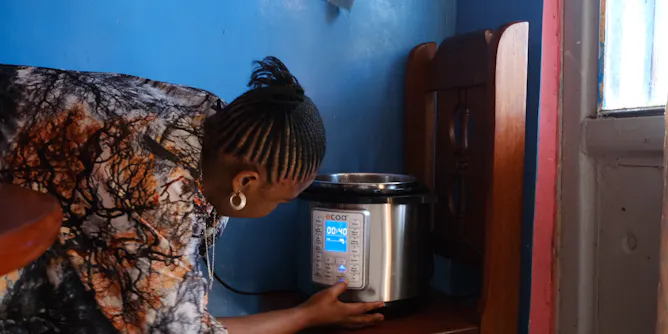
In eastern DRC, a hydropower mini-grid shows how access to electricity happens through public-private partnerships and community programmes.
Articles on Climate solutions
Displaying 41 - 60 of 159 articles

Carbon capture projects could provide the funds needed to restore land degraded by commercial farming and forestry.

South Africa needs almost US$15 billion over a decade just to reach a basic level of climate adaptation, that protects water, food, health and infrastructure.
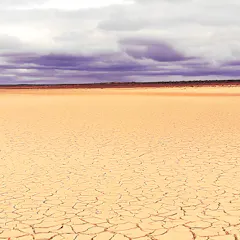
South Africa’s driest regions rely on groundwater, which dries up as the climate warms. Replenishing aquifers with excess rainfall may be a solution.

Gas from Mozambique is running out, leaving South African industry facing a supply crisis. Imported propane gas could offer a workable solution.

Africa doesn’t need a technological breakthrough to scale EV adoption. It needs cheaper capital and supportive policy environments.

With cement production driving 8% of greenhouse gas emissions, green housing is needed urgently.

Distinct disciplines are trained to notice different things.

Climate change is making people sicker and more vulnerable to disease, doctors and scientists explain. Erasing the federal endangerment finding increases the risk.

South African homes need two-way meters so that they can feed extra solar power from home systems and electric vehicles back to the grid.
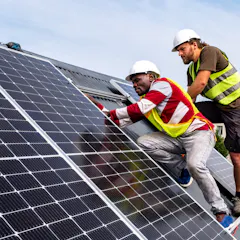
South Africa needs a renewable energy industrial strategy, not just requirements for green power projects to buy a percentage of solar parts from local companies.
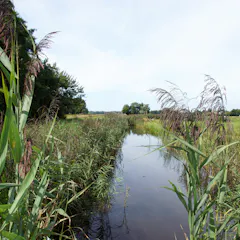
Ditches and canals can be climate heroes.
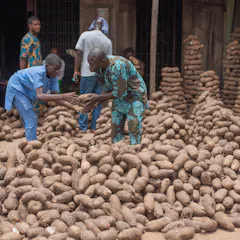
Climate change caused drought and flooding is damaging Nigeria’s staple foods, maize, cassava, millet and yam, smallholder farmers say.
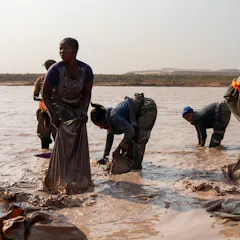
The G20’s new critical minerals framework wants to move Africa beyond raw exports so that mineral wealth creates jobs and growth on the continent.
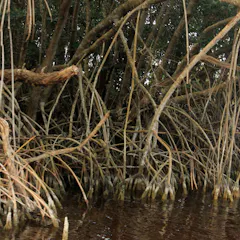
Mangroves offer natural protection against flooding. Without them, communities are left vulnerable.

The G20’s legacy so far has been to preserve capitalist financial systems.
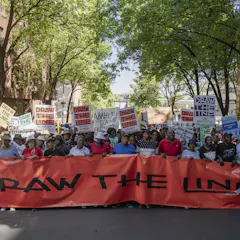
For the first time, countries now have a shared way to understand whether the world is actually improving at adapting to climate impacts.
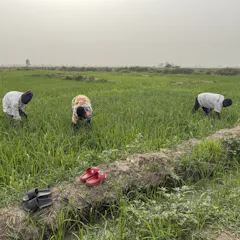
Climate-smart agricultural technologies increase crop sales revenue for farmers in the Sahel region.
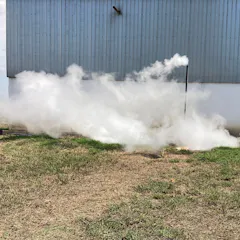
Wastewater heat recovery, which recycles hot water from drains to preheat new water, could cut coal use, lower carbon emissions, and create local jobs in Zambia.
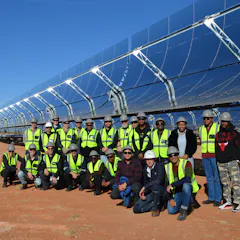
India links new rural power lines to solar projects, providing cleaner energy for farms, while South Africa has ways for communities to benefit from green energy profits.
Top contributors
-

Professor of Climate Change, Food Systems and Health and Director of The Lancet Countdown in Africa, London School of Hygiene & Tropical Medicine
-
Senior research officer: Climate Adaptation in the African Climate and Development Initiative (ACDI), University of Cape Town
-
Director of African Climate and Development Initiative, Professor in Environmental and Geographical Science, University of Cape Town
-
Senior Lecturer at Oyo State College of Agriculture and Technology, Igboora, Nigeria and Extraordinary Senior Lecturer at Indigenous Knowledge Systems Centre, North-West University, Mafikeng, South Africa, North-West University
-
Professor of Environmental Science, Rhodes University
-
Ass. Professor, University of Maryland Eastern Shore; North-West University
-
Researcher, Centre for Global Change, Walter Sisulu University
-
Adjunct Associate Professor of Population Health Sciences, University of Wisconsin-Madison
-
Professor of Environmental Medicine, University of Wisconsin-Madison
-
Professor Emeritus of Environmental and Occupational Health Sciences, University of Washington
-
Professor in Engineering, Stellenbosch University
-
Professor and Head of the Department of Geography, Geoinformatics & Meteorology, University of Pretoria
-
Researcher in Environmental Science, Rhodes University
-
Associate Professor of Climate Change, Technology and Policy, Carleton University
-
Professor of Policy Analysis, RAND School of Public Policy