
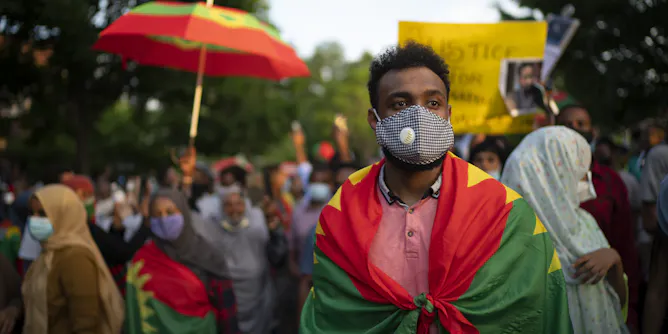
Ahmed Abiy has his work cut out to unify a nation divided along tribal lines
Articles on Ethiopia
Displaying 281 - 300 of 495 articles

The outspoken singer always considered himself to be at risk, and in Ethiopia people loved him because he didn’t let that risk keep him quiet.
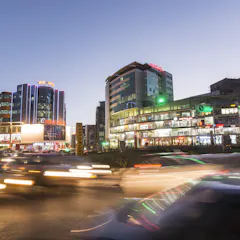
Abiy Ahmed has a vision to upgrade Ethiopia’s capital city but his ambitious megaprojects do not take the majority of Addis Ababa’s residents into account
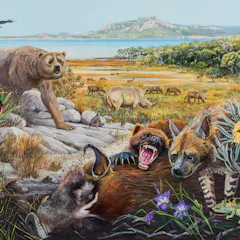
The teeth and limb bones we studied help to understand the role and lifestyle of these species in extinct ecosystems.

The country must urgently address the politics of ethnicity before it can move towards a workable democracy.

A number of programmes now exist that are helping to close the gender gap in African science, technology, engineering and maths.
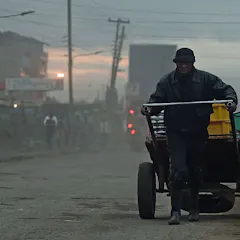
We found that air pollution levels in Nairobi increased by 182% over the study period, Kampala by 162% and Addis Ababa by 62%.
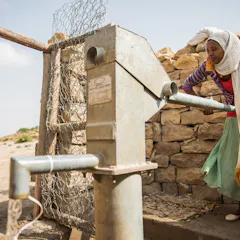
Neglecting existing communal water supplies risks leaving many of the most vulnerable and remote communities unserved.
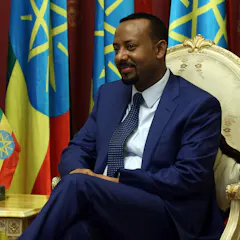
A delayed election could balkanise the country along ethnic lines and become the most severe political crisis in Ethiopia’s modern history.
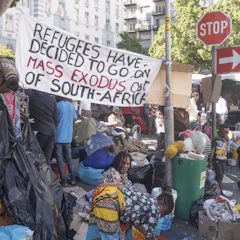
The policy and law applying to refugees and asylum seekers in South Africa is largely progressive. But, in practice, they continue to endure hardship and unfair treatment by officials.

Africa is facing a profound crisis that could set its development back a generation. It needs a solution to its debt problems that doesn’t cripple countries.

Despite their popularity, there are reasons to doubt whether “home gardens” provide a sustainable and cost-effective way of addressing hidden hunger.
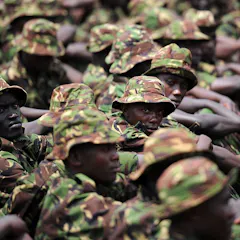
By withdrawing its troops from Somalia, Kenya could be doing more harm than good.
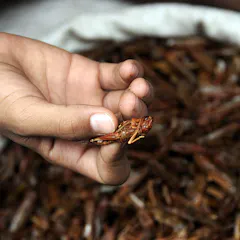
Eating locusts is an old strategy used to get food after locusts devastated crops, but things have changed.

An absence of laws governing the digital space has allowed the government to tinker with internet accessibility as it sees fit.
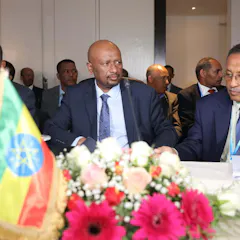
The Nile Treaties prevent upstream countries from using the waters of the Nile without the consent of those downstream. This results in an Egyptian bias.

The findings suggest that this specimen could climb and move in trees. But it may also have been able to walk on the ground. This echoes previous studies.

Thanks to one historic victory, Ethiopia became the only African country never to be colonised.
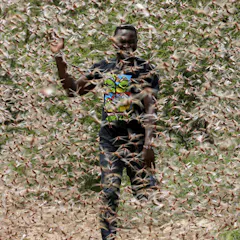
Changing weather modifies insect traits and can have an impact on their food, natural enemies and predators.
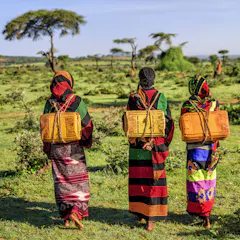
Over 60% of girls in Ethiopia are married by the age of 18. Many don’t have support in negotiating with their husbands and families to take control of their own fertility.
Top contributors
-

Senior Lecturer of Political Science, Georgia Gwinnett College
-
Visiting Lecturer, University of Roehampton
-
Professor, Weber State University
-
Adjunct Professor and Ph.D. Fellow, Center for Constitutional Democracy, Indiana University
-
Professor Emeritus in Global Health & Humanitarian Affairs, University of Manchester
-
PhD candidate, University of the Pacific
-
Associate Professor, Khalifa University
-
Professor of Geography, Ghent University
-
Professor of Sociology and Global and Africana Studies, University of Tennessee
-
Researcher, Ghent University; Oregon State University
-
Senior Research Fellow, Horn of Africa and Southern Africa, Institute of Commonwealth Studies, School of Advanced Study, University of London
-
Professor of International Relations, Norwegian University of Life Sciences
-
Lecturer and Senior Research Fellow at the South African Research Chair in International Law (SARCIL), University of Johannesburg
-
Visiting Adjunct Professor, School of Governance, University of the Witwatersrand
-
CGIAR