
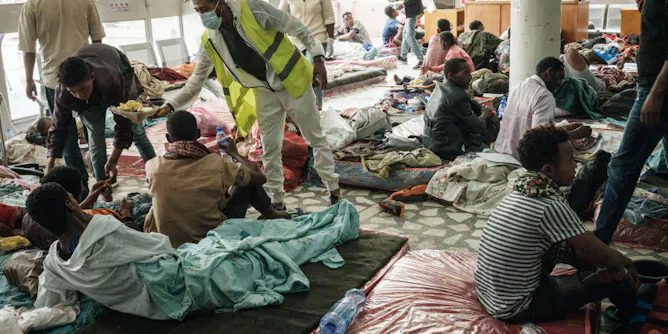
Unless special attention is given to conflict and HIV the war will undermine the achievement of the 2030 goals to end AIDS, discrimination, and new infections.
Articles on Ethiopia
Displaying 201 - 220 of 495 articles

Repeat photography has been used to document vegetation change in Africa since the 1950s; in the last 30 years there’s been an explosion of interest.
The project violates colonial-era water rights but promises cheap and clean power to East Africa.

Industry has renewed confidence after Boeing made commitments to redesign aircraft and train pilots
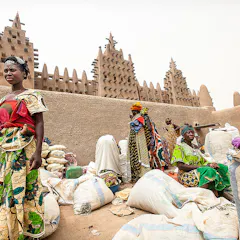
Food security has six dimensions: availability, access, stability, utilisation, agency and sustainability.
Addis may be shaping up to look like the modern city that the government wants, but it is yet to meet the needs of most residents.

The war in Tigray appears to have boosted Eritrea’s efforts at regional pre-eminence. But it could backfire.

Humanitarians are stuck in a dilemma: challenging practices that cause suffering could risk access to the vulnerable people they serve.
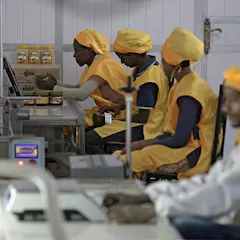
Countries like Ethiopia, Mali and Guinea find it difficult to access the US market.

Ghana lost its federalism due to mistaken political choices and missed opportunities, suggesting that other federations in Africa might well be at similar risk.
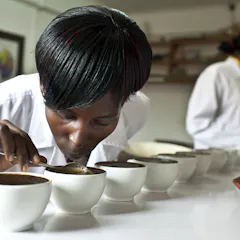
The experiences of all past successful late industrialisers tell us that experimentation with policies resulted in better outcomes.

Spotted hyenas provide ecosystem services that improve human welfare and contribute to sustainable development goals.
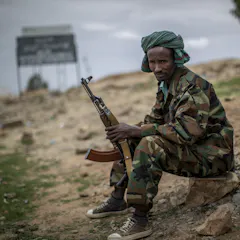
Violence in Ethiopia could cause ripples across the Horn of Africa, destabilizing the region.

Ethiopia’s main religions need to take an emotional distance from politics and find a neutral space so they can get moral clarity.

Many of the temperatures presently being recorded in Africa, and those projected in the next decade, are already close to the limits of human survival, or “liveability”.
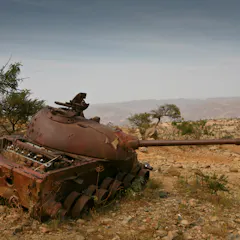
CC BY-NC-ND11.7 MB (download)
Where will an end to the conflict come from?
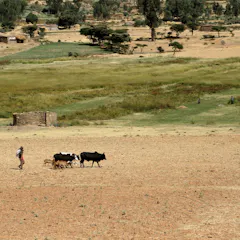
CC BY-NC-ND9.46 MB (download)
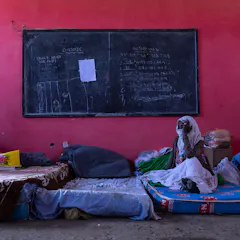
Unless the blockade by Ethiopia is lifted, Tigray will be in a very bad famine situation.
Plus, why reusable food containers aren’t always better for the environment than disposable ones. Listen to The Conversation Weekly.
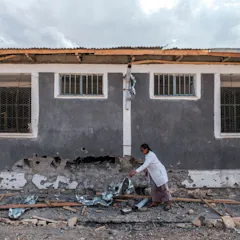
The rate and scale of the destruction of Tigray’s healthcare system is severe.
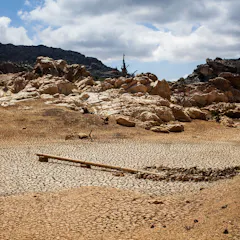
A consequence of a warming world is prolonged dry spells and periods of drought that can lead to infectious diseases like cholera.
Top contributors
-

Senior Lecturer of Political Science, Georgia Gwinnett College
-
Visiting Lecturer, University of Roehampton
-
Professor, Weber State University
-
Adjunct Professor and Ph.D. Fellow, Center for Constitutional Democracy, Indiana University
-
Professor Emeritus in Global Health & Humanitarian Affairs, University of Manchester
-
PhD candidate, University of the Pacific
-
Associate Professor, Khalifa University
-
Professor of Geography, Ghent University
-
Professor of Sociology and Global and Africana Studies, University of Tennessee
-
Researcher, Ghent University; Oregon State University
-
Senior Research Fellow, Horn of Africa and Southern Africa, Institute of Commonwealth Studies, School of Advanced Study, University of London
-
Professor of International Relations, Norwegian University of Life Sciences
-
Lecturer and Senior Research Fellow at the South African Research Chair in International Law (SARCIL), University of Johannesburg
-
Visiting Adjunct Professor, School of Governance, University of the Witwatersrand
-
CGIAR