
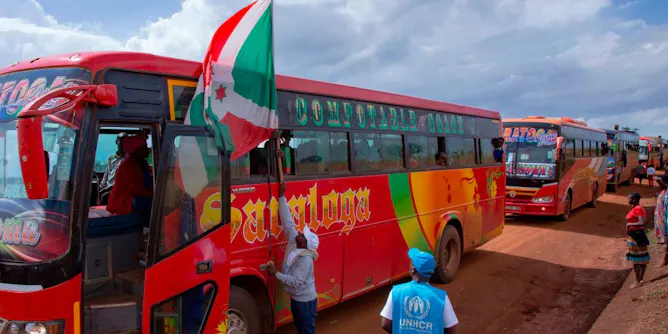
Tanzania’s refugee policy in the 1990s is a good example of how geopolitics affects ordinary refugees.
Articles on Ethiopia
Displaying 141 - 160 of 495 articles
Ghana’s regions have no autonomy, yet creating new ones is contentious as it threatens the interests of chiefs and political parties.
There is a risk that Sudan’s conflict could spill over into neighbouring countries.
Sudan’s location and natural resources have attracted international partners keen to benefit either geopolitically or economically.
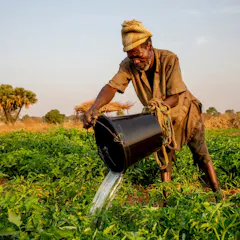
The relationship between small-scale irrigation and food security, diet quality, and nutrition is growing.
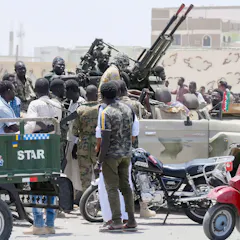
Violence in Sudan threatens to throw the troubled nation into chaos. A scholar of the region explains what is going on and what’s at stake.
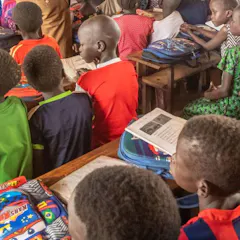
Ethiopia’s unmet refugee education reforms highlight the ways in which bureaucratic structures and interests can shape policy.
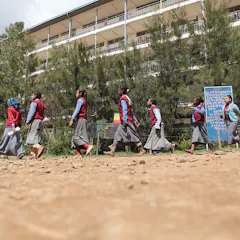
Health extension workers in Ethiopia have had a measurable impact on interconnected challenges such as child marriage, teenage pregnancy, and school dropout.
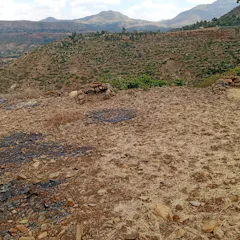
Typically, humanitarian concerns are prioritised following a war. But the environment must also get attention so that societies can produce food and goods to rebuild their lives.

Her exquisite piano compositions drew fans to the Jerusalem monastery where she lived after fleeing Ethiopia.
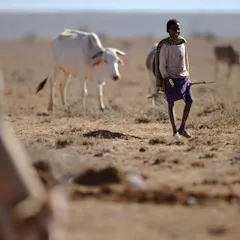
Instead of the deluge of external interventions, ways must be found to build resilience from below, drawing on local practices and networks.

Urban spaces are a repository of people’s beliefs, memories and collective conscience.
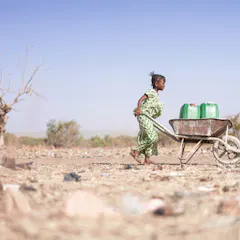
It is not the drought that causes disease outbreak, but instead the way society deals with dry conditions.

Carter’s work in Zimbabwe forms a significant and under appreciated part of his legacy
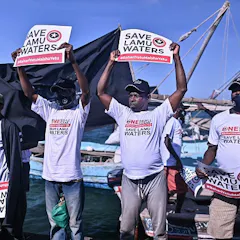
The joint border commission between Kenya and South Sudan is a step in the right direction.
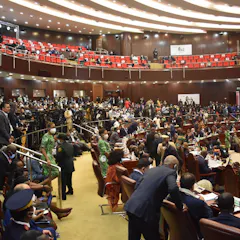
Member states need to arrive at binding, transparent and enforceable priorities to see progress.

South Sudan’s diplomatic support around energy and water is much sought after in Ethiopia, Egypt and Sudan.
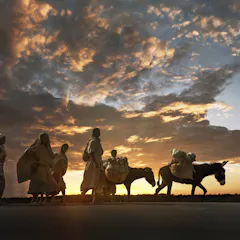
The demand for donkey hides to produce ejiao has led to a shortage of donkeys in China and increasingly worldwide.
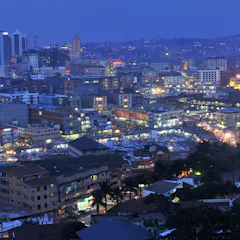
East Africa is one of the fastest urbanising regions in the world, but it’s still in the early phases. There’s a big opportunity to get the region’s cities right.

Factors such as having supportive family and friends, safer communities, positive school environments and adequate resources, are often associated with more physical activity.
Top contributors
-

Senior Lecturer of Political Science, Georgia Gwinnett College
-
Visiting Lecturer, University of Roehampton
-
Professor, Weber State University
-
Adjunct Professor and Ph.D. Fellow, Center for Constitutional Democracy, Indiana University
-
Professor Emeritus in Global Health & Humanitarian Affairs, University of Manchester
-
PhD candidate, University of the Pacific
-
Associate Professor, Khalifa University
-
Professor of Geography, Ghent University
-
Professor of Sociology and Global and Africana Studies, University of Tennessee
-
Researcher, Ghent University; Oregon State University
-
Senior Research Fellow, Horn of Africa and Southern Africa, Institute of Commonwealth Studies, School of Advanced Study, University of London
-
Professor of International Relations, Norwegian University of Life Sciences
-
Lecturer and Senior Research Fellow at the South African Research Chair in International Law (SARCIL), University of Johannesburg
-
Visiting Adjunct Professor, School of Governance, University of the Witwatersrand
-
CGIAR