
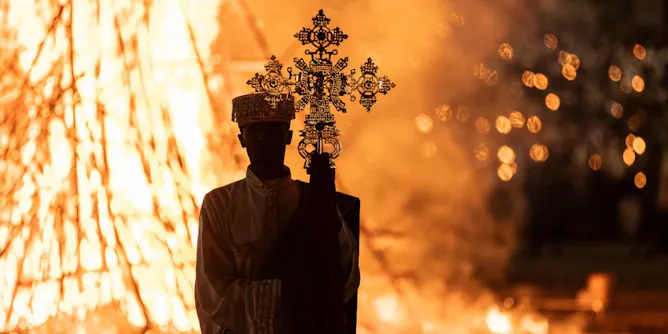
News coverage of Ethiopia’s ethnic conflicts has overshadowed the growing tensions and polarisation between religious communities.
Articles on Ethiopia
Displaying 121 - 140 of 495 articles

Did the Green Revolution, which brought high-tech agriculture to developing nations in the 1960s, prevent famine? Recent research takes a much more skeptical view.

If you’ve decided to look for coffee that’s better for the earth or the people making it, you might need some help translating all the industry lingo.

Without refugee status people aren’t able to receive valuable support, like the right to live and work in a country.

Climate change is putting pressure on Ethiopia’s largest city, Addis Ababa, and exposing people to disease and natural disasters.
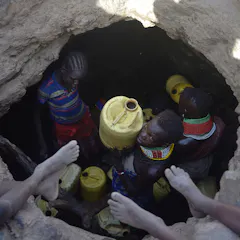
Better monitoring of groundwater is important for sustainable management.

Lack of sea access has constrained Ethiopia’s ability to cater for its large population.

It is not mere expansion, but the character of the expansion which will guide the five Brics countries on whether they admit new members.

The borderless nature of cyberspace presents particular challenges for African states used to controlling activities in their territory.
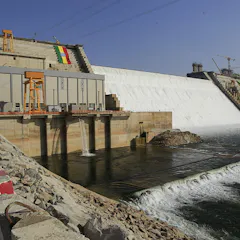
The Nile Basin states are keen to see what kind of deal Ethiopia reaches with Egypt and Sudan.
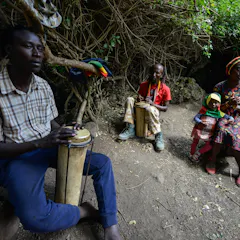
The first Rastafarian communities emerged around 1931 in eastern Jamaica. Today, there are over 700,000 Rastafarian communities located on almost every continent.
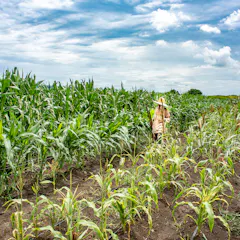
Labour, yields, and biodiversity are all elements of agriculture that need to be balanced.

There is increased demand to join BRICS in the emerging world order, partly as a countervailing power to “the west”.
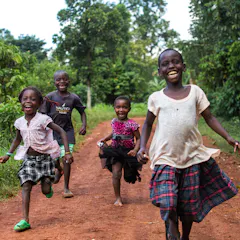
Africa contributes less than 1% of research worldwide on movement behaviours in children. This means that research on movement behaviours has largely excluded over 16% of the world’s population.
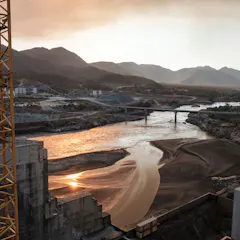
Hundreds of rivers are shared between two or more countries – this could be a source of cooperation or conflict.

Musicians established themselves in the US, where they continued to practice their cultural life, which flourished.
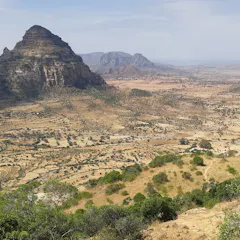
Even though the Tigray war front moved past Dabba Selama several times, the community suffered less than other nearby villages.
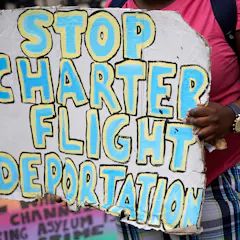
The forced return of migrants by European states has ignored pressures and interests of African countries of origin.
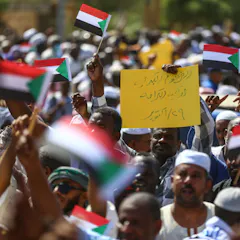
An African-led process would take into account complex regional dynamics – which would lead to a better and more stable peace agreement.
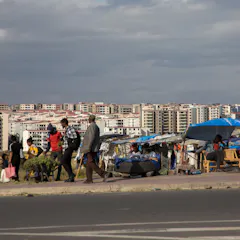
Ethiopia’s mass housing project has built and transferred half-a-million houses in two decades – but it’s damaging the social fabric of communities.
Top contributors
-

Senior Lecturer of Political Science, Georgia Gwinnett College
-
Visiting Lecturer, University of Roehampton
-
Professor, Weber State University
-
Adjunct Professor and Ph.D. Fellow, Center for Constitutional Democracy, Indiana University
-
Professor Emeritus in Global Health & Humanitarian Affairs, University of Manchester
-
PhD candidate, University of the Pacific
-
Associate Professor, Khalifa University
-
Professor of Geography, Ghent University
-
Professor of Sociology and Global and Africana Studies, University of Tennessee
-
Researcher, Ghent University; Oregon State University
-
Senior Research Fellow, Horn of Africa and Southern Africa, Institute of Commonwealth Studies, School of Advanced Study, University of London
-
Professor of International Relations, Norwegian University of Life Sciences
-
Lecturer and Senior Research Fellow at the South African Research Chair in International Law (SARCIL), University of Johannesburg
-
Visiting Adjunct Professor, School of Governance, University of the Witwatersrand
-
CGIAR