
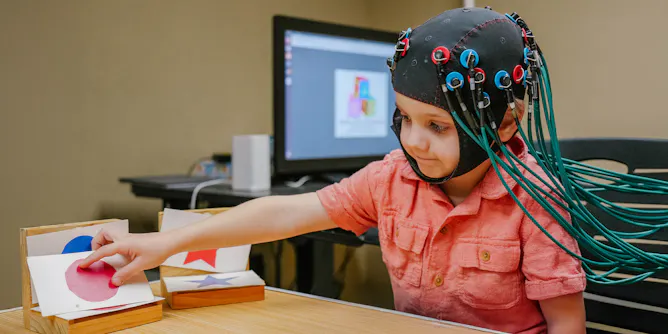
Kids with good executive function tend to grow up to be financially stable, healthy, productive adults. Past attempts to teach these skills have flopped. New brain research on language may change that.
Articles on Neuroscience
Displaying 101 - 120 of 866 articles

Is it possible to interpret babies’ cries in order to understand their needs accurately?

When you cuddle a cat, the ‘love hormone’ oxytocin is rising in both your brains.
Better sleep may help clear toxins associated with dementia from the brain.

Our brains know we’ll change our minds before we do. Understanding how might help us learn to make better decisions.

New study finds that the stubborn brain refuses to forget lost limbs.

Western theories of consciousness tend to assume consciousness is about information.

Research has shown that the way a person moves helps us recognise their identity.
This new study could change the way we think about ageing.

The same principles that help athletes on the court, field or track can help you regulate stress and adapt to changes in everyday life.

Researchers have found dreams are most likely to occur during the stage of sleep known as rapid eye movement, or REM.

How can music be such an extraordinary tonic for most of us, but leave others cold?

A new study shows painless brain stimulation technique may improve people’s ability to learn maths skills.
Chronic pain affects millions of people in the US. Targeting an oft-overlooked brain receptor could one day offer relief.
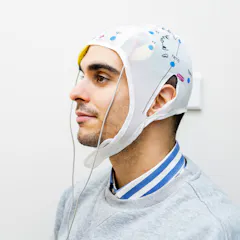
Devices that deliver mild, constant electrical current can alter our brain activity.

Current treatments for alcohol abuse are limited in their effectiveness and come with side effects. Precisely targeting the neurons involved in binge drinking could lead to better options.

Rejection can feel physically painful. It also provides a lesson for your brain on whom to connect with and how.
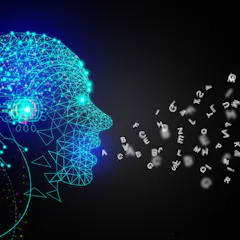
Describing artificial intelligence as having neural networks and understanding language has implications for how we understand both AI and the human brain.

Your brain processes the pleasure of everyday behaviors like eating and drinking similarly to the pleasure of using drugs. Disentangling them requires understanding how memories are formed.

Left and right brains hear speech differently, yet how this divide forms was unclear − until mouse studies showed each hemisphere runs on its own developmental clock.
Top contributors
-

Professor of Clinical Neuropsychology, University of Cambridge
-
Penn State
-
Postdoctoral Research Associate, Cognitive Neuroscience, University of Cambridge
-
Senior Lecturer (Adjunct), Nutritional neuroscientist, Adelaide University
-
Head of Developmental Psychobiology Lab, Deakin University
-
Postdoctoral Researcher in Cognitive Neurosciences, The University of Queensland
-
Senior Research Fellow, Uehiro Centre for Practical Ethics, University of Oxford
-
Professor of Anatomy, University of Bristol
-
Professor Emeritus of Cognitive NeuroImaging, Aston University
-
Professor of Cognitive Neuroscience, Bangor University
-
Senior Research Fellow, The Perron Institute for Neurological and Translational Science, and Faculty of Health Sciences, Curtin University
-
Associate Professor of Family & Community Medicine and Pediatrics, retired, University of California, San Francisco
-
Professor of Behavioral Neuroscience, University of Richmond
-
Lead, Cognition and Consciousness Imaging Group, Division of Anaesthesia, University of Cambridge
-
Associate Professor in Clinical Psychology and Neuropsychology, Trinity College Dublin