
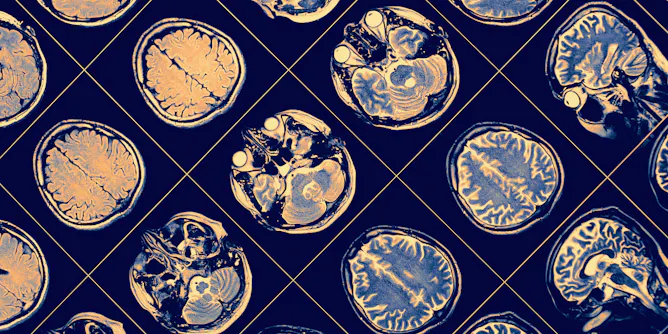
Standard medical exams miss subtle signs of awareness in around 40% of cases.
Articles on Neuroscience
Displaying 141 - 160 of 866 articles
Many believe ADHD is purely behavioural, but we can detect it by looking at brainwaves.

Hypnosis is safe and can work as both a stand-alone or a complementary treatment with other therapies.

Reading can change the brain.

Understanding how new neurons affect brain function throughout adulthood can offer new approaches to treating epilepsy and dementia.

Neuroscientists found that music cannot only influence your emotions in the present − it can also alter how you remember your memories.

Research shows people with more vivid visual imaginations may also be more prone to certain kinds of intrusive thoughts.

Brain-training games may have cognitive benefits, but other challenging activities are proven to help our brains function at their best.

Equipped with a rodent version of a Cybertruck, these driving rats reveal that positive experiences may sculpt the brain just as powerfully as stressful ones
Are neurons star players, or do they prioritise teamwork? A new study has uncovered an answer for this long-standing debate about the brain.
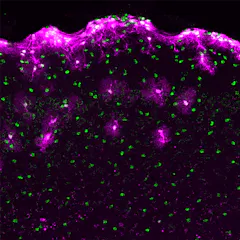
The transplantation of astrocytes — a type of brain cell as common as neurons — may provide hope of treatments or cures of some neurodegenerative disorders.

If you didn’t forget things, you’d be in for a world of trouble.

Every human brain still holds primitive instincts that we share with our monkey ancestors. Is that part of your brain in charge when you cast your ballot?

Here are just some of the ways light is important for our wellbeing and mental health.
Five simple questions can help spot exaggerated research claims.

And some dogs have the same genetic mutation linked to autism in humans.

Bittersweet experiences aren’t uncommon. Do people ever truly feel both positive and negative at the same exact moment, or do we just switch quickly back and forth?

Researchers are developing theories about the purpose of dreams and learning why some people seem to be better at remembering them.
We don’t yet know the health effects of microplastics in the brain. But until we find out more, it’s best to limit our exposure to plastics where we can.
Here’s how your brain visualizes scenarios that you’re not actually looking at with your eyes.
Top contributors
-

Professor of Clinical Neuropsychology, University of Cambridge
-
Penn State
-
Postdoctoral Research Associate, Cognitive Neuroscience, University of Cambridge
-
Senior Lecturer (Adjunct), Nutritional neuroscientist, Adelaide University
-
Head of Developmental Psychobiology Lab, Deakin University
-
Postdoctoral Researcher in Cognitive Neurosciences, The University of Queensland
-
Senior Research Fellow, Uehiro Centre for Practical Ethics, University of Oxford
-
Professor of Anatomy, University of Bristol
-
Professor Emeritus of Cognitive NeuroImaging, Aston University
-
Professor of Cognitive Neuroscience, Bangor University
-
Senior Research Fellow, The Perron Institute for Neurological and Translational Science, and Faculty of Health Sciences, Curtin University
-
Associate Professor of Family & Community Medicine and Pediatrics, retired, University of California, San Francisco
-
Professor of Behavioral Neuroscience, University of Richmond
-
Lead, Cognition and Consciousness Imaging Group, Division of Anaesthesia, University of Cambridge
-
Associate Professor in Clinical Psychology and Neuropsychology, Trinity College Dublin