
Change in the brain usually comes with plenty of effort over time. Neuroscientists are working to understand how psychedelic drugs provide a shortcut that seems to rely on existing brain systems.
Articles on Neuroscience
Displaying 221 - 240 of 866 articles
There’s a battle over consciousness research – and whether it can be understood purely through science.

It’s pretty common to see face-like patterns in objects – but this quirk can give us insights into human psychology and evolution.

From dopamine hacking to dopamine detoxes, some people have sought to harness this brain chemical to improve their mood and productivity. But it’s far more complicated than that.

Ever looked at a familiar face and found it suddenly unusual or unknown? You may have had a case of jamais vu.

The science of human consciousness offers new ways of gauging machine minds – and suggests there’s no obvious reason computers can’t develop awareness.

Although emotions like fear and anxiety originate in your brain, they ultimately travel through your body and make your heart race and your stomach twist.
Combining psychotherapy with medication can lead to more immediate and enduring results by boosting the brain’s neuroplasticity.

Visualization is an essential part of the scientific process. Advances in imaging have enabled eye-opening discoveries, not only for scientists and researchers but also for the general public.

The idea that each person has a particular learning style is a persistent myth in education. But new research provides more evidence that you won’t learn better in one modality than another.

More invasive devices have prompted new debates about privacy and freedom. But it’s important to keep in mind that other technologies already sense and shape our thoughts, a neuroethicist argues.
An objective way to measure pain is the holy grail of pain research. Gamma waves may be part of the answer.

Are holidays really necessary, and why do we need them? And, above all, what are the benefits of a few days off? This is what science says.
Mind uploading could allow human consciousness to live on long after their body dies.

When fruit flies see other dead fruit flies, their life spans are cut short. Other species also undergo analogous physiological changes when seeing their dead.
Glioblastoma is the most aggressive type of brain cancer, causing significant decline in cognitive function. New research suggests a common anti-seizure drug could help control tumor growth.
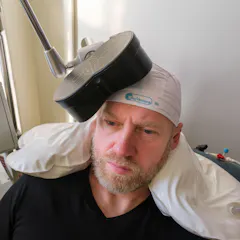
Transcranial magnetic stimulation is a safe, well-tolerated way to treat depression.
New research may upend our understanding of the brain, showing that travelling waves of neuronal excitation dominate the activity associated with our thoughts and feelings.

We have all experienced pain becoming more unbearable at night. The absence of stimuli and the influence of circadian rhythms could explain this phenomenon.
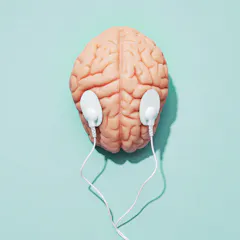
Transcranial alternating current stimulation, or tACS, is a type of brain stimulation that can change neural activity and improve memory, attention and executive function.
Top contributors
-

Professor of Clinical Neuropsychology, University of Cambridge
-
Penn State
-
Postdoctoral Research Associate, Cognitive Neuroscience, University of Cambridge
-
Senior Lecturer (Adjunct), Nutritional neuroscientist, Adelaide University
-
Head of Developmental Psychobiology Lab, Deakin University
-
Postdoctoral Researcher in Cognitive Neurosciences, The University of Queensland
-
Senior Research Fellow, Uehiro Centre for Practical Ethics, University of Oxford
-
Professor of Anatomy, University of Bristol
-
Professor Emeritus of Cognitive NeuroImaging, Aston University
-
Professor of Cognitive Neuroscience, Bangor University
-
Senior Research Fellow, The Perron Institute for Neurological and Translational Science, and Faculty of Health Sciences, Curtin University
-
Associate Professor of Family & Community Medicine and Pediatrics, retired, University of California, San Francisco
-
Professor of Behavioral Neuroscience, University of Richmond
-
Lead, Cognition and Consciousness Imaging Group, Division of Anaesthesia, University of Cambridge
-
Associate Professor in Clinical Psychology and Neuropsychology, Trinity College Dublin