
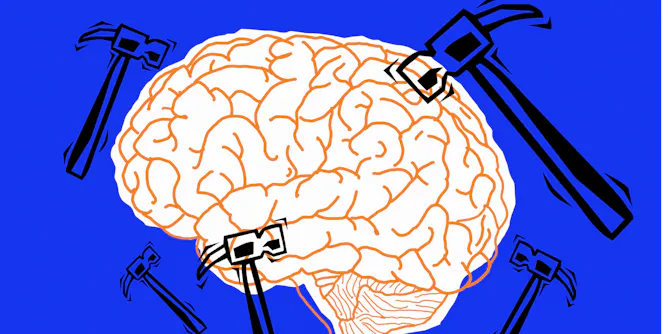
Pain has long been subjectively measured, leading to frustrations for patients and doctors alike. Identifying neural biomarkers of pain could improve diagnosis and lead to better treatments of chronic pain conditions.
Articles on Neuroscience
Displaying 241 - 260 of 866 articles

Brain scans have been used to interpret thoughts, but how far can this technology go?

One genetic study of over a quarter million people highlights the cognitive benefits of exercise, while another, based on 30 years of scientific literature, says the opposite. Who’s right and who’s wrong?
Of the risks posed by AI, overtaking human intelligence isn’t an immediate concern.
Pinpointing where memories are stored in the brain and how they are transmitted could provide new targets to treat neurological diseases and serve as models for neuromorphic computing.

Healthy eating campaigns tend to put forward images of nutritious foods. But science shows there is a more effective and counterintuitive way of steering people away from junk food.
Learning new rules requires the suppression of old ones. A better understanding of the brain circuits involved in behavioral adaptation could lead to new ways to treat schizophrenia and bipolar disorder.

Collections of self-organising nanowires behave a lot like the neurons and synapses in our brains, with startling results.

Entrepreneurs are more flexible than high-level managers.
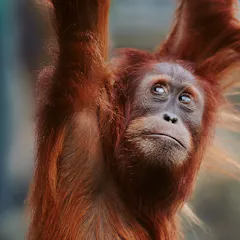
Orangutans, gorillas and chimpanzees seem to enjoy the buzz of getting dizzy.
Mirror neurons play a fundamental role in learning by imitation and observation or empathy. This is why we should take them into account when developing new educational tools.

Neuroscientists have typically thought of energy supply to the brain as demand-based. A supply-limited view offers another perspective toward aging and why multitasking can be difficult.

The European Union’s 10-year Human Brain Project is coming to a close. Whether this controversial 1 billion-euro project achieved its aims is unclear, but its online forum did foster collaboration.

A new film changes its story based on the emotions expressed by the viewer.
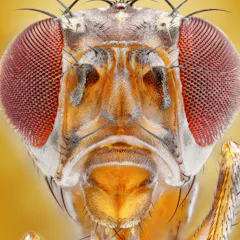
This new study could help researchers understand conditions such as autism and help fight climate change by reducing the carbon footprint of AI.
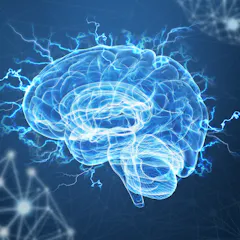
Your thoughts, emotions and behaviours arise from the complex network of electric activity in your brain. But what can we do when we need to tweak it?
By learning what parts of the brain are crucial for imagination to work, neuroscientists can look back over hundreds of millions of years of evolution to figure out when it first emerged.
How do you determine whether one brand is similar enough to another to infringe on its trademark? Researchers propose that comparing brain scans could be an option.

Lateral reading, self-nudging and a persistent refusal to feed the trolls are some of the ways one can better manage information.

Antidepressants may take away some of the pain of depression but that can also sap away people’s enjoyment of life.
Top contributors
-

Professor of Clinical Neuropsychology, University of Cambridge
-
Penn State
-
Postdoctoral Research Associate, Cognitive Neuroscience, University of Cambridge
-
Senior Lecturer (Adjunct), Nutritional neuroscientist, Adelaide University
-
Head of Developmental Psychobiology Lab, Deakin University
-
Postdoctoral Researcher in Cognitive Neurosciences, The University of Queensland
-
Senior Research Fellow, Uehiro Centre for Practical Ethics, University of Oxford
-
Professor of Anatomy, University of Bristol
-
Professor Emeritus of Cognitive NeuroImaging, Aston University
-
Professor of Cognitive Neuroscience, Bangor University
-
Senior Research Fellow, The Perron Institute for Neurological and Translational Science, and Faculty of Health Sciences, Curtin University
-
Associate Professor of Family & Community Medicine and Pediatrics, retired, University of California, San Francisco
-
Professor of Behavioral Neuroscience, University of Richmond
-
Lead, Cognition and Consciousness Imaging Group, Division of Anaesthesia, University of Cambridge
-
Associate Professor in Clinical Psychology and Neuropsychology, Trinity College Dublin