
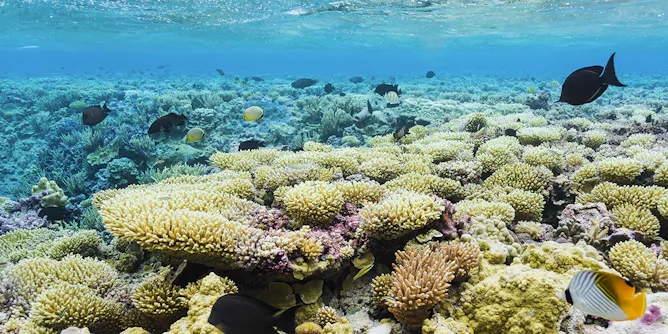
America’s marine protected areas help fish populations thrive. Trump’s plan to open them to industrial fishing may ultimately harm the fishing industry itself.
Articles on Ocean life
Displaying 1 - 20 of 22 articles
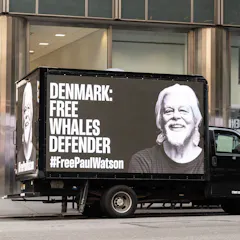
Japan’s whaling practices are in the spotlight following the arrest of activist Paul Watson. Are they a deeply rooted cultural tradition or a lucrative economic activity?
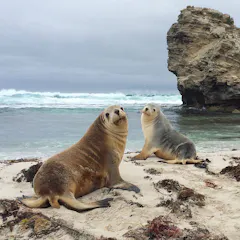
Using cameras and trackers attached to Australian sea lions, we explored previously unmapped ocean habitats off the South Australian coast. The data also fed into predictive computer models.
Taking more carbon dioxide out of the atmosphere by stashing it in the ocean seems like a good idea, but it could backfire if tiny marine animals called zooplankton get extra hungry.

A newly described fossil from South Australia is making waves in our understanding of where and when whales evolved titanic body sizes.
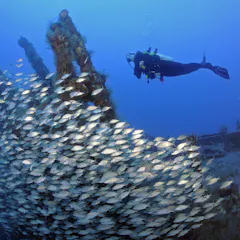
When ships sink, they add artificial structures to the seafloor that can quickly become diverse, ecologically important underwater communities.
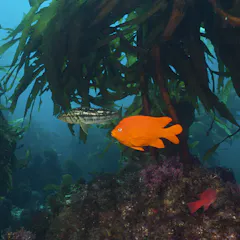
Humans rely on the ocean for food, jobs and other resources, but these systems are being stressed to the brink.
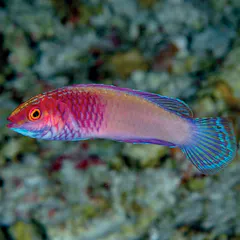
From fluffy crabs that wear sea sponge hats to worms that glow in the dark, scientists are constantly finding amazing new life forms in the ocean.
In the deep, dark ocean, sunlight-deprived bacteria turn to different sources of energy: dissolved hydrogen and carbon monoxide.
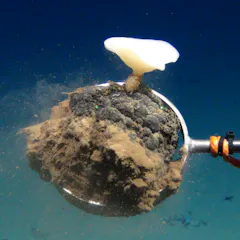
Mining nodules from the deep ocean seabed could provide the metals crucial for today’s EV batteries and renewable energy technology, but little is known about the harm it could cause.
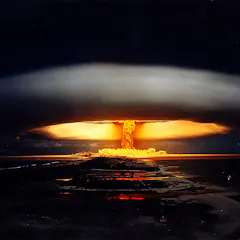
In Europe, a large-scale war could cause the Baltic Sea to freeze over and severely compromise food security – potentially for decades and even centuries to come.
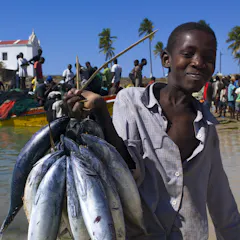
From planting mangroves to dumping minerals in the ocean, there are lots of ideas for ocean carbon dioxide removal – and even more questions.
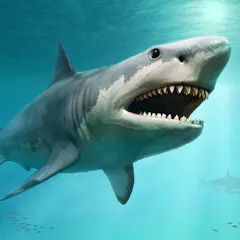
A terrifying sight in ancient waters, the megalodon shark was once the most feared creature in the sea.
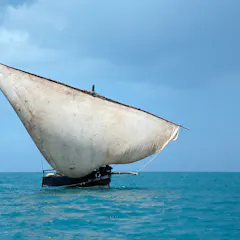
The work of the authors reveals a world that is outward-looking, full of movement, border-crossing and south-south interconnection.
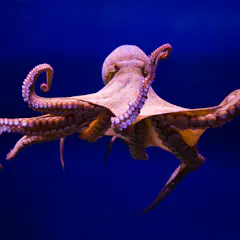
With nine brains, blue blood and a talent for camouflage, the octopus is one of the most fascinating creatures in the sea.

Mountains can’t be created without lubricant, and 2 billion years ago that lubricant was graphite produced by the carbon broken down from layers of dead plankton on the ocean floor.
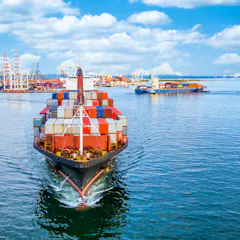
A recent survey of top executives at companies that operate at sea found environmental reporting practices were not a top priority and put the health of the marine environment at risk.
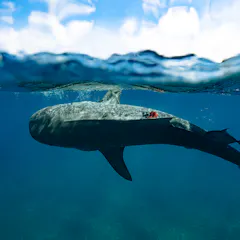
Warm-blooded fish can swim 1.6 times faster than their cold-blooded relatives.
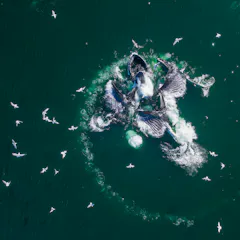
Bubble-net feeding is when whales blow bubbles from their nose to encircle their food, trapping their prey into a tight ball. A citizen scientist was the first to capture this behaviour in Australia.
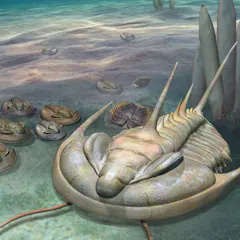
Looking a bit like enlarged woodlice, ancient trilobites crawled along the seabed and had an exoskeleton made of calcite — nature’s version of a suit of armour.
Top contributors
-

Senior Curator, Vertebrate Palaeontology, Museums Victoria Research Institute
-
Professor of Law, Indiana University
-
ARC DECRA Fellow/Senior Lecturer, IMAS, University of Tasmania
-
Professor of Business Law and Ethics, Indiana University
-
Professor of Environmental and Energy Policy, Indiana University
-
Research Fellow, School of Biological Sciences, Monash University
-
Associate Professor of International Studies, Indiana University
-
PhD Candidate in Zoology, Trinity College Dublin
-
Group Leader and ARC DECRA Fellow, Monash University
-
Senior Research Fellow in Aquatic Ecology, Charles Darwin University
-
Professor, Microbiology, Monash University
-
Associate Professor and Senior Global Futures Scientist, Arizona State University
-
Research Marine Biologist, National Oceanic and Atmospheric Administration
-
Executive Dean of the College of Arts, Sciences & Education and Professor of Biological Sciences, Florida International University
-
Postdoctoral researcher, Uppsala University