
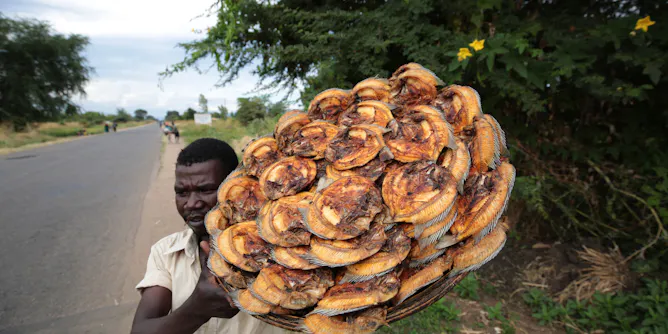
Nutrition policies offer the chance for us to think differently about men and women’s roles in society.
Articles on Food security
Displaying 301 - 320 of 559 articles
Awareness is increasing about foods like lab-grown meat, insects and seaweed. These foods may help address environmental challenges, but it’s important to be aware of both the costs and benefits.

As food systems are made vulnerable through climate change, we need to acknowledge and address the eco-anxiety provoked by threats to food security.
New Zealand is a net exporter of many fruit and vegetables. While climate-change induced food shortages are not an imminent risk, some crops may be affected by rising temperatures and extreme weather.
There needs to be more awareness of the benefits of insects as food, and support for farming and markets.
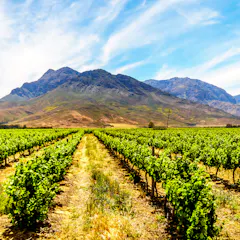
The impact of climate change on agriculture and food production is clear: the sector will suffer. Here’s what needs to be done.
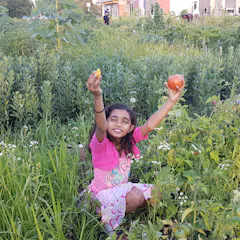
Community gardens with land-based activities can impact community food security and are a good way to forge relationships among new immigrants, Indigenous and non-Indigenous community members.
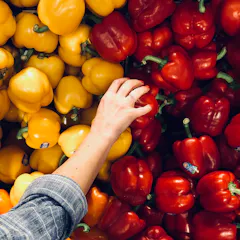
Canadian politicians on the campaign trail would do well to mention issues of food security. At least 55 per cent of Canadians are worried about how they will continue to pay grocery bills.

Students suffer the double burden of malnutrition - hunger and obesity. This results in stress, ill health, poor academic results and increased drop-out rates.

The Democratic candidates hoping to replace Trump in 2020 debated a host of critical issues but never brought up the equally important challenge of Americans’ food security.
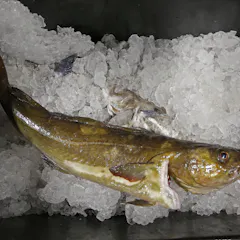
As the oceans warm, fish are moving to stay in temperature zones where they have evolved to live. This is helping some species, hurting others and causing a net reduction in potential catch.
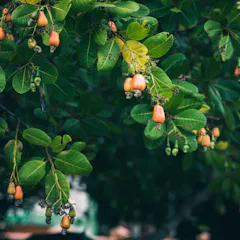
Expansion of cashew production for export poses potential challenges particularly around food security
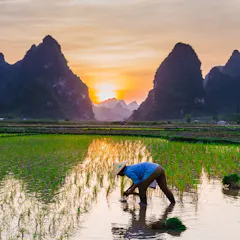
A new IPCC report has called for radical changes in food production to avoid catastrophic climate change. Rice-fish farming and mixed crops could help.
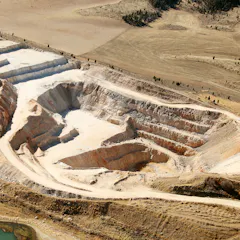
Global phosphate production is set to peak in 2030, around the same time the world’s population will reach nine billion. As a finite resource, a phosphate shortage will effect global food production.
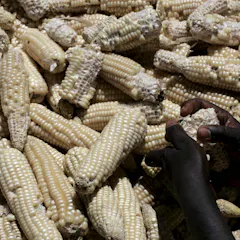
Understanding the political economy around maize production puts into context debates on key interventions in the value chain.

There have been some positive strides made in getting smallholders involved in digital agriculture in Africa

Urban gardening is a departure point for learning about land and relationships, as well as food, consumer culture and social activism.
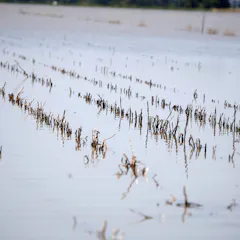
As climate change alters temperature and rainfall patterns, yields of some crops are increasing while others decline. The net result: less food, especially where it’s most needed.
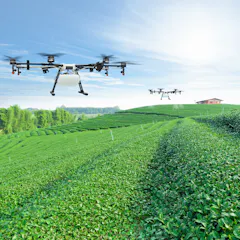
With each industrial revolution, food production and distribution has been revolutionized. With the current Fourth Industrial Revolution, can we address inequalities in food distribution?
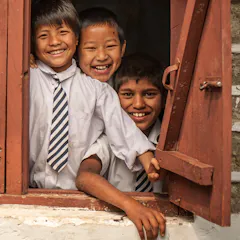
New study finds food insecurity is negatively linked to learning outcomes in reading, English, maths, and local language vocabulary.
Top contributors
-

Senior Fellow, Department of Agricultural Economics, Stellenbosch University
-
Associate Professor in Food Systems, The University of Melbourne
-
Research Fellow, Tegemeo Institute, Egerton University
-
Associate Professor, Department of Entomology; African-American Studies, University of Illinois Urbana-Champaign
-
PhD, Political Economy, Macquarie University
-
Professor of Food Policy, City St George's, University of London
-
Researcher in sustainable food systems, The University of Melbourne
-
Director of the Arrell Food Institute and Professor in the Dept. of Geography, Environment and Geomatics, University of Guelph
-
Network and Research Manager: ARUA – UKRI GCRF FSNet Africa, University of Pretoria
-
Professor in Food Security; Head of the Department of Agricultural Economics, Extension and Rural Development, University of Pretoria
-
Emeritus Fellow in Plant Biochemistry, University of Westminster
-
Professor of Social Development Studies, University of Johannesburg
-
Food Systems Research and Partnerships, The University of Melbourne
-
Adjunct Professor, Curtin Business School, Curtin University
-
Climate Scientist and Researcher, University of Cape Town