
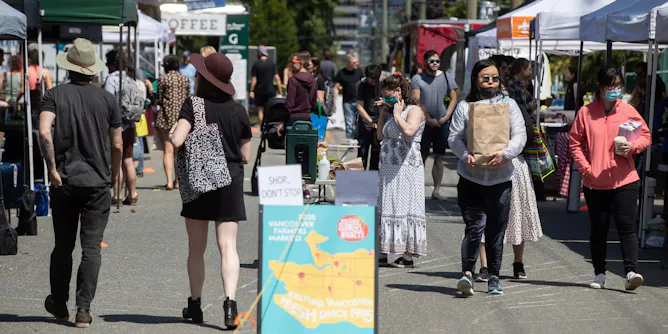
Since the beginning of the COVID-19 pandemic, there has been an increased interest in local food. This demand could be leveraged to help develop community resilience and encourage healthier diets.
Articles on Food security
Displaying 261 - 280 of 559 articles
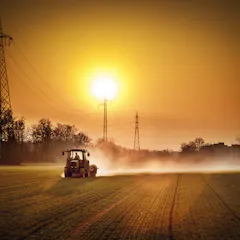
Soil loss in South Africa can have a negative impact on air quality and food security.
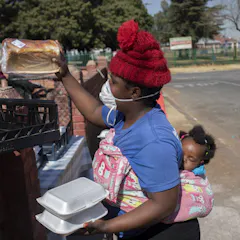
Despite the success of relief efforts by the government and civil society, it’s clear that hunger and food insecurity remain at disturbingly high levels in households.

Fruit production of shea is often limited by a lack of pollination which is more pronounced in places with less tree and shrub diversity.
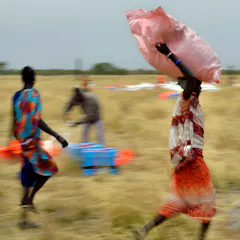
Over 820 million people around the world go to bed hungry at night, and that tide is rising. For working to reverse it, the U.N. World Food Program has received the 2020 Nobel Peace Prize.
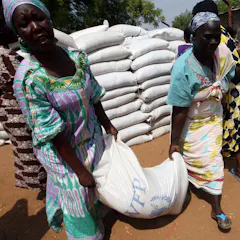
The World Food Programme can’t stop hunger on its own – that also requires political action.

Locust outbreaks are driven by unusual climatic conditions.

Khartoum, one of Africa’s largest cities, is both blessed and threatened by the dynamics of the Nile Rivers.

South Africa’s that current land reform strategies focus too narrowly on agricultural outcomes and transferred ownership - this undermines equitable and sustainable land reform.
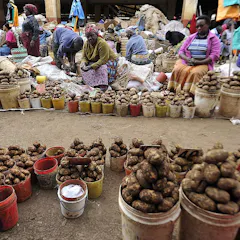
Potato cyst nematodes suppress crop growth and can cause huge yield losses of up to 80%, and even total crop failure.
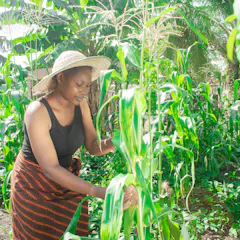
Africa is far from having an ageing farming population. What is missing is a critical mass of skilled, young farmers with access to finance who could drive productivity in farming.
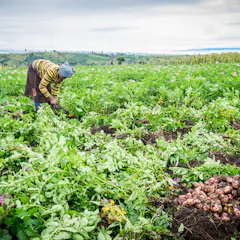
Poor and inconsistent pricing data makes it hard to assess agricultural markets.

Although COVID-19 measures have had a negative impact on food supply in Nigeria, there are other factors responsible for the dramatic rise in food prices.

A new UN report shows that hunger and food insecurity are rising worldwide. The COVID-19 pandemic is adding to this trend, but is not the major driver.

Clashes between farmers and herders in Nigeria have been bloody and protracted, with one side portrayed as victims. But as this study shows, both sides are victims.

Fast-food restaurants can be comforting places, but when they saturate communities, they crowd out healthy food sources and leave residents less nourished.
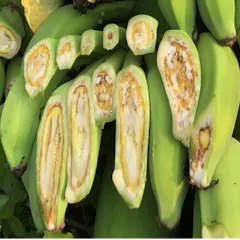
Fungi and other organisms called oomycetes are
highly adaptable. That’s bad news for the global food supply.
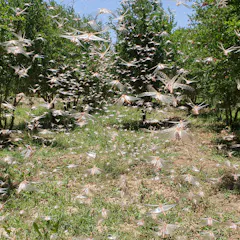
A swarm of roughly 40 million desert locusts can eat the same amount of food in one day as about 35,000 people.
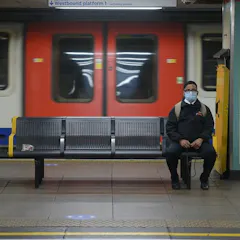
In this week’s round-up of coronavirus articles by scholars around the globe, we explore the disproportionate impacts of COVID-19 and the latest on drug trials.

Haphazard development of abattoirs without environmental and health considerations in Nigeria can only invite diseases – and potentially pandemics such as COVID-19.
Top contributors
-

Senior Fellow, Department of Agricultural Economics, Stellenbosch University
-
Associate Professor in Food Systems, The University of Melbourne
-
Research Fellow, Tegemeo Institute, Egerton University
-
Associate Professor, Department of Entomology; African-American Studies, University of Illinois Urbana-Champaign
-
PhD, Political Economy, Macquarie University
-
Professor of Food Policy, City St George's, University of London
-
Researcher in sustainable food systems, The University of Melbourne
-
Director of the Arrell Food Institute and Professor in the Dept. of Geography, Environment and Geomatics, University of Guelph
-
Network and Research Manager: ARUA – UKRI GCRF FSNet Africa, University of Pretoria
-
Professor in Food Security; Head of the Department of Agricultural Economics, Extension and Rural Development, University of Pretoria
-
Emeritus Fellow in Plant Biochemistry, University of Westminster
-
Professor of Social Development Studies, University of Johannesburg
-
Food Systems Research and Partnerships, The University of Melbourne
-
Adjunct Professor, Curtin Business School, Curtin University
-
Climate Scientist and Researcher, University of Cape Town